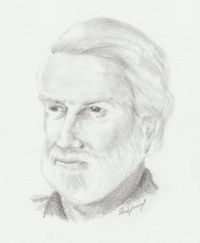
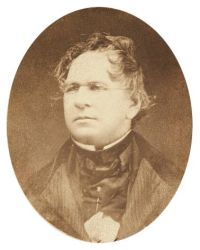
René-Robert Cavalier de La Salle

Definition and stakes

Charles Crawford Whinery 1911 Encyclopædia Britannica, Volume 16… (1911)

He then returned to Michilimackinac, whence, with Tonty, he went again to the Illinois and established a fort, Fort St Louis, probably on Starved Rock (near the present Ottawa, Illinois) , around which nearly 20,000 Indians (Illinois, Miamis and others seeking protection from the Iroquois) had been gathered. La Salle then went to Quebec, and La Barre, who had succeeded Frontenac, being unfriendly to him, again visited France (1684) , where he succeeded in interesting the king in a scheme to establish a fort at the mouth of the Mississippi and to seize the Spanish posts in the vicinity.
Source: Wikisource

Charles Crawford Whinery 1911 Encyclopædia Britannica, Volume 16… (1911)

La Salle was one of the greatest of the explorers in North America. Besides discovering the Ohio and probably the Illinois, he was the first to follow the Mississippi from its upper course to its mouth and thus to establish the connexion between the discoveries of Radisson, Joliet and Marquette in the north with those of De Soto in the south.
Source: Wikisource

Various Encyclopaedia Britannica, 11th Edition…

To talent and experience he added that power of feeling the pulse of the battle which is the true gift of a great leader. A statue of him was erected in Lunéville in 1893. His remains were brought from Austria to the Invalides in 1891.
LA SALLE, RENÉ ROBERT CAVELIER, Sieur de (1643-1687) , French explorer in North America, was born at Rouen on the 22nd of November 1643. He taught for a time in a school (probably Jesuit) in France, and seems to have forfeited his claim to his father’s estate by his connexion with the Jesuits.
Source: Gutenberg

Get perspective with Kwize: daily news enlightened by great literature