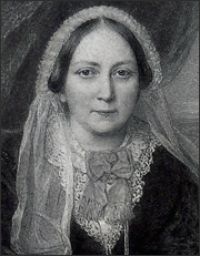
“ No officers of justice, searching for a fugitive, ever made a louder. Richard Hare, his face turned to chalk, his eyes starting, and his own light hair bristling up with horror, struggled into his wet smock-frock after a fashion, the tails up about his ears and the sleeves hanging, forced on his hat and his false whiskers, looked round in a bewildered manner for some cupboard or mouse-hole into which he might creep, and, seeing none, rushed to the fireplace and placed his foot on the fender. ”
Richard Hare
Definition and stakes
The theme of “Richard Hare” has been addressed by authors such as George Mac Gregor, Alexander Leighton, Augustus John Cuthbert Hare, Augustus J. C. Hare and Rev. W. May. It is often associated with terms like Francis, John, Augustus, Burke and Naylor.
Quotes about “Richard Hare”
Gordon Goodwin, Dictionary of National Biography… (1890)
“ HARE, HUGH (1668–1707) , translator, baptised at Totteridge, Hertfordshire, 2 July 1668, was the eldest surviving son of Henry Hare, second lord Coleraine [q. v.] , by his first wife, Constantia, daughter of Sir Richard Lucy, bart., of Broxbourne, Hertfordshire. He lived at East Betchworth, Surrey. ”
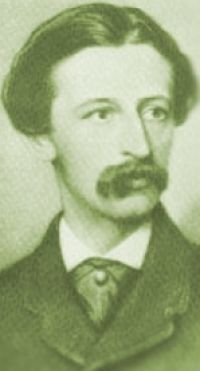 Augustus John Cuthbert Hare,
Dictionary of National Biography…
(1890)
Augustus John Cuthbert Hare,
Dictionary of National Biography…
(1890)
“ Another son, Robert, was father of Francis Hare-Naylor [q. v.] , and a third, Richard, was father of James Hare [q. v.] Hare was a prolific author. He had been an old friend of Bentley, to whom he addressed in 1713 'the clergyman's thanks to Phileleutherus' (Bentley's pseudonym in the controversy with Anthony Collins [q. v.] ) . They were estranged perhaps by Hare's support of John Colbatch [q. v.] In 1724 Hare published an edition of 'Terence,' founded upon that of Faërnius, and with notes founded partly on previous communications from Bentley, who had intended to publish an edition himself. ”
Richard Lydekker, 1911 Encyclopædia Britannica, Volume 12… (1911)
“ Hares are remarkably prolific, pairing when scarcely a year old, and the female bringing forth several broods in the year, each consisting of from two to five leverets (from the Fr. lièvre) , as the young are called. These are born covered with hair and with the eyes open, and after being suckled for a month are able to look after themselves. In Europe this species has seldom bred in confinement, although an instance has recently been recorded. It will interbreed with the blue hare. ”
Richard Lydekker, 1911 Encyclopædia Britannica, Volume 12… (1911)
“ In Assam there is a small spiny hare (Caprolagus hispidus) , with the habits of a rabbit; and an allied species (Nesolagus nitscheri) inhabits Sumatra, and a third (Pentalagus furnessi) the Liu-kiu Islands. The plateau of Tibet is very rich in species, among which L. hypsibius is very common. Of African species, the Egyptian Hare (L. aegyptius) is a small animal, with long ears and pale fur; and in the south there are the Cape hare (L. capensis) , the long-eared rock-hare (L. saxatilis) and the diminutive Pronolagus crassicaudatus, characterized by its thick red tail. ”
Richard Lydekker, 1911 Encyclopædia Britannica, Volume 12… (1911)
“ On the first alarm of danger it sits erect to reconnoitre, when it either seeks concealment by clapping close to the ground, or takes to flight. In the latter case its great speed, and the cunning endeavours it makes to outwit its canine pursuers, form the chief attractions of coursing. The hare takes readily to the water, where it swims well ”
Richard Lydekker, 1911 Encyclopædia Britannica, Volume 12… (1911)
“ The range of the common or brown hare, inclusive of its local races, extends from England across southern and central Europe to the Caucasus; while that of the blue or mountain species, likewise inclusive of local races, reaches from Ireland, Scotland and Scandinavia through northern Europe and Asia to Japan and Kamchatka, and thence to Alaska. The brown hare is a night-feeding animal, remaining during the day on its “form,” as the slight depression is called which it makes in the open field, usually among grass. ”
Richard Lydekker, Animal portraiture (1912)
“ No one, of course, can mistake a hare for any other animal, and therefore anything in the way of description would be superfluous. It is, however, important to point out the characters by which the brown, or English species, is distinguished from the blue hare, which is found in Scotland and Ireland. ”
A Cyclopædia of Canadian Biography
“ By a vast number of Canadian women, some of whom are now in middle age, the name of Dr. Hare is held in honor and veneration. His educational attainments were some years ago recognized by his selection as examiner in geology by the University of Toronto. In September, 1874, he married Katherine Isabella, daughter of the late Rev. D. C. McDowell, a well-known Methodist divine, and has one son. Mrs. Hare was for some years lady principal of the college, and discharged the duties of her position with efficiency. His recreations are riding, driving and tennis; and in politics he is an independent. ”
Anonymous, West Port Murders (1829)
“ The common remark was, that “he was a poor silly-looking body;” and nothing can better describe his appearance; for though Hare is certainly no beauty, every one has seen hundreds of uglier men. He can neither read nor write, and his mind, in other respects, is just as untutored as an Esquimaux Indian’s. What is called the moral sense, seems in him to stand below zero; and in this opinion we are borne out by all the medical gentlemen who had an opportunity of seeing and conversing with him here. ”
Countess of Marguerite Blessington, The Idler in France
“ Hare is well-looking, and agreeable, appears amiable, and is a good musician. I remember seeing her and her sisters with her mother, Lady Paul, at Florence, when I had little notion that she was to be Mrs. Hare. I never meet Francis Hare without being surprised by the versatility of his information; it extends to the fine arts, literature, rare books, the localities of pictures and statues; in short, he is a moving library that may always be consulted with profit, and his memory is as accurate as an index in rendering its precious stores available. ”
1911 Encyclopædia Britannica, Volume 12… (1911)
“ There he became fellow in 1818, and after some time spent abroad he began to read law in London in the following year. From 1822 to 1832 he was assistant-tutor at Trinity College. Turning his attention from law to divinity, Hare took priest’s orders in 1826; and, on the death of his uncle in 1832, he succeeded to the rich family living of Hurstmonceaux in Sussex, where he accumulated a library of some 12,000 volumes, especially rich in German literature. ”
Various, The International Magazine, Volume 4…
“ Hare is an English churchman of no ordinary cast. He has passed from the region of traditional belief, has skirted the bogs and quicksands of doubt and disbelief, and has found firm footing where alone it seems possible, in a revelation whose letter is colored by the human media through which it has passed, and in a faith whose highest mysteries are not only harmonious with but necessary complements to the truths of reason. ”
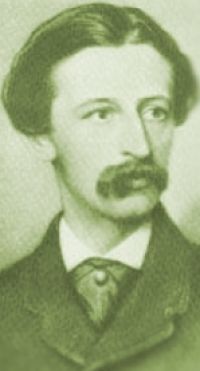 Augustus J. C. Hare,
The Story of My Life, volumes 1-3
Augustus J. C. Hare,
The Story of My Life, volumes 1-3
“ And all the little children came up and kissed him, and cried, "Hosanna! hosanna! he is good; and he has got little wings like us.""'So Hare lived on in the island, till, one day, the angel said, "Have you ever thought what your poor mother is doing now, and would you not like to go back to her?" And Hare said, "But can I always be good and have white robes and wings if I go back to Babylon?" ”
Augustus J. C. Hare,
The Story of My Life, volumes 1-3
“ I am writing in the darkened room, where Edward lies powerless, with all his hair cut off and his head soaked in wet towels, almost unable to move, and unable to feed himself. I am sorry not to be able to go out while Marcus Hare is here, and he is much disappointed. He arrived suddenly from Naples and embraced me as if we were still children.""April 10.—My dear Mother is much the same. It has been a peaceful week with her, though there is no improvement.... The paralysed arm is quite useless, and has a separate and ungovernable individuality. This is why she can never be left alone. ”
Augustus John Cuthbert Hare,
The Story of My Life — Chapter II: Childhood
(1890s)
“ I said “No,” for at that time I had never heard of George Hare or of the Bishop’s youngest son, Francis, who likewise died in India. But my brother insisted that we must have had an Indian relation who died there; and on my inquiring “why,” he told me the following story. He assured me, that being resolved once more to visit the old family home, he had gone down to Hurstmonceaux, and had determined to pass the night in the castle. ”
Augustus J. C. Hare,
The Story of My Life, volumes 1-3
“ Assail the poet, and defame the man."After another winter at Rome, the family went to Lausanne, and thence my father, with my beautiful Albanese nurse, Lucia Cecinelli, took me to meet Mrs. Gayford, the English nurse sent out to fetch me by my adopted mother from Mannheim on the Rhine. There the formal exchange took place which gave me a happy and loving home. I saw my father afterwards, but he seldom noticed me. Many years afterwards I knew Mrs. Hare well and had much to do with her ”
Augustus J. C. Hare,
The Story of My Life, volumes 4-6
“ We drove swiftly up a rocky forest road to the large villa which a merchant of Kristiania has lent to the Queen for the benefit to her health from the pine air. Another merchant close by has lent his to the King, as the immense personnel of the court could not possibly live in one house. As we drove up through the garden, a tall figure in a wide-awake hat emerged from one of the windows upon the terrace. ‘Sa Majesté le Roi!’ said the chamberlain; so I jumped out of the carriage, and he came forward at once with ‘Is it Mr. Hare? ”
Augustus John Cuthbert Hare,
The Story of My Life — Chapter IV: Lyncombe
(1890s)
“ She was then living with her mother Lady Boyle in the same house of Millard’s Hill, near Frome, in which my great-aunts Caroline and Marianne Hare had lived before; and, to my great surprise and delight, I was allowed to go by the coach to spend two days with her there. It was on this occasion that I first wore a morning-coat instead of a jacket, and very proud I was of it. Apropos of dress, at this time and for many years afterwards, all young gentlemen wore straps to their trousers, not only when riding, but always: it was considered the ne plus ultra of snobbism to appear without them. ”
Augustus J. C. Hare,
The Story of My Life, volumes 1-3
“ When Hare was a little child he lived at Rome: you know what we call it?— ("Oh yes, papa, Babylon.") —Well, he lived at Babylon, and he was a very good little boy then, but he used to walk about dressed in scarlet, for they all wore scarlet there. One day a man was seen in the streets, very beautiful, a stranger with silver wings. And he said, "Are you little Hare, and would you like to go with me and learn how to be good?" for he was an angel. And little Hare said, "Oh yes, that is what I always like to be and try to be, and I shall like very much to go." ”
Augustus John Cuthbert Hare,
Dictionary of National Biography…
(1890)
“ In return, he was often loved,frequently detested, but never ignored. His acquaintance with English literature was extraordinary, and his knowledge of German probably unique for an undergraduate. He gave himself up with passionate delight to his classical studies; but his dislike of mathematics prevented him from qualifying to compete for the chancellor's medal. He was elected to a Trinity fellowship in October 1818. After a winter passed with Francis Hare in Italy, he was persuaded by his elder brother to study the law, and took chambers in Hare Court, Temple. ”
Augustus J. C. Hare,
The Story of My Life, volumes 1-3
“ He died on the 27th of November, utterly destitute, and dependent upon the charity of his humble friends. He was buried by them in a corner of the Campo Santo at Pisa, near their own family burial-place, where the letters F. H. in the pavement alone mark the resting-place of Francis George Hare, the idolised son of his mother. [388] XV LAST YEARS WITH THE MOTHER"Nothing but the infinite pity is sufficient for the infinite pathos of human life."—John Inglesant. ”
 Zane Grey,
The Heritage of the Desert: A Novel
Zane Grey,
The Heritage of the Desert: A Novel
“ You're called 'Dene's spy' there, and the rustlers are still looking for you. I wouldn't worry about it, though.” “Why not, I'd like to know?” inquired Hare, with a short laugh. “Well, if you're like the other Gentiles who have come into Utah you won't have scruples about drawing on a man. Father says the draw comes natural to you, and you're as quick as he is. Then he says you can beat any rifle shot he ever saw, and that long-barrelled gun you've got will shoot a mile. So if it comes to shooting—why, you can shoot. If you want to run—who's going to catch you on that white-maned stallion? ”
Augustus J. C. Hare,
The Story of My Life, volumes 1-3
“ She bade me seek in the environs of Paris for a small house, any one I liked, in any situation, and she would buy it for me. If there was a large house near it, so much the better—that she would buy for herself. She said she knew I could not live there upon nothing, but that she should give me an annuity, and that Félix 'à cause de son rhumatisme,' must have a little carriage. I was quite overwhelmed. 'Mais, Madame, nous ne méritons pas cela,' I said. 'Oui, Victoire, je sais que vous le méritez bien, et je le veux.' I said it was impossible I could accept such favours at her hands. ”
Augustus J. C. Hare,
The Story of My Life, volumes 1-3
“ In the summer of 1832 all the family went to Baden-Baden, to meet Lady Paul and her daughter Eleanor, Sir John, the FitzGeralds, and the Bankheads. All the branches of Mrs. Hare's family lived in different houses, but they met daily for dinner, and were very merry. Before the autumn, my father returned to Italy, to the Villa Cittadella near Lucca, which was taken for two months for Mrs. Hare's confinement, and there, on the 9th of October, my sister was born. She received the names of "Anne Frances Maria Louisa." ”
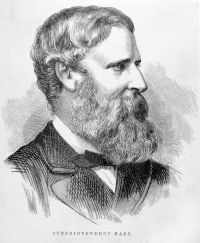 Francis Augustus Hare,
The Last of the Bushrangers: An Account of the Capture of the Kelly Gang
Francis Augustus Hare,
The Last of the Bushrangers: An Account of the Capture of the Kelly Gang
“ They have been carting in a supply of wood for the winter, and in every hollow log there appears to be a snake." He returned to us downcast and dejected, and taking me aside, said, "Hare, I cannot sleep on the ground to-night; you must let me sleep in the waggon." I consulted with the others, and we agreed, after the miserable nights he had passed, he should be allowed to clear out the waggon, and put his 'possum rug in it. I must describe the position we selected for our camp. It was a steep hill on the side we were on, with a wide creek at the foot of it. ”
Various, The Strand Magazine, Vol. 01, Issue 02…
“ Hare is a familiar figure, not only on the stage, but on horseback in the Row, or, more delightful still to his acquaintances, talking from an easy-chair as no one but himself can talk, or rising after dinner to make one of his inimitable speeches. ”
Augustus J. C. Hare,
The Story of My Life, volumes 1-3
“ As Flora Ackermann, Madame Limosin had been brought up in my father's family, and, with her sister Victoria, had been treated like his own children. [388] Now (1895) every one who took part in the trial at Guildford is dead, except the priests, and, I believe, the Abbess Pierina. The person whom Francis Hare had married during the last months of his life vanished, immediately after his death, into the chaos from whence she had come. ”
Augustus John Cuthbert Hare,
The Story of My Life
(1890s)
“ For several years our grandparents carried on a most laborious contest of dignity with poverty on their ruined estate of Hurstmonceaux, where their only daughter Anna Maria Clementina was born in 1799. Finding no congenial associates in the neighbourhood, Mrs. Hare-Naylor consoled herself by keeping up an animated correspondence with all the learned men of Europe, while her husband wrote dull plays and duller histories, which have all been published, but which few people read then and nobody reads now. ”
Mrs. Sale Barker, Little Wideawake: A story book for little children
“ Hare, while the others are Mrs. Hare and the children. They are eating away as fast as they can, while the good papa looks on, and listens with those long ears of his for the sound of any approaching footsteps. If he hears any noise of a kind which he considers alarming, he will give notice to his wife and little ones; then they will all scurry off so fast that they will soon be miles away from the spot where they have been frightened.A hare never walks or trots, because the hind legs are so much longer than the front ones, but it goes along in a succession of bounds. ”
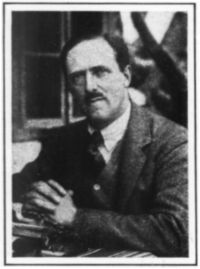 Francis Brett Young,
The Crescent Moon
Francis Brett Young,
The Crescent Moon
“ Besides, a man who is on the point of dying with thirst in the middle of Africa at night does not expect to fall in with a woman walking hatless and unarmed. He knew that something unusual was doing; he knew that she too was in trouble. And obviously he was going to help her. In the middle of Africa people help one another without asking questions: in their relations there appears a certain delicacy which sits particularly well on such a villainous-looking person as Hare was then. ”
Related terms
Authors who wrote about “Richard Hare”
George Mac GregorAlexander LeightonAugustus John Cuthbert HareAugustus J. C. HareRev. W. MayKatharine Berry Judson AesopMary Hazelton Blanchard WadeVariousAnonymousRichard LydekkerFrancis Augustus Hare
 Charles DickensThompson Cooper
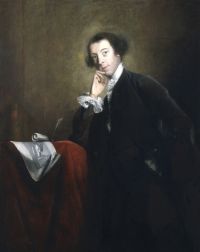 Horace WalpoleZane GreyGordon Goodwin
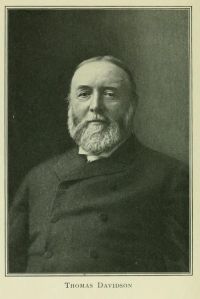 Thomas DavidsonCountess of Marguerite BlessingtonFrancis Brett Young
Augustus John Cuthbert HareAugustus J. C. HareRev. W. MayKatharine Berry JudsonAesopMary Hazelton Blanchard WadeVariousAnonymousRichard LydekkerFrancis Augustus HareCharles DickensThompson CooperHorace WalpoleZane GreyGordon GoodwinThomas DavidsonCountess of Marguerite BlessingtonFrancis Brett Young