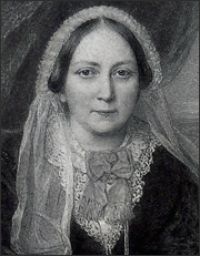
“ Forgive me, Miss Carlyle, forgive me!” “Thank God!” inwardly breathed Miss Carlyle. “Forgive me,” she said, aloud and in agitation, touching her hand. “I could have made your home happier, and I wish I had done it. I have wished it ever since you left it.” Lady Isabel drew the hand in hers. “I want to see Archibald,” she whispered, going back, in thought, to the old time and the old name. “I have prayed Joyce to bring him to me, and she will not. Only for a minute! Just to hear him say that he forgives me! What can it matter, now that I am as one lost to the world? I should die easier.” ”
Summary
"East Lynne," written by Mrs. Henry Wood, is a Victorian novel that weaves together themes of justice, family secrets, and moral struggle through the lives of its central characters, including Lady Isabel, Barbara Hare, and Mr. Carlyle. Set against a background of societal expectations and personal wrongdoing, the narrative examines the repercussions of concealed identities, marital infidelity, and the quest for redemption.
At the heart of the story are conflicts between spouses, the legal system's role in uncovering the truth, and the emotional burden of hidden histories, as illustrated in scenes involving murder accusations, secret encounters, and divided loyalties. The novel unites these elements to highlight the unavoidable consequences of personal decisions and the delicate line between secrecy and disclosure.
Quotes from East Lynne (Mrs. Henry Wood)
“ Barbara silently locked her hands, one within the other, and turned to the window. “Of whom did you speak?” asked Mr. Carlyle, in a matter-of-fact tone, as if he were putting the most matter-of-fact question. He knew too well; but he thought to temporize for the sake of Mrs. Hare. “Of whom do I speak!” uttered the exasperated justice, nearly beside himself with passion; “of whom would I speak but the bastard Dick! Who else in West Lynne is likely to come to a felon’s death?” “Oh, Richard!” sobbed forth Mrs. Hare, as she sank back in her chair, “be merciful. He is our own true son.” ”
“ We have each chosen our path in life, and must abide by it; the gulf between us is impassable but the fault was mine. I ought to have avowed my affection, and not have suffered you to throw yourself away upon Mr. Carlyle.” “Throw myself away!” she indignantly uttered, roused to the retort. “Mr. Carlyle is my dear husband, esteemed, respected, and beloved. I married him of my own free choice, and I have never repented it; I have grown more attached to him day by day. Look at his noble nature, his noble form; what are you by his side? You forget yourself, Francis Levison.” ”
“ Barbara was shocked. “He is your husband, after all,” she took leave to whisper. “My husband!” broke forth Lady Levison, in agitation, seemingly. “Yes! there’s the wrong. Why did he, knowing what he was, delude me into becoming his wife? You ought to feel for me, Mrs. Carlyle; and you do feel for me, for you are a wife and mother. How dare these base men marry—take to themselves an innocent, inexperienced girl, vowing, before God, to love and honor and cherish her? ”
“ A faint flush tinged the brow of Mr. Carlyle. “I know more than one who would be glad to get Barbara, in spite of the murder. Do not depreciate Miss Hare.” “Not I, indeed; I like the young lady too well,” replied Captain Thorn. “The girl, Afy, has never been heard of since, has she?” “Never,” said Mr. Carlyle. “Do you know her well?” he deliberately added. “I never knew her at all, if you mean Afy Hallijohn. Why should you think I did? I never heard of her till Tom Herbert amused me with the history.” ”
“ Carlyle. Shakspeare calls jealousy yellow and green; I think it may be called black and white for it most assuredly views white as black, and black as white. The most fanciful surmises wear the aspect of truth, the greatest improbabilities appear as consistent realities. Not another word said Isabel to her husband; and the feeling—you will understand this if you have ever been foolish enough to sun yourself in its delights—only caused her to grow more attached to him, to be more eager for his love. But certain it is that Barbara Hare dwelt on her heart like an incubus. ”
“ Barbara was thinking over the events of the day. What Mr. Carlyle was thinking of was best known to himself; his eyes, covered with their drooping eyelids, were cast upon Barbara. There was a long silence, at length Barbara seemed to feel that his gaze was upon her, and she looked up at him. “Will you marry me, Barbara?” The words were spoken in the quietest, most matter-of-fact tone, just as if he had said, “Shall I give you a chair, Barbara?” But, oh! The change that passed over her countenance! The sudden light of joy! The scarlet flush of emotion and happiness. ”
“ Dill sadly shook his head. “Am I one to swear to a wrong man, colonel? I wish I had not heard it—save that it may be the means of clearing Richard Hare.” Sir Francis Levison had braved out the proceedings with a haughty, cavalier air, his delicate hands and his diamond ring remarkably conspicuous. Was that stone the real thing, or a false one, substituted for the real? Hard up as he had long been for money, the suspicion might arise. A derisive smile crossed his features at parts of the evidence, as much as to say, “You may convict me as to Mademoiselle Afy, but you can’t as to the murder.” ”
“ In spite of his smock-frock and his straw-wisped hat, and his false whiskers, black as Erebus, she knew him for her brother. “Oh, Richard! Where have you come from? What brings you here?” “Did you know me, Barbara?” was his rejoinder. “How was it likely—in this disguise? A thought crossed my mind that it might be some one from you, and even that made me sick with terror. How could you run such a risk as to come here?” she added, wringing her hands. “If you are discovered, it is certain death; death—upon—you know!” “Upon the gibbet,” returned Richard Hare. “I do know it, Barbara.” ”
“ Madame Vine was agitated. She held her handkerchief to her mouth, and the boy noticed how her hands trembled. “I have learnt to love Lucy. It has appeared to me in these few months’ sojourn with her, that I have stood to her in light of a mother. William Vane,” she solemnly added, keeping her hold upon him, “I shall soon be where earthly distinctions are no more; where sin and sorrow are no more. Should Lucy Carlyle indeed become your wife, in after years, never, never cast upon her, by so much as the slightest word of reproach, the sin of Lady Isabel.” ”
“ Hare marked not the flush of shame, the drooping of the eyelids. “You have lost your little ones,” Mrs. Hare resumed. “That is grief—great grief; I would not underrate it; but, believe me, it is as nothing compared to the awful fate, should it ever fall upon you, of finding your children grow up and become that which makes you wish they had died in their infancy. There are times when I am tempted to regret that all my treasures are not in that other world; that they had not gone before me. Yes; sorrow is the lot of all.” “Surely, not of all,” dissented Lady Isabel. ”
“ Lady Isabel was dying, and what would become of the ominous secret? A conviction, born of her fears, was on the girl’s mind that, with death, the whole must become known; and who was to foresee what blame might not be cast upon her, by her master and mistress, for not having disclosed it? She might be accused of having been an abettor in the plot from the first! Fifty times it was in Joyce’s mind to send for Miss Carlyle and tell her all. The afternoon was fast waning, and the spirit of Lady Isabel seemed to be waning with it. Joyce was in the room in attendance upon her. ”
“ Lady Isabel bowed to him as he left the room with Mr. Carlyle. “How fond that French governess of yours is of the boy!” the doctor whispered, as they crossed the hall. “I detected it when she brought him to Lynneborough. And you saw her just now! That emotion was all because he could not live. Good-bye.” Mr. Carlyle grasped his hand. “Doctor, I wish you could save him!” he passionately uttered. “Ah, Carlyle! If we humble mites of human doctors could but keep those whom it is the Great Physician’s pleasure to take, how we should be run after! ”
“ It will not do to talk of—it is a miserable subject. How she could abandon such a husband, such children, was a marvel to many; but to none more than it was to me and my daughter. The false step—though I feel almost ashamed to speak out the thought, lest it may appear to savor of triumph—while it must have secured her own wretchedness, led to the happiness of my child; for it is certain Barbara would never love one as she loves Mr. Carlyle.” “It did secure wretchedness to her, you think?” cried Lady Isabel, her tone one of bitter mockery more than anything else. ”
“ There stood Afy, bold as a sunflower, exhibiting herself and her splendor to the admiring eyes of the mob below, gentle and simple. “He is a handsome man, after all,” quoth she to Miss Carlyle’s maids, when Sir Francis Levison arrived opposite the house. “But such a horrid creature!” was the response. “And to think that he should come here to oppose Mr. Archibald!” “What’s that?” cried Afy. “What are they stopping for? There are two policemen there! Oh!” shrieked Afy, “if they haven’t put handcuffs on him! Whatever has he done? What can he have been up to?” ”
“ Hare added, in a lower tone, while the tears glistened on her pale cheeks, “there will be a blessed rest for the weary, when this toilsome life is ended; let us find comfort in that thought.” “Ay! Ay!” murmured Lady Isabel. “It is all that is left to me.” “You are young to have acquired so much experience of sorrow.” “We cannot estimate sorrow by years. We may live a whole lifetime of it in a single hour. But we generally bring ill fate upon ourselves,” she continued, in a desperation of remorse; “as our conduct is, so will our happiness or misery be.” ”
“ Carlyle was conscious that she had; but, taking all the circumstances into consideration, more especially how he learnt the fact, he could not, in honor, acknowledge it to his wife. “If it was so, Isabel, she was more reprehensibly foolish than I should have given Barbara’s good sense could be; for a woman may almost as well lose herself as to suffer herself to love unsought. If she did give her love to me, I can only say, I was entirely unconscious of it. Believe me, you have as much cause to be jealous of Cornelia as you have of Barbara Hare.” ”
“ A tall form, whose very height and strength bore a grace of which its owner was unconscious, was advancing rapidly toward her from the direction of West Lynne. Again she shrank away; true love is ever timid; and whatever may have been Barbara Hare’s other qualities, her love at least was true and deep. But instead of the gate opening, with the firm quick motion peculiar to the hand which guided it, the footsteps seemed to pass, and not to have turned at all toward it. Barbara’s heart sank, and she stole to the gate again, and looked out with a yearning look. ”
“ As the hall-door closed upon them, Barbara came into the gray parlor. Up rose Madame Vine, scuffled on her spectacles, and took her seat soberly upon a chair. “All in the dark, and your fire going out!” exclaimed Barbara, as she hastened to stir the latter and send it into a blaze. “Who’s on the sofa? William, you ought to be to bed!” “Not yet, mamma. I don’t want to go yet.” “But it is quite time that you should,” she returned, ringing the bell. “To sit up at night is not the way to make you strong.” ”
“ Richard described Thorn’s appearance; his evening dress, his white hands and diamond ring; more particularly he described a peculiar motion of his hand as he threw back his hair. In that moment it flashed across me that Thorn must be Captain Levison; the description was exact. Many and many a time since have I wondered that the thought did not strike Mr. Carlyle.” Lady Isabel sat with her mouth open, as if she could not take in the sense of the words; and when it did become clear to her, she utterly rejected it. “Francis Levison a murderer! Oh, no! bad man as he is, he is not that.” ”
“ Without, heavy flakes of snow were falling thickly, flakes as large and nearly as heavy as a crown piece, rendering the atmosphere so dense and obscure that a man could not see a yard before him. Mr. Carlyle had driven home in the pony carriage, and the snow had so settled upon him that Lucy, who happened to see him as he entered the hall, screamed out laughingly that her papa had turned into a white man. ”
“ He—Lord Mount Severn—told me, in confidence, that he had sought out Lady Isabel when the man, Levison, left her; he found her sick, poor, broken-hearted, in some remote French town, utterly borne down with remorse and repentance.” “Could it be otherwise?” sharply asked Lady Isabel. “My dear, I have said it could not. The very thought of her deserted children would entail it, if nothing she did. There was a baby born abroad,” added Mrs. Hare, dropping her voice, “an infant in its cradle, Lord Mount Severn said; but that child, we knew, could only bring pain and shame.” ”
“ Joyce was silent. To contradict Miss Corny brought triumph to nobody. And she was conscious, in her innermost heart, that Afy merited a little wholesome correction, not perhaps to the extent of a ducking. “Joyce,” resumed Miss Carlyle, abruptly changing the subject, “who does the governess put you in mind of?” “Ma’am?” repeated Joyce, in some surprise, as it appeared. “The governess? Do you mean Madame Vine?” “Do I mean you, or do I mean me? Are we governesses?” irascibly cried Miss Corny. “Who should I mean, but Madame Vine?” ”
“ Mr. Carlyle stood confounded, and confused. He drew himself up to his full height, looking every whit as fearless and far more noble than the peer. “My lord, I do not understand you.” “Yet I speak plainly. What is it but a clandestine procedure to take advantage of a guardian’s absence and beguile a young girl into a marriage beneath her?” “There has been nothing clandestine in my conduct toward Lady Isabel Vane; there shall be nothing but honor in my conduct toward Lady Isabel Carlyle. Your lordship has been misinformed.” ”
“ There, in the bright moonlight, all too bright and clear, slowly paced arm in arm, and drawn close to each other, her husband and Barbara Hare. With a choking sob that could no longer be controlled or hidden, Lady Isabel sunk back again. He, that bold, bad man, dared to put his arm around her, to draw her to his side; to whisper that his love was left to her, if another’s was withdrawn. She was most assuredly out of her senses that night, or she never would have listened. A jealous woman is mad; an outraged woman is doubly mad ”
“ Madame Vine, when the corridor became empty again, laid her hand upon the boy’s arm as he was moving away, and drew him to the window. “In speaking as you do of Lucy Carlyle, do you forget the disgrace reflected on her by the conduct of her mother?” “Her mother is not Lucy.” “It may prove an impediment, that, with Lord and Lady Mount Severn.” “Not with his lordship. And I must do—as you heard me say—battle with my mother. Conciliatory battle, you understand, madame; bringing the enemy to reason.” ”
“ Young Vane, who was in the thick of the crowd, of course, cast his eyes up to its lined windows, took off his hat and waved it. “Carlyle and honor forever!” shouted he. The ladies laughed and nodded, and shook their handkerchiefs, and displayed their scarlet and purple colors. The crowd took up the shout, till the very air echoed with it. “Carlyle and honor forever!” Barbara’s tears were falling; but she smiled through them at one pair of loving eyes, which sought out hers. “A galaxy of beauty!” whispered Mr. Drake in the ear of Sir Francis. “How the women rally round him! ”
“ After dinner, when Lady Isabel left them, he grew confidential over his claret to Mr. Carlyle, laying open all his intricate affairs and his cargo of troubles. “This compulsory exile abroad is becoming intolerable,” he concluded; “and a Paris life plays the very deuce with one. Do you see any chance of my getting back to England?” “Not the least,” was the candid answer, “unless you can manage to satisfy or partially satisfy those claims you have been telling me of. Will not Sir Peter assist you?” ”
“ Dinner over, Miss Carlyle beguiled Barbara out of doors. Barbara would far rather have remained in his presence. Of course they discussed Lady Isabel. “How do you like her?” abruptly asked Barbara, alluding to Lady Isabel. “Better than I thought I should,” acknowledged Miss Carlyle. “I had expected airs and graces and pretence, and I must say she is free from them. She seems quite wrapped up in Archibald and watches for his coming home like a cat watches for a mouse. She is dull without him.” ”
“ When we want people to “hold fast,” they “loose;” and when we want them to “loose,” they “hold fast.” Barbara, anxious, troubled, worn out almost with the suspense of looking and watching for her brother, feeling a feverish expectation that night would bring him—but so had she felt for the two or three nights past—would have given her hand for her father to go out. But no—things were going by the rule of contrary. There sat the stern justice in full view of the garden and the grove, his chair drawn precisely in front of the window, his wig awry, and a long pipe in his mouth. ”
“ Barbara hastily took off the chain, and laid it before her mother. “What a beautiful chain!” muttered Mrs. Hare, in surprise. “Archibald, you are too good, too generous! This must have cost a great deal; this is beyond a trifle.” “Nonsense!” laughed Mr. Carlyle. “I’ll tell you both how I happened to buy it. I went into a jeweller’s about my watch, which has taken to lose lately in a most unceremonious fashion, and there I saw a whole display of chains hanging up; some ponderous enough for a sheriff, some light and elegant enough for Barbara. I dislike to see a thick chain on a lady’s neck. ”
“ Barbara was now the cherished wife, East Lynne’s mistress. And what was she? Not even the courted, welcomed guest of an hour, as Barbara had been; but an interloper; a criminal woman who had thrust herself into the house; her act, in doing so, not justifiable, her position a most false one. Was it right, even if she did succeed in remaining undiscovered, that she and Barbara should dwell in the same habitation, Mr. Carlyle being in it? Did she deem it to be right? No, she did not; but one act of ill-doing entails more. ”
“ It was a perplexing debate that Lady Isabel held with herself in the solitude of her chamber, whilst Mr. Carlyle touched upon ways and means to Lady Mount Severn. Isabel was little more than a child, and as a child she reasoned, looking neither far nor deep: the shallow palpable aspect of affairs alone presenting itself to her view. That Mr. Carlyle was not of rank equal to her own, she scarcely remembered; East Lynne seemed a very fair settlement in life, and in point of size, beauty and importance, it was far superior to the house she was now in. ”
“ He had taken her parasol, as he had taken it the last night they had walked together—an elegant little parasol, this, of blue silk and white lace, and he did not switch the hedges with it. That night was present to Barbara now, with all its words and its delusive hopes; terribly present to her was their bitter ending. There are women of warm, impulsive temperaments who can scarcely help, in certain moments of highly wrought excitement, over-stepping the bounds of nature and decorum, and giving the reins to temper, tongue, and imagination—making a scene, in short. ”
Common terms
Similar works
East Lynne — Chapter 36 (Ellen Wood…East Lynne — Chapter 24 (Ellen Wood…East Lynne — Chapter 23 (Ellen Wood…East Lynne — Chapter 37 (Ellen Wood…East Lynne — Chapter 32 (Ellen Wood…Oswald Cray: A Novel (Mrs. Henry Wood…The Red Court Farm: A Novel (Vol…The Shadow of Ashlydyat (Mrs. Henry Wood…Anne Hereford: A Novel (Mrs. Henry Wood…Court Netherleigh: A Novel (Mrs…
