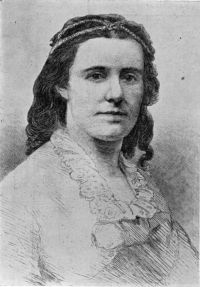
Roswitha

Definition and stakes

Alice Kemp-Welch,  Of Six Mediæval Women — Roswitha (1913)

“ It is by these dramas that Roswitha has distinguished herself in the world of letters; for although the legends contain points of interest, and are treated with skill, they are naturally not so unique as the dramas, nor do they reflect her personality in the same way. She herself tells us that the plays were written in imitation of the manner, but not of the matter, of Terence, and that her only desire in writing them was "to make the small talent given her by Heaven to create, under the hammer of devotion, a faint sound to the praise of God." ”
Source: Wikisource

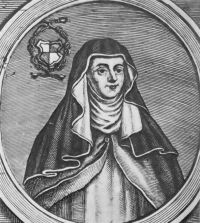
Portrait of Hrotsvitha Hrotsvitha,  The Plays of Roswitha

“ It has another interest in that Roswitha tells us that she obtained her facts from a witness of the saint’s martyrdom.
Although Roswitha claims Terence as her master in the art of play-writing, it cannot be said that she imitates him closely. When Paphnutius was acted in London in 1914 the dramatic critic of The Times was justified from one point of view in asserting that Roswitha’s style is “not in the least Terentian.” For one thing she is quite indifferent to the “unities,” and transports us from place to place with bewildering abruptness.
”
Source: Gutenberg

Portrait of Hrotsvitha Hrotsvitha,  The Plays of Roswitha

“ As if frightened by her own daring (or did the Abbess intervene, as we guess she intervened in Dulcitius!) , Roswitha spoils the play as a play by a lengthy and tedious final scene in which St. John appears to more advantage as a theologian than as a man.
Abraham and Paphnutius show Roswitha at her best as a dramatist. In both plays the scenes are well knit, the characterization deft and sure, and the dialogue admirably expressive. The opening scenes of Abraham reveal that power to suggest character and situation without wordy explanations which is essential in drama.
”
Source: Gutenberg

Get perspective with Kwize: daily news enlightened by great literature