Rufus Dawes

Definition and stakes

Marcus Clarke,  For the Term of His Natural Life…

“ Rufus Dawes, too much astonished to speak, bent his black eyes upon the man who crouched at his feet, and a ray of divine pity penetrated his gloomy soul. He seemed to catch a glimpse of misery more profound than his own, and his stubborn heart felt human sympathy with this erring brother. "Then in this hell there is yet a man," said he; and a hand-grasp passed between these two unhappy beings. North arose, and, with averted face, passed quickly from the cell. Rufus Dawes looked at his hand which his strange visitor had taken, and something glittered there. ”
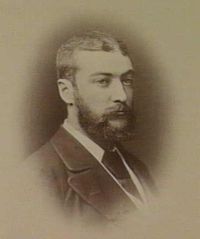
Source: Wikisource

Portrait of Marcus Andrew Hislop Clarke Marcus Andrew Hislop Clarke,  For the Term of His Natural Life

“ And congratulated himself upon the fact that Rufus Dawes merely touched his cap, and went on with his stone-cracking in silence. Certainly double irons and hard labour were fine things to break a man's spirit. So that, when in the afternoon of that same day he heard the astounding news that Rufus Dawes had freed himself from his fetters, climbed the gaol wall in broad daylight, run the gauntlet of Macquarie Street, and was now supposed to be safely hidden in the mountains, he was dumbfounded. ”
Source: Gutenberg

Portrait of Marcus Andrew Hislop Clarke Marcus Andrew Hislop Clarke,  For the Term of His Natural Life

“ He had abandoned his rough manner, and no longer threatened or complained, and though at times a profound melancholy would oppress him, his spirits were more even than those of Frere, who was often moody, sullen, and overbearing. Rufus Dawes was no longer the brutalized wretch who had plunged into the dark waters of the bay to escape a life he loathed, and had alternately cursed and wept in the solitudes of the forests. He was an active member of society—a society of four—and he began to regain an air of independence and authority. ”
Source: Gutenberg

Get perspective with Kwize: daily news enlightened by great literature