Salammbô

Definition and stakes

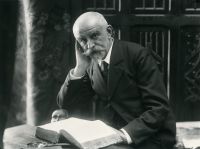
Portrait of Gustave Flaubert Gustave Flaubert,  Salammbo (1862)

“ Only the beardless priests understood Salammbô; their wrinkled hands, which hung over the strings of their lyres, quivered, and from time to time they would draw forth a mournful chord; for, feebler than old women, they trembled at once with mystic emotion, and with the fear inspired by men. The Barbarians heeded them not, but listened continually to the maiden’s song. ”
Source: Gutenberg

Portrait of Gustave Flaubert Gustave Flaubert,  Salammbo

“ The leathern tent, which was raised at the corners, left visible the entire circuit of the mountain with its thronging soldiers, and as it was in the centre Salammbô could be seen on all sides. An immense shouting burst forth, a long cry of triumph and hope. Those who were marching stopped; the dying leaned on their elbows and turned round to bless her. All the Barbarians knew now that she had recovered the zaïmph; they saw her or believed that they saw her from a distance; and other cries, but those of rage and vengeance, resounded in spite of the plaudits of the Carthaginians. ”
Source: Gutenberg

Portrait of Gustave Flaubert Gustave Flaubert,  Salammbo (1862)

“ Salammbô could at first distinguish only the two eyes and a long white beard which hung down to the ground; for the rest of the body, which was cumbered with the rags of a tawny garment, trailed along the earth; and with every forward movement the hands passed into the beard and then fell again. Crawling in this way it reached her feet, and Salammbô recognised the aged Gisco.
In fact, the Mercenaries had broken the legs of the captive Ancients with a brass bar to prevent them from taking to flight; and they were all rotting pell-mell in a pit in the midst of filth.
”
Source: Gutenberg

Get perspective with Kwize: daily news enlightened by great literature