“ The prostrate column lay like a wing-dam, half across the stream, and over it the Salmon piled itself. Disintegration followed; bergs heaved themselves into sight and went rolling and lunging after the billow which was rushing down-stream with the speed of a locomotive. They ground and clashed together in furious confusion as the river spun them; the greater ones up-ended themselves, casting off muddy cascades. From the depths of the flood came a grinding and crunching as ice met rock. ”
Salmon River
Definition and stakes
Quotes about “Salmon River”
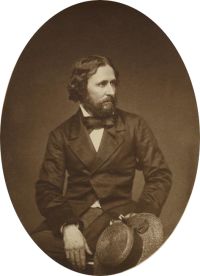
John Charles Frémont,
The Exploring Expedition to the Rocky Mountains…
“ All the day the course of the river has been between walls of the black volcanic rock, a dark line of the escarpment on the opposite side pointing out its course, and sweeping along in foam at places where the mountains which border the valley present always on the left two ranges, the lower one a spur of the higher; and, on the opposite side, the Salmon River mountains are visible at a great distance. Having made 24 miles, we encamped about five o'clock on Rock creek--a stream having considerable water, a swift current, and wooded with willow. ”
Lewis Ankeny McArthur, Oregon Geographic Names (1952)
“ The Salmon River Highway traverses the stream for many miles. George Davidson, in : 237 Coast Pilot, 1889, says the Indian name for this Salmon River was Nechesne. Another well-known Salmon River rises on the south slope of Mount Hood and flows into Sandy River. It is in Clackamas County. There are streams named for the salmon in other counties. A good deal has been written about the various varieties of salmon frequenting Pacific Coast waters. The opinions of some of the experts are highly controversial, and the compiler does not feel that he has the energy to join the battle. ”
Alfred Wellesley Rees, Creatures of the Night: A Book of Wild Life in Western Britain
“ Up-river, at a bend below a hillside farmstead some distance from our village, is a broad, deep salmon-pool, fringed with alders and willows. Right across the upper end of this pool stretches a broken ledge of rock, over which, in flood, the waters boom and crash into a seething basin whence thin lines of vapour—blue and grey when the day is dull, or gleaming with the colours of the rainbow when the sun, unclouded, shines aslant the fall—ceaselessly arise, and quiver on the waves of air that catch their movement from the restless swirls beneath. ”
The New International Encyclopædia…
“ As they go farther and farther up-stream they swim rather more rapidly. Those that enter the river first are the ones which will go farthest toward the headwaters, many of them going to spawning beds in the Salmon River in the Sawtooth Mountains of Idaho, more than 1000 miles from the sea. In the Yukon the quinnat ascends to Caribou Crossing, 2250 miles from the sea. ”
Nathaniel Parker Willis,
Canadian Scenery, Volume 2 (of 2…
“ Francis, to its tributary the Salmon, and to Lake Megantie. These lower declivities are richly wooded, and well fitted for a mixed system of corn and pasture farming. The Salmon river, which traverses in a northerly direction nearly the whole district, has beautiful and fertile banks, one part of which, about ten miles long, from its luxuriant verdure is called “The Meadows.” This river, as well as numerous little streams which flow into it, is rapid and broken by falls, unfit for navigation, but convenient for mills. Here the Company have determined to begin their settlement ”
William Senior,
Lines in Pleasant Places: Being the Aftermath of an Old Angler
“ Never no more, Salmo Salar, unless something smashes—not an inch, be you of gold instead of silver. How the good man gaffs the fish in the rough edge stream I know not; only he does it masterly, and with back and knees trembling, and breath puffing hard and short, I drop upon the moss in an ecstasy of silence. Yet it is only a salmon of 15 lb.; but that quarter of an hour of "hold on" is the most intense thing, so far, of my experience with salmon, not forgetting that surprise, many a year back, when I killed my first salmon with a No. 1 trout fly by the dorsal in the Galway river. ”
William A. Ross, A Yacht Voyage to Norway, Denmark…
“ Although the salmon float within sight and reach in the most transparent stream, they will not touch the fly, be it thrown even on their noses. The only reason that can be given for this notorious fact is, that the salmon, when they leave the sea, are generally gorged, and do not desire, or seek for food until they have travelled some distance up the rivers; for it is equally well ascertained that the farther the first foss is removed from the mouth of a salmon river, the more voracious are the fish. ”
Thomas Garnett, Essays in Natural History and Agriculture
“ Let the upper proprietors of Salmon rivers bestir themselves so to amend the law as to give them a chance of having a supply of Salmon when they are in season. They cannot and will not have a more efficient ally than Salmo Salar. Salmo Salar is in my opinion quite right when he says that the fish kept in ponds will not be quite so well able to take care of themselves as fish which have been bred and lived all their lives in the river. ”
John Charles Frémont,
The Exploring Expedition to the Rocky Mountains…
“ In the north, about 50 miles distant, were some high snowy peaks of the Salmon River mountains; and in the northeast, the last peak of the range was visible at the distance of perhaps 100 miles or more. The river hills consist of very broken masses of sand, covered everywhere with the same interminable fields of sage, and occasionally the road is very heavy. We now frequently saw Indians, who were strung along the river at every little rapid where fish are to be caught, and the cry haggai, haggai, (fish,) was constantly heard whenever we passed near their huts, or met them in the road. ”
Various, The Rivers of Great Britain, Descriptive…
“ Occasionally a salmon, taking advantage of a flood, will ascend as high as Stockbridge, but this does not happen every year. At Romsey, however, gentlemen anglers find their reward, though anything more unlike a salmon river could not be found, unless, indeed, it should be the Stour and the Avon, to which we shall come presently. The Test in its upper and middle reaches is seldom so deep that the bottom, and the trout and grayling for which it is justly celebrated, cannot be clearly seen. ”
Charles Francis Hall, Life with the Esquimaux (1864)
“ Two miles up from where it enters the sea, on the east side, is the neck of a plain, which grows wider and wider as it extends back. It looks from the point where I am as if it were of scores and scores of acres. Thence, on the east side, as far as I can see, there is a ridge of mountains. On the west side of the river, a plain of a quarter to half a mile wide. This is a great salmon river, and so known in this country among the Innuits. At our encampment I picked up the vertebræ of a salmon, the same measuring twenty-one inches, and a piece of the tail gone at that. ”
Clive Phillipps-Wolley,
Gold, Gold, in Cariboo! A Story of Adventure in British Columbia
“ The rolling years are kind to most things, beautifying them with the soft tints of age or veiling them with gracious foliage, but the banks of the Frazer still look raw and crude; the gentler things of earth will have nothing to do with the accursed river, in which millions of struggling salmon rot and die, while beside its waters little will grow except the bitter sage bush and the prickly pear.When Corbett and Chance reached Chimney Creek the fall run of salmon was at its height, and added, if possible, to the weird ugliness of the river. ”
Samuel de Champlain,
Voyages of Samuel De Champlain…
“ They marched along the sandy shore about four leagues, and then struck inland. If we turn to the map of 1632, on which a line is drawn to rudely represent their course, we shall see that on striking inland they proceeded along the banks of a small river to which several small lakes or ponds are tributary. Little Salmon River being fed by numerous small ponds or lakes may well be the stream figured by Champlain. The text says they discovered an excellent country along the lake before they struck inland, with fine forest-trees, especially the chestnut, with abundance of vines. ”
Gilbert Parker,
Mrs. Falchion, Complete
“ One could pick out the Indian section of the village, because not far from it was the Indian graveyard, with its scaffolding of poles and brush and its offerings for the dead. There were almost interminable rows of scaffolding on the river’s edge and upon the high bank where hung the salmon drying in the sun. The river, as it ambled along, here over shallows, there over rapids and tiny waterfalls, was the pathway for millions and millions of salmon upon a pilgrimage to the West and North—to the happy hunting grounds of spawn. ”
John Hyde, Wonderland; or, Alaska and the Inside Passage
“ About fifteen to twenty miles after entering Johnstone Strait, a conspicuous valley is seen on Vancouver Island, the only break in the high mountain range on that side. It is the valley of a stream called Salmon river, named from that delicious fish, which here abound, and in the pursuit of which the Indians have shown this stream to be navigable for canoes for a number of miles inland. A conspicuous conical hill, probably a thousand feet high, rises in the valley and marks it to the traveler. ”
Joseph Ladue,
Klondyke Nuggets: A Brief Description of the Great Gold Regions in the Northwest
“ Of course I often found less than this, but not in what I considered the main channel."Thirty-six and a quarter miles below the Big Salmon, the Little Salmon—the Daly of Schwatka—enters the Lewes. This river is about 60 yards wide at the mouth, and not more than two or three feet in depth. The water is clear and of a brownish hue; there is not much current at the mouth, nor as far as can be seen up the stream. The valley which, from the mouth, does not appear extensive, bears north-east for some distance, when it appears to turn more to the east. ”
Various, The Rivers of Great Britain, Descriptive…
“ So that in time trout may venture back to Kelvin, and the “stately salmon” itself be seen basking in the sandbanks opposite the Broomielaw, or stemming the “amber-coloured Clyde,” once more pure and sweet as well as “beneficent and strong.”Often the channel itself is choked with mist and overhung with smoke; and vessels and houses loom vaguely through the haze, or stand out in startling relief against their dim background when the sun manages to send his shafts through the mist and to light up river and shipping. ”
Thomas Garnett, Essays in Natural History and Agriculture
“ But still, if 500,000 are bred, in addition to all that are reared naturally, it will represent a larger proportion of the whole than Salmo Salar seems to suppose; otherwise, how is it that in rivers where Salmon are protected, or still more in unsettled countries, the Salmon are so numerous? The Salmon in the Columbia river, on the north-west coast of America, are cast dead upon the shores by myriads after the spawning season, and these are merely the fish dying from exhaustion, as a small portion always do here. ”
Edward Sylvester Ellis, Deerfoot on the Prairies
“ There is no end to the salmon in the Columbia River. At numerous islands mat houses were seen where the people were as busy as beavers in splitting and drying the fish. Looking down in the clear water they could be seen twenty feet below the surface, sometimes moving slowly and then darting hither and thither so swiftly that they looked like flitting patches of shadow. They floated down stream at this season in such enormous quantities that winrows drifted ashore and the Indians had only to gather, split and dry them on the scaffolds. ”
Ruth Kedzie Wood, The Tourist's Maritime Provinces (1915)
“ When they come from the deep to spawn in the streams, they invariably return to the same river in which they themselves have been spawned. Fish from, the same water average the same size. A river known for the lustiness of its salmon may rise from the same source as another stream in which only small fish are found. The salmon of the Atlantic coast, contrary to the habit of its Pacific cousin, takes the fly in fresh water. Why they rise to bait at all is an enigma since it has been proven that while in river pools for months at a time they maintain a rigid fast. ”
Daniel P. Thompson, Gaut Gurley; Or, the Trappers of Umbagog…
“ Thus, with the quick tacks and turns and sudden leaps of the ascending salmon, and almost with the celerity, he made his way up the long succession of rapids, until the last of the series was overcome, and he found himself safely emerging into the smooth waters of the beautiful lakelet or pond which divides, in the upper portion of its course, this remarkable stream. Another row of a mile or so now brought the voyagers where the water again took the form of a swift river, tumbling and foaming over the rocks, in the last series of rapids to be overcome. ”
Various, The Atlantic Monthly, Volume 14…
“ At short intervals along the narrow strip of shore under the more gradual steeps, on the lower ledges of the basaltic precipices, and on little rock-islands in the river, appeared rude-looking stacks and scaffoldings where the Indians had packed their salmon. They left it in the open air without guard, as fearless of robbers as if the fish did not constitute their almost entire subsistence for the winter. And within their own tribes they have justification for this fearlessness. ”
M. F. Mansfield, Romantic Ireland; volume 2/2
“ One looks over the bridge into the water, and sees what is apparently the dark bed of the river; but drop in a pebble, and instantly there is a splash and a flash of silver, and a general movement along the whole bed of the stream. Then one comes to know that what apparently were closely packed stones are salmon, squeezed together like herrings in a barrel, unable to get up-stream for want of water. ”
James W. Buel, Glimpses of America
“ The fish continue their run up-stream as far as the water will allow, and so determined are they that they perform many amazing feats to gain the headwaters, crossing shoals, darting through the swiftest cascades, and even leaping up and over falls of considerable height. The Indians, familiar with the instincts of the salmon, in the season take great numbers by means of spears, which they cast with astonishing accuracy. A chief fishing place is Salmon Falls, where the river is a mile wide and plunges over a wall fully twenty feet high, extending from shore to shore. ”
A. G. Bradley, The Rivers and Streams of England
“ As a dry-fly trouting river it stands perhaps at the actual head of the list, and like the Avon is also a salmon river in its lower reaches, which fall into Southampton Water just to the west of the mouth of the Itchen. Travellers on the main line of the South-Western from London to Exeter must be familiar with its infant efforts if they have any sort of eye for a country. ”
Various, Scientific American Supplement…
“ This year the run of silver salmon in Frazer's River was very light, while on Puget Sound the run was said by the Indians to be greater than ever known before. Both these cases may be due to the same cause, the dry summer, low water, and consequent failure of the salmon to find the rivers. The run in the Sound is much more irregular than in the large rivers. One year they will abound in one bay and its tributary stream and hardly be seen in another, while the next year the condition will be reversed. ”
Frances Fuller Victor,
Atlantis Arisen
(1891)
“ The Indians use small herring for bait, sinking it with a stone, and trolling, by paddling silently and occasionally jerking the line. Near the mouth of the Columbia they can be taken with the fly; but, as salmon do not feed, on their annual journey up the river to spawn, it is useless to offer them bait. They can only be caught at a distance from the ocean by nets and seines, or by spearing. The natives usually take them by using scoop-nets, which they dip into the water, at random, near the falls and rapids, where large numbers of salmon collect to jump the falls. ”
Various, New England Salmon Hatcheries and Salmon Fisheries in the Late 19th Century
“ From the collecting headquarters to Orland village, a distance of about 5 miles, the route is in brackish water, and the tow is favored by the flood tide. At Orland is a dam which is surmounted by means of a lock, and thence, two miles further to Dead Brook, the route is through the tide less fresh water of Narramissic River. The sudden change from salt to fresh water does not appear to trouble the fish except when the weather is very hot and the fresh water is much the warmest. The cars are towed directly into the inclosure, where the fish are at once liberated. ”