“ I could make the matter easy for you.” “In Sardinia!” cried Brandolaccio. “Istos Sardos! Devil take them and their lingo! We couldn’t live in such bad company.” “Sardinia’s a country without resources,” added the theologian. “For my part, I despise the Sardinians. They keep mounted men to hunt their bandits. That’s a stigma on both the bandits and the country. [*] Out upon Sardinia, say I! The thing that astounds me, Signor della Rebbia, is that you, who are a man of taste and understanding, should not have taken to our life in the maquis, after having once tried it, as you did.” ”
Sardinians
Definition and stakes
The theme of “Sardinians” has been addressed by authors such as Élisée Reclus, William James, D. H. Lawrence, Prosper Mérimée and P. V. N. Myers. It is often associated with terms like Sardinia, Italy, Piedmont, language and kingdom.
Quotes about “Sardinians”
P. V. N. Myers, General History for Colleges and High Schools
“ Sardinia was led to join England and France through the policy of the far-sighted Cavour, who would thus have the Sardinians win the gratitude of these powers, so that in the next conflict with Austria the Italian patriots might have some strong friends to help them. ”
Louis Paul Bénézet, The World War and What was Behind It…
“ Accordingly, the Sardinians received only Lombardy in return for Savoy and Nice, which they gave to France, and the Austrians kept the county of Venetia. A fire once kindled, however, is hard to put out. No sooner did the people of the other states of northern Italy see the success of Sardinia, than, one after another, they revolted against their Austrian princes and voted to join the new kingdom of Italy. ”
Emperor of the French Napoleon III, History of Julius Cæsar, Vol. 1 of 2
“ Sardinia. XXI. The flourishing condition of Sardinia arose especially from the colonies which Carthage had planted in it. The population of this island rendered itself formidable to the Romans by its spirit of independence. [468] From 541 [469] to 580, 130,000 men were slain, taken, or sold. [470] The number of these last was so considerable, that the expression Sardinians to sell (Sardi venales) became proverbial. [471] Sardinia, which now counts not more than 544,000 inhabitants, then possessed at least{152} a million. ”
Various, The Atlantic Monthly, Volume 07…
“ Had the war been continued, had Venetia been conquered, and had the last of the Austrians been driven beyond the Isonzo, Italy would have been the prize of French valor and genius; for all this must have been done on the instant, and before the Italians, less the Sardinians, could have taken an effective part in the war. The most devoted believer in the patriotism and bravery of the Italians must perforce admit that they had little to do with the war of 1859. Leaving the Sardinians aside, the Italian element in that contest was scarcely appreciable. ”
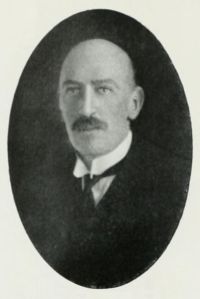 Maurice Baring,
Dead letters
(1910)
Maurice Baring,
Dead letters
(1910)
“ It is true that the Sardinians are a thievish race, and they seldom, if ever, speak the truth; moreover, they trade on the honesty and22 the good nature of our people, and our unfamiliarity with their various and uncouth jargons. For instance, a favourite plan of theirs is this: many of them gain their living by the catching of lobsters, which they send by Ostia to Rome to supply the banquets of the rich patricians of that city. ”
 D. H. Lawrence,
Sea and Sardinia
D. H. Lawrence,
Sea and Sardinia
“ There is a tick-tocking in the little cabin against which I lean. The wireless operator is busy communicating with Trapani, no doubt. He is a fat young man with fairish curly hair and an important bearing. Give a man control of some machine, and at once his air of importance and more-than-human dignity develops. One of the unaccountable members of the crew lounges in the little doorway, like a chicken on one foot, having nothing to do. The girl from Cagliari comes up with two young men—also Sardinians by their thick-set, independent look, and the touch of pride in their dark eyes. ”
Edward Farr, The History of England in Three Volumes…
“ Before war was declared against Great Britain, the French resolved to make use of their sovereignty over the Mediterranean sea. Admiral Truguet was sent with nineteen ships of the line and some frigates to make the conquest of Sardinia, chiefly, it would appear, for the purpose of obtaining corn from that exuberantly fertile island. It was imagined by the French that the Sardinians, who were an unruly and turbulent people, were ripe for revolt, and that, therefore, with their aid, they would throw off the yoke of monarchy. ”
 Élisée Reclus,
The Earth and its inhabitants, Volume 1…
Élisée Reclus,
The Earth and its inhabitants, Volume 1…
“ Maltzan looks upon the inhabitants of the fertile district of Millis as the purest representatives of African immigrants, and it was they who introduced the cultivation of the orange into Sardinia.The Sardinians of the interior not only retain their ancient language, but likewise many of their ancient customs. Their dances are still the same as in the time of Greece. In the north the steps are regulated by the human voice, the chanters occupying the centre of the ring. In the south a musical instrument, the launedda, is used, which is nothing but an ancient flute, made of two or three reeds. ”
D. H. Lawrence,
Sea and Sardinia
“ He asked us where we came from, and where we were going: always in his soft mutter. And what nation were we, were we French? Then he went on to say there was a war—but he thought it was finished. There was a war because the Austrians wanted to come into Italy [Pg 182] again. But the French and the English came to help Italy. A lot of Sardinians had gone to it. But let us hope it is all finished. He thought it was—young men of Sorgono had been killed. He hoped it was finished.Then he reached for the candle and peered at the kid. It was evident he was the born roaster. ”
Élisée Reclus,
The Earth and its inhabitants, Volume 1…
“ The Sardinians, even when they are the owners of pasture-grounds or of fields, never live in the country. Like the Sicilians, they are concentrated in towns or large villages, and neither hamlets nor isolated farmhouses are met with. Even {349} the shepherds in the mountains build their huts in groups called stazzi, and combine for mutual protection into cussorgie. Members of these associations, when they lose their cattle from disease or any other cause, may claim one or more beasts from every one of their comrades living within the same district or canton. ”
 Grazia Deledda,
Ashes (Cenere): A Sardinian Story
Grazia Deledda,
Ashes (Cenere): A Sardinian Story
“ I'm not like most fellows, Sardinians especially, who expect to succeed at once and have no staying power, and do nothing but envy those who do succeed. Battista Daga for instance! He's all envy and hatred. ”
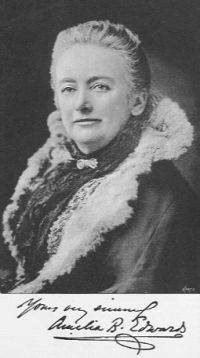 Amelia B. Edwards,
A thousand miles up the Nile
(1888)
Amelia B. Edwards,
A thousand miles up the Nile
(1888)
“ The Khetas wear a mustache and scalp-lock; the Egyptians pride themselves on “a clean shave,” and cover their bare heads with ponderous wigs. The Sardinian contingent cultivate their own thick hair, whiskers and mustachios; and their features are distinctly European. They also wear the curious helmet surmounted by a ball and two spikes, by which they may always be recognized in the sculptures. These Sardinians appear only in the border-frieze, next the floor. The sand had drifted up just at that spot and only the top of one fantastic helmet was visible above the surface. ”
A. H. J. Greenidge, A History of Rome During the Later Republic and Early Principate
“ The cheapened labour which was now spread over Italy presented as many varieties of moral as of physical type, and these came to be well known to the prospective owner, not because he aimed at being a moral influence, but because he objected to being worried by the vagaries of an eccentric type. Sardinians were always for sale, not because they were specially abundant, but because they showed an indocility that rendered them a sorry possession. ”
William James, Great Men, Great Thoughts, and the Environment (1880)
“ Simply because no individuals were born there with patriotism and ability enough to inflame their countrymen with national pride, ambition, and thirst for independent life. Corsicans and Sardinians are probably as good stuff as any of their neighbors. ”
Charles Francis Atkinson and David McDowall Hannay, 1911 Encyclopædia Britannica, Volume 11… (1911)
“ The second indicated the means of coercing Sardinia—first the Austrians were to be driven or scared away towards Alessandria, then the French army would turn sharp to the left, Loano.driving the Sardinians eastward and north-eastward through Ceva, and this was to be the signal for the general invasion of Piedmont from all sides. ”
Alexander Andrew Knox, Once a Week (1860)
“ He is surrounded by those who are strongly interested in their own opinion in advocating the policy of escape. Garibaldi is, no doubt, in earnest, when he says that if the Sardinians will not attack the French in Rome, or procure the evacuation by peaceful means, he is prepared to try conclusions even with France. Had it been otherwise we should not have heard of the entry of the Sardinian troops into Umbria and the Marches, and of the defeat inflicted by them upon the Papal levies. Cavour and Garibaldi are the real chess-players just now, and for the moment Cavour has won the move. ”
Captain David Sutherland, A Tour Up the Straits, from Gibraltar to Constantinople
“ The Sardinians are not at all bigoted, and, next to the Spaniards, the English are their favorites. In 1708, the Viceroy was disposed to support the Duke of Anjou, but on the approach of the British fleet, the inhabitants obliged him to acknowledge Charles.The town stands on the side of an hill, rising from the sea, with a rampart round it. The situation is strong by nature; but the works are much out of repair. The worst of this port is, that, on account of the shoalness of the water, men of war are obliged to lay a long distance from the shore ”
J. N. Larned, History for ready reference, Volume 2…
“ He attacked the Sardinians in April, and a single month sufficed to break the courage of their king and force him to a treaty of peace. On the 10th of May he defeated the Austrians at Lodi; on the 15th he was in Milan. Lombardy was abandoned to him; all central Italy was at his mercy, and he began to act the sovereign conqueror in the peninsula, with a contempt for the government at Paris which he hardly concealed. Two ephemeral republics were created under his direction, the Cisalpine, in Lombardy, and the Cispadane, embracing Modena, Ferrara and Bologna. ”
William James, The Will to Believe and Other Essays in Popular Philosophy… (1897)
“ That Sardinia, with all her emotional and picturesque barbarism, has never produced a single artist is almost as strange as her barbarism itself.... Near the focus of European civilization, in the very spot which an à priori geographer would point out as the most favorable place for material and intellectual, commercial, and political development, these strange sister islands have slept their secular sleep, like nodes on the sounding-board of history. ”
Baron Edward Bulwer Lytton Lytton, Rienzi, the Last of the Roman Tribunes
“ Many years since, the writer of these pages ventured to predict that the time must come when Sardinia would lead the van of Italian civilisation, and take proud place amongst the greater nations of Europe. In the great portion of this population there is visible the new blood of a young race; it is not, as with other Italian States, a worn-out stock; you do not see there a people fallen, proud of the past, and lazy amidst ruins, but a people rising, practical, industrious, active ”
D. H. Lawrence,
Sea and Sardinia
“ They are amusing, these peasant girls and women: so brisk and defiant. They have straight backs, like little walls, and decided, well-drawn brows. And they are amusingly on the alert. There is no eastern creeping. Like sharp, brisk birds they dart along the streets, and you feel they would fetch you a bang over the head as leave as look at you. Tenderness, thank heaven, does not seem to be a Sardinian quality. ”
Clara Vaughan, Volume 2 (of 3)
“ Till you have thoroughly traversed the country, if you stick to it so long; and then if you quit yourself well, we should commission you for Sardinia. What an opening for an idle man, though it would soon kill me--so little to do. ”
D. H. Lawrence,
Sea and Sardinia
“ So that for us to go to Italy and to penetrate into Italy is like a most fascinating act of self-discovery—back, back down the old ways of time. Strange and wonderful chords awake in us, and vibrate again after many hundreds of years of complete forgetfulness.And then—and then—there is a final feeling of sterility. It is all worked out. It is all known: connu, connu!This Sunday morning, seeing the frost among the tangled, still savage bushes of Sardinia, my soul thrilled again. This was not all known. This was not all worked out. Life was not only a process of rediscovering backwards. ”
Felix Dahn, The Scarlet Banner
“ Do you feel the breath of the morning wind, the strong south-southeast? It is the fair one for Sardinia.""The god of wishes himself, who breathes in and rules the wind, is sending it to you, descendants of Genseric. Follow it; it is the breath of victory that fills your sails. To battle! To battle! On to the sea! On to the sea! On to Sardinia!" a thousand voices shouted tumultuously. Full of passionate excitement, overflowing with warlike enthusiasm, the Vandals poured out of the Grove of Venus toward Carthage and the harbor. ”
Thomas Forester, Rambles in the Islands of Corsica and Sardinia
“ There is one highly gifted man, who has long filled a distinguished place in the service of his sovereign and the eyes of the world, in whose hands the task of regenerating Sardinia, herculean as it may appear, would be not only a labour of love, but facile comparatively with any others on which it may devolve. ”
Thomas Benfield Harbottle, Dictionary of Historical Allusions
“ This kingdom came into existence in 1720, when Sardinia was ceded by Austria to the House of Savoy, in exchange for Sicily, the name being applied to the new combination of Savoy, Sardinia and Piedmont. It lasted until Victor Emmanuel became King of United Italy in 1861.Sardinian Convention.A convention, signed in 1855, by which the King of Sardinia undertook to furnish 15,000 men in aid of France and England in the Crimea, the troops to be transported by England. In return the allies guaranteed the integrity of the King’s dominions. ”
Grazia Deledda,
Ashes (Cenere): A Sardinian Story
“ Everywhere in the country round, the wild Sardinian spring [2] was on its death-bed; the flowers of the asphodel, the golden balls of the broom were dropping; the roses showed pale in the thickets, the grass was already yellow; a hot odour of hay perfumed the heavy air. The Milky Way and the distant splendour of the horizon, which seemed a band of far off sea, made the night clear as twilight. The dark blue heaven and its stars were reflected in the scanty waters of the river. On its bank, Olì found two of her little brothers looking for crickets. ”
Thomas Forester, Rambles in the Islands of Corsica and Sardinia
“ Such we may justly presume, divested of poetical fiction, was the condition of the aborigines of the neighbouring island of Sardinia, the largest in the Mediterranean except Sicily, when the first foreign colonists landed on its coast. And such, after the lapse of more than thirty centuries, are the Sarde shepherds of the present day, generally lawless, sometimes robbers, making the caves of the rocks their shelter, and their flocks and herds providing them with food and clothing. ”
Thomas Forester, Rambles in the Islands of Corsica and Sardinia
“ In Belgium, notwithstanding religious antagonisms, which have also perplexed the young councils of Sardinia, the constitutional system has been so consolidated, under the rule of a sagacious prince, that it may be hoped its permanence is secured. We need not speak of the rising fortunes of the Sardinian States, the only hope of fair Italy. The eyes of Europe are upon them; they are closely watched by friends and foes. ”
Thomas Forester, Rambles in the Islands of Corsica and Sardinia
“ Of the prevalence in Sardinia of the Egypto-Phenician mythology, in times the most remote, no one who has examined the large collection of relics in the Royal Museum at Cagliari, or who consults the plates attached to La Marmora's work, can entertain any doubt. But it is surprising to find, among the usages of the Sardes at the present day, a very exact representation of the rites of a primitive religion, introduced into the island nearly thirty-five centuries ago, though it now partakes rather of the character of a popular festival than of a religious ceremony. ”
D. H. Lawrence,
Sea and Sardinia
“ It is like Cornwall, like the Land's End region. Here and there, in the distance, are peasants working on the lonely landscape. Sometimes it is one man alone in the distance, showing so vividly in his black-and-white costume, small and far-off like a solitary magpie, and curiously distinct. All the strange [Pg 130] magic of Sardinia is in this sight. Among the low, moor-like hills, away in a hollow of the wide landscape one solitary figure, small but vivid black-and-white, working alone, as if eternally. There are patches and hollows of grey arable land, good for corn. ”
Related terms
Authors who wrote about “Sardinians”
Élisée ReclusWilliam JamesD. H. Lawrence Prosper MériméeP. V. N. MyersVariousEmperor of the French Napoleon IIIMaurice BaringLouis Paul BénézetEdward FarrGrazia DeleddaAmelia B. EdwardsA. H. J. GreenidgeCharles Francis Atkinson and David McDowall HannayAlexander Andrew KnoxCaptain David SutherlandJ. N. Larned