Sargasso Sea

Definition and stakes

Portrait of Jules Verne Jules Verne,  Twenty Thousand Leagues under the Sea

“ This second arm—it is rather a collar than an arm—surrounds with its circles of warm water that portion of the cold, quiet, immovable ocean called the Sargasso Sea, a perfect lake in the open Atlantic: it takes no less than three years for the great current to pass round it. Such was the region the Nautilus was now visiting, a perfect meadow, a close carpet of seaweed, fucus, and tropical berries, so thick and so compact that the stem of a vessel could hardly tear its way through it. ”
Source: Gutenberg

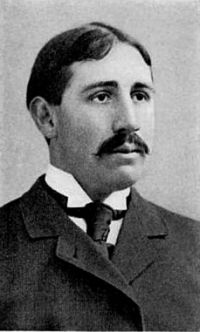
Portrait of Thomas A. Janvier Thomas A. Janvier,  In the Sargasso Sea

“ IX ON THE EDGE OF THE SARGASSO SEA When I came to myself again, and found my state-room—although the dead-light was set—bright with the light which entered through the broken door, my first feeling was of wonder that I was not yet drowned; for it was evident that the sun must be well up in the heavens to shine so strongly, and therefore that a good many hours must have passed since the smash had happened that had sent everybody flying to the boats believing that the ship was going right down. ”
Source: Gutenberg

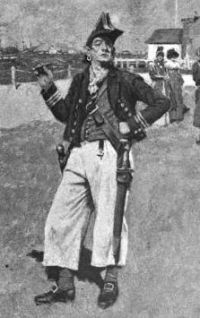
Portrait of Ralph D. Paine Ralph D. Paine,  Lost Ships and Lonely Seas (1921)

“ Three men were left aboard the Polly, the captain and two sailors.
The brig drifted into that fabled area of the Atlantic that is known as the Sargasso Sea, which extends between latitudes 16° and 38° North, between the Azores and the Antilles. Here the ocean currents are confused and seem to move in circles, with a great expanse of stagnant ocean, where the seaweed floats in tangled patches of red and brown and green. It was an old legend that ships once caught in the Sargasso Sea were unable to extricate themselves, and so rotted miserably and were never heard of again.
”
Source: Wikisource

Get perspective with Kwize: daily news enlightened by great literature