“ No doubt the very consciousness of these riches that, head for head, undoubtedly far surpass that of the dwellers in the old continent, caused the South Americans to fling aside the last vestige of pastoral simplicity and to make the roots of this great wealth of theirs bud out into residential palaces and entertainments of a rather fabulous order. ”
South Americans
Definition and stakes
The theme of “South Americans” has been addressed by authors such as Timothy Thomas Fortune, Alexis de Tocqueville, Arnold Henry Savage Landor, William Bligh and Carl Schurz. It is often associated with terms like America, Brazil, Spaniards, Argentina and Americas.
Quotes about “South Americans”
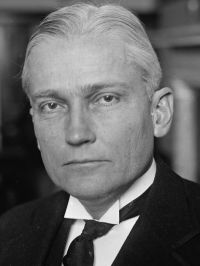 Hiram Bingham,
Across South America
“ Although it is true that the historical and geographical background of the South Americans is radically different from ours, it is also true that they have many social and superficial characteristics very like those which European travellers found in the United States fifty years ago. The period of time is not accidental. The South American Republics secured their independence nearly fifty years later than we did. Moreover, they have been hampered in their advancement by natural difficulties and racial antipathies much more than we have. ”
Hiram Bingham,
Across South America
“ The top of the highest mountain in the thirteen English colonies was not half as high as the lowest point in the ranges of lofty mountains that separated the Spanish colonies; nor one third as high as the Uspallata Pass by which Chile is connected with Argentina.It is not for us to criticise the South Americans for having failed to unite and form a great nation. Our{58} ancestors were favored by nature with a region that is comparatively accessible in all parts. ”
Viscount James Bryce Bryce, South America: Observations and Impressions
“ The number of 'North Americans' in Buenos Aires is very small. While we have been slowly waking up to the fact that South America is something more than 'a land of revolutions and fevers,' our German cousins have entered the field on all sides. The Germans in southern Brazil are a negligible factor in international affairs, but the well-educated young German who is being sent out to capture South America commercially is a power to be reckoned with. ”
Viscount James Bryce Bryce, South America: Observations and Impressions
“ They are all, except Argentines and Uruguayans, largely Indian or (in Brazil) African in blood. Even the Uruguayans and Argentines strike one as differing at least as much from Spaniards as North Americans differ from Englishmen. They give the impression of being still nations in the making, whose type or types, both521 the common type of all Spanish America and the special types of each nation, will grow more sharp and definite as the years roll on and as life becomes for them more rich and more intense. ”
 Alexis de Tocqueville,
Democracy in America
(1835)
“ The Americans of the United States stand in precisely the same position with regard to the peoples of South America as their fathers, the English, occupy with regard to the Italians, the Spaniards, the Portuguese, and all those nations of Europe which receive their articles of daily consumption from England, because they are less advanced in civilization and trade. ”
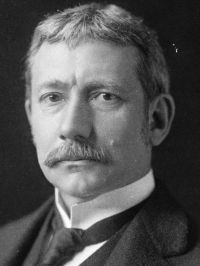 Elihu Root,
Latin America and the United States
“ After many weeks of association with the distinguished men who control the affairs of the South American republics, after much observation of the widely different countries I have visited, it is with the greatest satisfaction that I find, in reviewing the new records of my mind, that the impressions with which I came to South America have been confirmed—the impression that there is a new day dawning, a new day of industry, of enterprise, of prosperity, of wider liberty, of more perfect justice among the people of the southern continent. ”
George A. Miller, Prowling about Panama
“ Who cares to be judged by the social leavings of his own country? The South American best is intelligent, refined, and faithful to trusts. His mental processes are touched with a constructive imagination that finds high expression in his abundant art and literature. ”
A. S. Forrest, A Tour Through South America
“ Truly, here was a people widely differentiated from the ruck of South American natives—those squalid Indians with whom the Spanish adventurers came into contact. Possessed of sufficient enterprise to establish an empire which, from north to south, extended from Quito in Ecuador to the River Maule in Chili, they were a noble and withal peaceful race; and the inexplicable manner in which this fabric of civilisation arose can only be compared in sheer wonder with the sudden manner of its fall. ”
Hartley Burr Alexander, The Mythology of All Races, Vol…
“ Yet, on the whole, South America has its own distinct character, whether of savagery or of civilization, showing little certain evidence of recent influence from other parts of the globe. Au fond the cultural traits—implements, social organization, ideas—are of the types common to mankind at similar levels; but their special developments have a distinctly South American character, so that, whether we compare Inca with Aztec, or [Pg 254] Amazonian with Mississippian, we perceive without hesitancy the continental idiosyncracy of each. ”
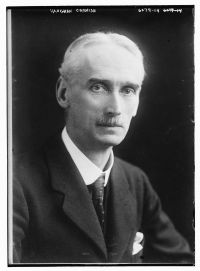 Vaughan Cornish,
The Panama Canal and Its Makers
“ The circumstance that South America is a Roman Catholic continent, where the Latin races are dominant, would enormously favour the experiment. On the Zone, the Spanish labourer works in order to save and to depart, the milieu being foreign to him and unattractive. ”
George Whitfield Ray, Through Five Republics on Horseback…
“ Since its early discovery South America has been pre-eminently a country of bloodshed. Revolution has succeeded revolution and hundreds of thousands of the bravest have been slain, but, phoenix-like, the country rises from its ashes. ”
Lilian Elwyn Elliott, Brazil today and tomorrow (1917)
“ The sweeping charge that South America is a land of revolutions is made so often and so lightly that few people stop to consider the record of the vastly different countries comprising the area below Panama. ”
“ The general conditions of the New World at this period are well worthy of note.No doubt South America has been more widely experimented upon in the colonizing sense than any other Continent. The methods of the Spaniards and Portuguese were by no means similar throughout. Indeed, the principles adopted by the four greatest colonizing nations of the age—the Spanish, the Portuguese, the English, and the Dutch—were all distinguished from each other by various important features. ”
Viscount James Bryce Bryce, South America: Observations and Impressions
“ No countries have more possibilities of change than those of South America. European immigrants are streaming into the southern republics. The white race is commingling with the aboriginal Indians in the west and with the negroes in the east. Scientific discovery is bringing its latest appliances into contact with countries still undeveloped and with peoples long left behind in the march of progress. Till the middle of the eighteenth century the world of trade, politics, and thought was practically a European world. ”
Gardiner G. Hubbard, South America
“ The Latin race conquered Central America and South America, a perfect Eden of natural loveliness, one hundred years prior to the settlement of the Anglo-Saxon; yet to-day they constitute but a thin layer over a scarcely populated country. Their leaders were men of unbounded ambition, rapacious, of great endurance, but cruel and unscrupulous. They sought adventure, expecting it would bring them gold and silver. For that end they plundered, despoiled and enslaved the Indians. ”
Viscount James Bryce Bryce, South America: Observations and Impressions
“ Considered as a field for emigration, South America may be divided into three sections. There are, first, the tropical and forest-covered regions of Colombia, Venezuela, Guiana, and eastern Brazil; secondly, the temperate and grassy or wooded regions of Argentina, Uruguay, and southern Brazil outside the tropics; and lastly, the great central plain of the Amazon and its tributaries which the Brazilians call the Selvas (woods) . I exclude altogether the mountainous parts of Ecuador, Peru, and Bolivia, because they are already as well inhabited as they deserve to be. ”
 Henry George Ward,
Mexico in 1827/Volume 1
(1828)
“ With the exception of Brazil, Dutch and French Guiana, and our present colonies of Demerara and Esequibo, the Spanish possessions occupied the whole of South America, the Isthmus of Panama, and a portion of the Northern continent, which extended to the confines of the United States. ”
Georges Clemenceau, South America To-day
“ The great Anglo-Saxon Republic of North America, tempered by the same Latin idealism imported in the eighteenth century from France by Jefferson, is making of a continent a modern nation whose influence will count more and more in the affairs of the globe. May it not be that South America, whose evolution is the result of lessons taught to some extent by the Northern races, will give us a new development of Latin civilisation corresponding to that which has so powerfully contributed to the making of Europe as we know it? ”
Nevin O. Winter, Argentina and Her People of To-day
“ As the United States has not been a colonizing nation, having undeveloped lands and resources at home for its surplus population, there has not been the intercourse between North and South America that there has been between South America and Europe. ”
Frances Jenkins Olcott, Good stories for great birthdays
“ II And in order that this stupendous wealth of the West Indies and of Tierra Firme, as South America was then called, should belong to no country but herself, Spain sent out Governors to rule with iron hand her Spanish-American Colonies. For the Spanish Crown had Colonies in South America, just as England had in North America. In South America were many important cities and towns. ”
Viscount James Bryce Bryce, South America: Observations and Impressions
“ The importance of the native Indian element in South America—and the same thing holds true of Mexico and Central America—resides partly in the fact that it furnishes the bulk of the labouring people and a large part of the army, partly in the influence which it has exerted, and still exerts, on the whites, commingling its blood with theirs and affecting their habits and life in many ways. ”
George A. Miller, Prowling about Panama
“ Since the world war has battered down the wall with which we sought to separate ourselves from other nations, we have nothing left but to recognize and accept our place in the national neighborhood and do our share to make it decent.The Latin-American has been at a disadvantage in the character of the continent in which he lives. South America is a land for promoters, organizers of industry, hardy pioneers of production, engineers, planters, and rugged explorers of commercial frontiers. ”
Sir Clements R. Markham, Travels in Peru and India
“ No European labouring class was introduced into South America; the Indians still continued to be the cultivators, the shepherds, and the artizans; and the Spaniards were merely the dominant race. This state of things is more allied to the conditions which now exist in British India or Dutch Java, and there is thus no analogy between the South American settlements and any British colony in the proper acceptation of the word. ”
Viscount James Bryce Bryce, South America: Observations and Impressions
“ The most interesting of all the questions which a journey in South America suggests are those which concern the growth of these young nations. What type of manhood will they develop? What place in the world will they ultimately hold? They need fear no attacks from the powers of the Northern Hemisphere, and they have abundant resources within. ”
James J. Walsh, Education: How Old The New
“ It is not surprising, then, that the Indian {340} himself, with all this interest in him, did not disappear, as in North America, but has remained to constitute the basis of South American peoples. If the South American peoples are behind our own in anything, it is because large elements in them have been raised from a state of semi-barbarism into civilization, while our people have all come from nations that were long civilized and we have none at all of the natives left. ”
Robert Grant Watson, Spanish and Portuguese South America during the Colonial Period…
“ The History of South America may contain much of general interest; it possesses, moreover, a special interest for merchants, settlers, sailors, and travellers, who may have passed, or may be likely to pass, a portion of their lives on the continent in question; nor should some knowledge of an important portion of the globe be excluded from the sphere of inquiry of any educated person. ”
Ramón Páez, Travels and adventures in South and Central America…
“ Nothing in the history of modern adventure can compare in hardihood, determination, and reckless disregard of life, with those haphazard undertakings{401} in the heart of South America which, although proving invariably most disastrous to their promoters, resulted ultimately in a real benefit to the colonial possessions of Spain in the New World, by extending the geographical knowledge of those regions. ”
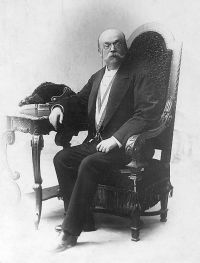 Francisco García Calderón,
Latin America: Its Rise and Progress
“ He implores South America to defend itself against the danger of a Saxon hegemony, to enrich itself by means of European influences, to encourage French and Italian immigration, and to purify its races by an influx of new blood. ”
D.D. James Thomson, Letters on the Moral and Religious State of South America (1827)
“ Rocafuerte, Chargé d’Affaires in England from the Government of Mexico, delivered in a Speech at the Twenty-first Annual Meeting of the British and Foreign School Society, May 15th, 1826.The independence of South America is the consequence of that growing spirit of modern civilization which, having crossed the Atlantic Ocean on the wings of trade, has penetrated into those remote countries, and liberated them from the Spanish yoke. ”
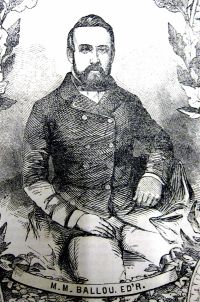 Maturin M. Ballou,
Equatorial America
“ We know as little of portions of the continent as we do of Central Africa, yet there is no section of the globe which suggests a greater degree of physical interest, or which would respond more readily and profitably to intelligent effort at development. When the Spaniards first came to South America, it was only in Peru, the land of the Incas, that they found natives who had made any substantial progress in civilization. ”
George Whitfield Ray, Through Five Republics on Horseback…
“ W. B. Grubb, a missionary in Paraguay, says: "The greatest unexplored region at present known on earth is there. It contains, as far as we know, 300 distinct Indian nations, speaking 300 distinct languages, and numbering some millions, all in the darkest heathenism." H. W. Brown, in "Latin America," says, "There is a pagan population of four to five millions." Then, with respect to the Roman Catholic population, Rev. T. B. Wood, LL.D., in "Protestant Missions in South America," says, "South America is a pagan field, properly speaking. Its image-worship is idolatry. ”
George Whitfield Ray, Through Five Republics on Horseback…
“ Most important of all, the old medieval Romanism of the Dark Ages is losing its grip upon the masses, and slowly, but surely, the leaven is working which will, before another decade, bring South America to the forefront of the nations.The economic possibilities of South America cannot be overestimated. It is a continent of vast and varied possibilities. There are still districts as large as the German Empire entirely unexplored, and tribes of Indians who do not yet know that America has been "discovered." ”
“ It must never be forgotten that these remarks as regards the Spanish colonies, and to almost as great an extent as regards the Portuguese, apply to the general run of the population. The majority of the leaders, both social and political, in all the South American colonies have been in the first instance, and have continued, men of good blood, and generally of ancient lineage, who have floated along with the rest, until they met with the inevitable current which bore them to the topmost of the new social layers. ”
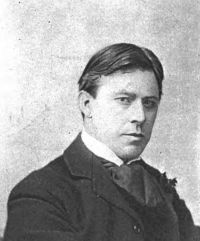 John Foster Fraser,
The Amazing Argentine: A New Land of Enterprise
“ We speak of North America as Teutonic—made prosperous by the stock of northern Europe—and South America as Spanish. Latin America, however, does not all lie south of the Panama Canal. We must begin to reckon it from the territory line which separates the United States from Mexico. Southwards from the banks of the Rio Grande the Latin tongue is spoken, chiefly Spanish, but with much Portuguese in Brazil, and Italian in places right down, through the Torrid Zone, the heavy tropics, reeking with luxuriant vegetation, to the bleak and rocky, inhospitable Tierra del Fuego. ”
Robert Grant Watson, Spanish and Portuguese South America during the Colonial Period…
“ FAILURE OF THE FRENCH AT RIO DE JANEIRO. 1510-1570. In following the progress of discovery in South America it is necessary to turn to another direction. The main centres from which discoveries were made may for general purposes be set down as three, namely:— (1.) From the Isthmus of Panama by the Spaniards; (2.) From the river Plata by the Spaniards; and (3.) From Bahia, on the coast of Brazil, by the Portuguese. We have now to turn to the last-named point. ”
Related terms
Authors who wrote about “South Americans”
 Timothy Thomas FortuneAlexis de Tocqueville
 Arnold Henry Savage Landor
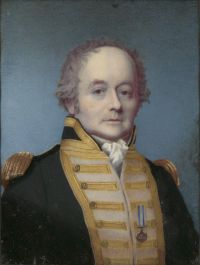 William Bligh
 Carl Schurz
 Theodore RooseveltJames Weldon JohnsonViscount James Bryce BryceGeorge Whitfield Ray
 Charles DarwinW. H. KoebelHiram BinghamVariousA. S. ForrestGardiner G. HubbardRobert Grant WatsonGeorge A. MillerFrancisco García CalderónJohn Foster Fraser
 Daniel Webster
