St Kilda

Definition and stakes

Portrait of Karel Čapek Karel Čapek,  The Absolute at Large (1927)

“ Kilda is a little island, practically nothing more than a rock of pliocene tufa far to the west of the Hebrides. A few stunted birches, a handful of heather and dry grass, flocks of nesting seagulls and semi-arctic butterflies of the order Polyommatus are all that lives on this lost outpost of our hemisphere, out amid the endless beating of the seas and the equally endless procession of clouds for ever laden with rain. For that matter, St. Kilda has always been uninhabited, is now, and will for ever be so. ”
Source: Wikisource

1911 Encyclopædia Britannica, Volume 24… (1911)

“ St Kilda is probably the core of a Tertiary volcano, but, besides volcanic rocks, contains hills of sandstone in which the stratification is distinct. The boldness of its scenery is softened by the richness of its verdure. The inhabitants, an industrious Gaelic-speaking community (110 in 1851 and 77 in 1901) , cultivate about 40 acres of land (potatoes, oats, barley) , keep about 1000 sheep and a few head of cattle. They catch puffins, fulmar petrels, guillemots, razor-birds, Manx shearwaters and solan geese both for their oil and for food. ”
Source: Wikisource

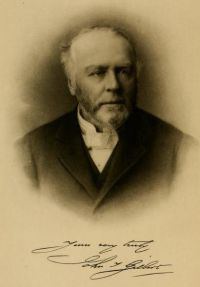
Portrait of Archibald Geikie Archibald Geikie,  Scottish Reminiscences

“ Kilda may be seen in clear weather, the distance being not more than about 50 miles. But it is the open Atlantic which lies between, and the anchorage of St. Kilda is not good, there being only one available bay, from which, however, a vessel had better at once depart if the wind should shift into the south-east. On one of our visits we were fortunate in finding the weather calm and sunny, so that it was possible to pull in an open boat round the base of the cliffs. And such cliffs and crests! ”
Source: Gutenberg

Get perspective with Kwize: daily news enlightened by great literature