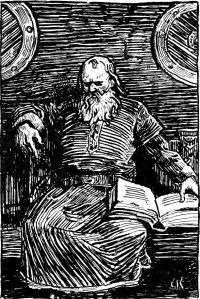
Svein Forkbeard

Definition and stakes

Portrait of Bjørnstjerne Bjørnson Bjørnstjerne Bjørnson,  Poems and Songs

“ Returning to Norway to win back his ancestral inheritance from Haakon Jarl (see Note 14) , he had fortune with him; for as he steered into the Trondhjem Fjord, he received the tidings of the successful uprising of the peasants against Haakon. He founded Nidaros, the present city of Trondhjem, established Christianity in a large part of the country, and soon became dearer to the people than any other Norwegian King. But he had powerful enemies outside of the land: the Danish King, Svein Forkbeard, the Swedish King, Olaf, and Erik, son of Haakon Jarl. ”
Source: Gutenberg

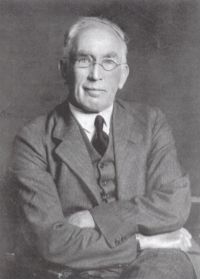
Portrait of A. Mawer A. Mawer,  The Vikings

“ The first Danish settlers in England were entirely heathen in sentiment, but they were soon brought into close contact with Christianity, and the terms of the peace of Edward and Guthrum in the early years of the 10th century show that already Christianity was making its way in the Danelagh. In the course of this century both archbishoprics were held by men of Danish descent and the excesses of the early 11th century were due, not to the Danish settlers, but to the heathen followers of Olaf Tryggvason and Svein Forkbeard. ”
Source: Gutenberg

Alfred Wintle Johnston,  Orkney and Shetland Folk 872-1350

“ Sveinn is further described as of all men the sharpest-sighted, skygnastr, and saw things which others could not see. It was the opinion of Jón vængr, junior, that Sveinn was a truce breaker, grið-níðingr, and was true to no man. When earl Haraldr advised him to give up roving and twitted him with being an unfair man, újafnaðarmaðr, Svein’s answer was tu quoque, and there the discussion ended. The Saga sums him up as “mestr maðr fyrir sér í Vestrlöndum,” the most masterful man in the West, both of old and now, of those men who had no higher tignar-nafn, rank, than he. ”
Source: Gutenberg

Get perspective with Kwize: daily news enlightened by great literature