Thomas Randolph

Definition and stakes

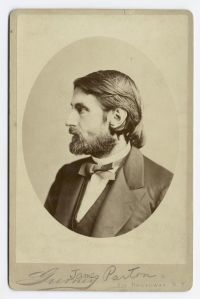
Portrait of G. J. Whyte-Melville G. J. Whyte-Melville,  The Queen's Maries: A Romance of Holyrood

“ It was indeed no petty triumph to have secured the homage of the fastidious and cynical Thomas Randolph: the man who was the type of refinement and the incarnation of selfishness, avowedly a despiser of women and a free-thinker in love. The pleasure, too, was doubtless in no small degree enhanced by the care-worn face of Alexander Ogilvy, who continued to haunt the Court, with a hopeless perseverance truly edifying, and made himself miserable with the self-immolating regularity peculiar to a lover, and totally inexplicable on any grounds of reason or expediency. ”
Source: Gutenberg

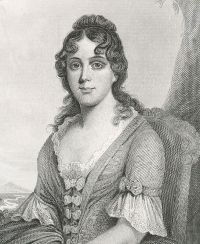
Portrait of Leslie Stephen Leslie Stephen,  Dictionary of National Biography… (1896)

“ Randolph held many prominent positions at the university. From 1776 to 1783 he was professor of poetry, and as his tenure of the post was broken, he left unfinished the Latin lectures which he was delivering on Homer. They were published in 1870 by his son, Thomas Randolph, rector of Much Hadham in Hertfordshire. He was regius professor of Greek from 16 March 1782 to 1783, professor of moral philosophy from 1782 to 1786, and on 30 Aug. 1783 he was promoted to the regius professorship of divinity, with a canonry in Christ Church Cathedral and the rectory of Ewelme. ”
Source: Wikisource

A Cyclopædia of Sacred Poetical Quotations (1888)

“ Unless thy very thoughts are upright too.
Thomas Randolph.
His pure thoughts were borne
Like fumes of sacred incense o’er the clouds,
And wafted thence on angels’ wings, through ways
Of light to the bright Source of all.
Congreve.
Companion none is like
Unto the mind alone,
For many have been harmed by speech,—
Through thinking, few, or none.
Fear oftentimes restraineth words,
But makes not thoughts to cease;
And he speaks best, that hath the skill
When for to hold his peace.
Our wealth leaves us at death,
Our kinsmen at the grave,
But virtues of the mind unto
The heavens with us we have
”
Source: Gutenberg

Get perspective with Kwize: daily news enlightened by great literature