Upper Austria

Definition and stakes

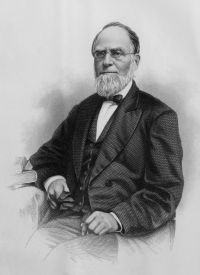
Portrait of John S. C. Abbott John S. C. Abbott,  The Empire of Austria; Its Rise and Present Power

“ The French armies crossed the Rhine and united with the Bavarian troops. The combined battalions marched, sweeping all opposition before them, to Lintz, the capital of upper Austria. This city, containing about thirty thousand inhabitants, is within a hundred miles of Vienna, and is one of the most beautiful in Germany. Here, with much military and civic pomp, the Duke of Bavaria was inaugurated Archduke of the Austrian duchies. A detachment of the army was then dispatched down the river to Polten, within twenty-four miles of Vienna ”
Source: Gutenberg

Various,  The New Gresham Encyclopedia. Atrebates to Bedlis

“ Austria, or German Austria, a republic formed out of the fragments of the old Austro-Hungarian Empire. The republic was proclaimed on 12th Nov., 1918, and the government was taken in hand by the National Constitutional Assembly. The new republic, the frontiers of which were provisionally defined by the treaty of St. Germain (q.v.) , includes Upper Austria, Lower Austria, Salzburg, and parts of Styria, Carinthia, Tyrol, and Vorarlberg, some districts having been assigned to Yugo-Slavia and Italy. German Austria now has an area of 30,716 sq. ”
Source: Gutenberg

David Kay,  Encyclopædia Britannica, Ninth Edition (1878)

“ The population of Austria is made up of a number of distinct races, differing from each other in manners, customs, language, and religion, and united together only by living under the same government. The most numerous race is the German, amounting to 9,000,000, and forming 25 per cent, of the entire population. They are found more or less in all the crown-lands, but are most numerous in Lower and Upper Austria, Salzburg, Styria, Carinthia, and Northern Tyrol. The different Slavonic races number together 16,540,000, or 46 per cent. ”
Source: Wikisource

Get perspective with Kwize: daily news enlightened by great literature