“ But, though it was necessary for Spain to assert her ownership over these endless pampas and the unexplored wastes beyond, the new territory was always subordinated to the gold-producing viceroyalty of Peru across the Andes. A glance at the map will show the almost incredible obstacles wilfully interposed by the home authorities upon the River Plate colonies in forcing the latter not only to be subject in government to the Viceroy of Peru, but to carry on most of their commercial communications with the mother country across the wide continent from the Pacific coast by way of Panama and Peru. ”
Viceroyalty of Peru
Definition and stakes
The theme of “Viceroyalty of Peru” has been addressed by authors such as Marie Robinson Wright, A. J. Duffield, Johann Jakob von Tschudi, Charles Melville Pepper and Pedro de Cieza de León. It is often associated with terms like Lima, empire, Chile, Spaniards and Inca.
Quotes about “Viceroyalty of Peru”
Robert Grant Watson, Spanish and Portuguese South America during the Colonial Period…
“ It was on the collapse of the narrow, repressive policy of Spain, and the erection of Buenos Ayres into a Viceroyalty, that the history of that city and province may be said to commence. Notwithstanding its natural resources and its geographical importance, it was until that date, like Tucuman, merely the seat of a local government, one amongst several, dependent on the Viceroyalty of Peru. In the last quarter of a century, however, of its colonial existence it made colossal strides. The new prospects of commercial wealth absorbed the interests and thoughts of all ”
Sir Richard Henry Bonnycastle, Spanish America, Vol. 2 (of 2)
“ The viceroyalty of Peru is far from being the largest, or the richest of the Spanish American governments, as since the dismemberment of several of its most important provinces it has become of very little comparative importance ”
1911 Encyclopædia Britannica (1911)
“ In 1550 an audiencia real under the viceroyalty of Peru was established at Santa Fé (Bogotà) , but in 1564 this isolated group of Spanish settlements was transformed into a presidency. In 1718, owing to the unmanageable size of the viceroyalty of Peru, it was divided and a new viceroyalty was created from the various provinces lying in the north-western angle of the continent, extending from Tumbez northward to the northern limits of Panama, and eastward to the Orinoco, to which the name of Nueva Granada was given. ”
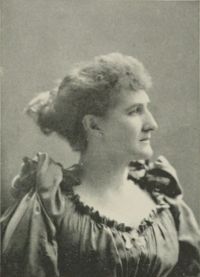 Marie Robinson Wright,
The old and the new Peru
(1908)
Marie Robinson Wright,
The old and the new Peru
(1908)
“ The progress of the nation within the past half a century shows that the race is strong, full of purpose, and capable of working out a noble destiny. During the first twenty years of the republic, the social life of Lima did not change greatly from what it had been in the pleasure-loving court of the viceroyalty. Visitors to Peru in those early times tell us that the propensity for card playing was one of the greatest evils the new government had to combat, and that ministers, envoys, and officers of all ranks fell under its spell. ”
Marie Robinson Wright,
The old and the new Peru
(1908)
“ The constant drain put on the resources of Peru by the Spanish kings during the entire period of the viceroyalty could have been supported only by a country of inexhaustible wealth and a people of long-suffering loyalty. ”
“ Peru constituted in the first place the sole Viceroyalty, and subsequently the senior Viceroyalty, of Spanish South America. Lima, its capital and the seat of government, took care to dis [Pg 111] tinguish itself from any other colonial city of the Continent. Certainly no other town possessed such buildings and architectural decorations as those of which Lima could boast. The home of the Viceroy, it was a city of pomp, processions, and stately movements. ”
Great Men and Famous Women. Vol…
“ And again he grandly announced his future policy in nearly these words: "From the time that a government is established by the people of Peru, the army of the Andes will obey its orders."The army of liberation was as successful in Peru as in Chile. The empire of the viceroys crumbled and fell. Amid the roar of cannon, the shouts of the people, and strewing of flowers, the independence of Peru was proclaimed on July 20, 1821, in the great square of Lima. San Martin, as in Chile, was offered the supreme authority under the title of the Protector of Peru. ”
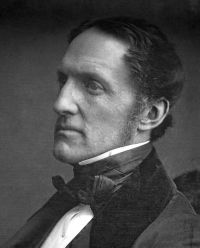 William Hickling Prescott,
History of the Conquest of Peru
William Hickling Prescott,
History of the Conquest of Peru
“ The ultimate aim of its institutions was domestic quiet. But it seemed as if this were to be obtained only by foreign war. Tranquillity in the heart of the monarchy, and war on its borders, was the condition of Peru. By this war it gave occupation to a part of its people, and, by the reduction and civilization of its barbarous neighbours, gave security to all. Every Inca sovereign, however mild and benevolent in his domestic rule, was a warrior, and led his armies in person. Each successive reign extended still wider the boundaries of the empire. ”
Johann Jakob von Tschudi, Travels in Peru, on the Coast, in the Sierra…
“ As Peru was the last to answer the cry of independence, and to shake off the yoke of Spanish domination, so she adheres with most tenacity to the customs of the mother country; for she has not the energy requisite for developing a nationality of her own. Even here is apparent that want of independence of character for which the Peruvians are remarkable. The faults of the Spaniards in them become vices, because, in imitating without reflecting, they push everything to an extreme. Thus, if bull-fights are cruel in Spain, they are barbarous in Lima. ”
Robert Kerr, A General History and Collection of Voyages and Travels - Volume 05
“ Under these circumstances your followers were necessarily impelled to adhere to your party in the defence of their own lives and properties. But as both are now secured, by the revocation of the obnoxious regulations, and the amnesty granted by his majesty, the Spanish inhabitants of Peru have now their legitimate sovereign as their friend and protector, to whom we all owe the most entire loyalty and obedience. ”
Marie Robinson Wright,
The old and the new Peru
(1908)
“ The Liberator Bolivar was proclaimed by Congress president of the new republic for life, and the Colombian troops were voted a magnificent reward for their services in behalf of the independence of Peru. Henceforth the country that had been held most strictly under the bondage of Spanish conditions and customs was to be governed by its own people, in harmony with the principles for which its patriots had so courageously contended, and according to laws formulated and decreed on the responsibility of its own constituted authorities. ”
Robert Mackenzie, America: A history
“ The remainder are native Spaniards, Negroes, Chinese, with a very few Germans and Italians. From a nation so composed, a wise management of public affairs can scarcely be hoped for. The government of Peru has been, since the era of independence, a reproach to humanity. Elsewhere on the continent there has been the hopeful spectacle of a people imperfectly enlightened, but animated by a sincere love of liberty, and struggling against tremendous obstacles towards a happier political situation. The incessant strifes which have devastated Peru have no such justification. ”
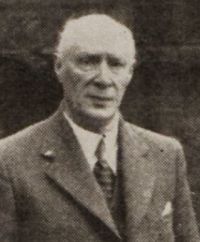 Lewis Spence,
The Myths of Mexico & Peru
Lewis Spence,
The Myths of Mexico & Peru
“ If the blessings of a well-regulated government were dispensed by the Incas, these benefits were assuredly counterbalanced by the degrading despotism which accompanied them. The political organisation of the Peruvian Empire was in every sense more complete than that of Mexico. But in a state where individual effort and liberty are entirely crushed even such an effective organisation as the Peruvian can avail the people little, and is merely a device for the support of a calculated tyranny. [291] ”
A. J. Duffield, Peru in the Guano Age
“ The present Peruvian Government sought all over Lima for complete copies of his works to send to Philadelphia, but it allows those whom he has left behind him, and who bear his name, to languish in obscurity and in want; and Don Manuel Pardo and his ministers, good in many things though they may be, are in others nothing better than cracked musical instruments. Peru is only a Republic in name, liberty does not exist, its people are not free, and the country remains at the mercy of men who at any moment, and in the most unexpected manner, can turn it into a hotbed of what is called revolution. ”
Charles Edmond Akers and George Edmundson, 1911 Encyclopædia Britannica (1911)
“ Peru was the centre of Spanish power, and the viceroy had his military strength concentrated at Lima. Consequently the insurrections in the more distant provinces, such as Chile and Buenos Aires, were the first to declare themselves independent, in 1816 and 1817. But the destruction of the viceroy’s power was essential to their Peru Independent. continued independent existence. The conquest of the Peruvian coast must always depend on the command of the sea. ”
Johann Jakob von Tschudi, Travels in Peru, on the Coast, in the Sierra…
“ A glance at the history of Peru serves to show that prior to the Spanish conquest the Indians were the subjects of a dynasty, to which they rendered willing obedience. We find, indeed, an uninterrupted series of revolutions and wars, arising out of the continued extension of the empire, to which nations differing one from another in language, religion, and manners, were gradually annexed. For some time after their subjugation these nations struggled to recover their independence, but the wise and mild government of the Incas gradually restored peace, and established unity. ”
Marie Robinson Wright,
The old and the new Peru
(1908)
“ It was fitting that the capital of the Inca empire which had been subjugated by Spain three hundred years before, should be the first city to receive the patriots who had won its independence, and that the children of the new Peru should link their destiny with the descendants of its oldest civilization on this historic ground, both of them proud to claim the title of Peruvians. ”
A. J. Duffield, Peru in the Guano Age
“ Whatever else it be, a Republic it certainly is not, and never has been a Republic. Its political constitution and its laws have nothing whatever to do with the people, nor have the people aught to do with them; and they care for them as they care for the theory of gravitation, or any other portion of demonstrable knowledge, from which they may indeed derive some animal comfort in its application, but the application of which will probably never enlighten their souls. The people of Peru know as much of liberty as they know of the Virgin Mary. ”
George A. Miller, Prowling about Panama
“ Everywhere there are a few intelligent, earnest men working away patiently and steadily at the problem of making South America democratic by making her people free to adopt with intelligence democratic institutions. One by one the nations have declared for freedom of worship and conscience, and, last of all, Peru, robbed and despoiled Peru of the conquest, priest-ridden and fanatical Peru, threw off the galling yoke of spiritual bondage and divorced church and state. ”
Marie Robinson Wright,
The old and the new Peru
(1908)
“ The military spirit was too strong, and the principles of representative government were too little understood in the beginning of the new life of Peru to admit of a strict conformity to the republican constitution; and it is not surprising that the descendants of a race of soldiers, with all the traditions implanted by an absolute monarchy, should err at first in their interpretation of political freedom. ”
William Hickling Prescott,
History of the Conquest of Peru
“ The imperative spirit of despotism would not allow them to be happy or miserable in any way but that established by law. The power of free agency - the inestimable and inborn right of every human being - was annihilated in Peru. ”
vicomte de François-René Chateaubriand, The Memoirs of François René Vicomte de Chateaubriand sometime Ambassador to England…
“ Peru has just adopted a monarchical Constitution. European policy should employ every care to obtain a similar result in the case of the colonies which declare themselves independent. The United States are singularly afraid of the establishment of an empire in Mexico. If ever the whole of the New World is Republican, the monarchies of the Old World will perish. ”
William Hickling Prescott,
History of the Conquest of Peru
“ It may seem strange that such a maxim should ever have been proclaimed in the New World, where popular institutions have been established on a more extensive scale than was ever before witnessed; where government rests wholly on the people; and education—at least, in the great northern division of the continent—is mainly directed to qualify the people for the duties of government. Yet this maxim was strictly conformable to the genius of the Peruvian monarchy, and may serve as a key to its habitual policy ”
William Hickling Prescott,
History of the Conquest of Peru
“ Yet the ordinances received the sanction of the emperor that same year, and in November, 1543, were published at Madrid.14No sooner was their import known than it was conveyed by numerous letters to the colonists, from their friends in Spain. The tidings flew like wildfire over the land, from Mexico to Chili. Men were astounded at the prospect of the ruin that awaited them. In Peru, particularly, there was scarcely one that could hope to escape the operation of the law. Few there were who had not taken part, at some time or other, in the civil feuds of Almagro and Pizarro ”
William Hickling Prescott,
History of the Conquest of Peru
“ Thus, by degrees, and without violence, arose the great fabric of the Peruvian empire, composed of numerous independent and even hostile tribes, yet, under the influence of a common religion, common language, and common government, knit together as one nation, animated by a spirit of love for its institutions and devoted loyalty to its sovereign. ”
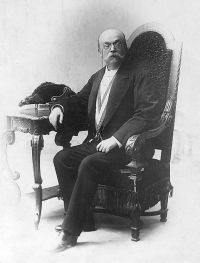 Francisco García Calderón,
Latin America: Its Rise and Progress
Francisco García Calderón,
Latin America: Its Rise and Progress
“ Although these rules are applicable to all America, I believe they apply with most reason to Lima. There the rich will not tolerate the democracy, and the slaves and the liberated slaves will not tolerate the aristocracy; the first will prefer the tyranny of a single person, in order to avoid popular persecutions and to establish a rule that will at least be pacific." The evolution of Peru proved the profound truth of this statement. The oligarchy accepted military dictators, who upheld property and preserved peace. ”
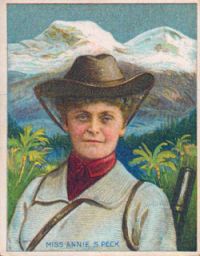 Annie S. Peck,
The South American Tour
Annie S. Peck,
The South American Tour
“ For nearly three centuries afterward, Peru was governed by a Viceroy, who until 1740 had authority over the whole of Spanish South America. The Viceroy was assisted by a Real Audiencia, consisting of four oidores or judges who possessed extensive civil and criminal powers. Another Audiencia was also established at Chuquisaca, Sucre, in Alto Peru, now Bolivia. During the colonial days the Indians were greatly oppressed by the Spanish residents, who drew vast wealth from the mines and lived in luxury and splendor. ”
William Hickling Prescott,
History of the Conquest of Peru
“ Such are some of the most remarkable features of the Peruvian institutions relating to property, as delineated by writers who, however contradictory in the details, have a general conformity of outline. These institutions are certainly so remarkable, that it is hardly credible they should ever have been enforced throughout a great empire, and for a long period of years. Yet we have the most unequivocal testimony to the fact from the Spaniards, who landed in Peru in time to witness their operation ”
Marie Robinson Wright,
The old and the new Peru
(1908)
“ But the history of the past few years proves that the nation is capable of advancing in line with the most progressive countries, and that the elements uniting to consolidate the best interests of the new Peru are not only unlimited faith and confidence but also fine judgment, well-directed energy, and established principles. It is peculiarly significant of the tendency of the new Peru that the statesman chosen to govern its destinies during the next four years as president of the republic is one of the most capable financiers in South American politics. ”
William Hickling Prescott,
History of the Conquest of Peru
“ From the first landing of the Spaniards on the soil, their subsequent adventures, their battles and negotiations, their ruinous retreat, their rally and final siege, all tend to this grand result, till the long series is closed by the downfall of the capital. In the march of events, all moves steadily forward to this consummation. It is a magnificent epic, in which the unity of interest is complete.In the "Conquest of Peru," the action, so far as it is founded on the subversion of the Incas, terminates long before the close of the narrative. ”
Various, Blackwood's Edinburgh Magazine…
“ And serious as this uprising was, there hardly seems to have been a probability of the extermination of the Spaniards in Peru, or of their expulsion from the country, at any period subsequent to Atahuallpa’s execution. The throne vacant, the rights of succession uncertain, the ancient institutions of the country fell to pieces, and anarchy ensued. Peruvian generals gathered their armies around them, seized upon provinces, declared themselves independent, and were beaten in detail. Difficulties and hardships were still in store for the conquerors ”
Related terms
Authors who wrote about “Viceroyalty of Peru”
Marie Robinson WrightA. J. DuffieldJohann Jakob von TschudiCharles Melville Pepper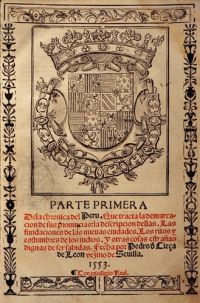 Pedro de Cieza de LeónCharles Edmond Akers and George EdmundsonAnnie S. PeckW. H. KoebelRobert Kerr
 Hiram BinghamHarry Weston Van DykeRobert Grant WatsonW. E. HardenburgFrancisco García CalderónSir Richard Henry BonnycastleHenry StephensSir Clements R. MarkhamViscount James Bryce BryceW. A. HirstNevin O. Winter