Walloon people

Definition and stakes

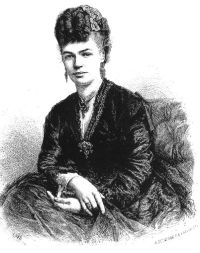
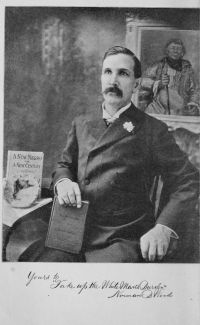
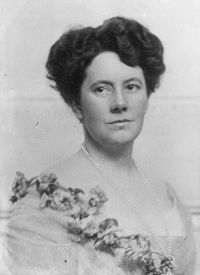
Portrait of Isabel Anderson Isabel Anderson,  The Spell of Belgium

“ Through them flows the Scheldt, the river of commerce.
South of the line are the mines and the mountains, the foundries and the forests, of Namur, Liège, Hainault, and the Ardennes. This is the Walloon country, through which runs the Meuse, the river of romance.
In the north live the stolid, easy-going, devout Flemish peasantry, while in the south are the lively, energetic, enterprising Walloons. They are a larger people physically than their neighbours, more heavily built, and of darker colouring, for there is a strain of Spanish blood in [332] their ancestry.
”
Source: Gutenberg

Edmund William Gosse and an anonymous contributor,  1911 Encyclopædia Britannica, Volume 28… (1911)

“ It is supposed that as early as the 12th century the idiom of the people may have been used in songs which are now lost, unless echoes of them are preserved in the curious Noëls, partly in French, partly in patois, which were orally collected by M. Doutrepont and published in 1888. Several Flemish works in old French, containing Walloon expressions, and in particular the so-called Poème moral of the 13th century, have been claimed as precursors of a local literature, but they are really to be considered as composed in French with a certain admixture of Liégeois phrases. ”
Source: Wikisource

Edmund William Gosse and an anonymous contributor,  1911 Encyclopædia Britannica, Volume 28… (1911)

“ In these early songs and plays the Walloon humour is displayed with great crudity; anything like sentiment or elevated feeling is unknown.
The Revolution of 1789 inspired numerous Liégeois patriots with popular songs; of these pasquêyes, as they are styled, Albin Body collected more than 250, but they are almost entirely devoid of literary merit. Under their new government, Liége and Namur allowed the national patois to withdraw into the background, and it was not until the middle of the 19th century that Walloon literature began seriously to be cultivated.
”
Source: Wikisource

Get perspective with Kwize: daily news enlightened by great literature