Ball (cricket)

Definition and stakes

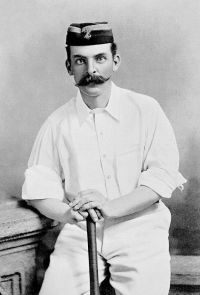
Portrait of Allan Gibson Steel Allan Gibson Steel,  Cricket (1888)

“ A spectator picks the ball up, chucks it to the expectant field, who dribbles it along the ground to the bowler, while the batsman, having had his smack, saunters about in the most unconcerned way and prepares for the next ball. Cricketers well understand that this saving of breath to a batsman is an enormous advantage; he is enabled to stand quite cool and collected in his ground, and hit away without, as a rule, having to run more than two runs, while the bowlers and field are perspiring away in their efforts to get the side out. ”
Source: Wikisource

The Cricket of Abel, Hirst, and Shrewsbury

“ The only hope of making cricket as really attractive and useful to young boys as it might be, is to reduce the size of the ball as well as the size of the bat, and keep the full distance. At present a diminutive brat pummels the big ball with all his might, and it barely reaches cover point; his best half-volley drive goes meekly into mid-on’s hands—or, rather, it would, if the ball were not too big to get there. Not only is his hitting spoilt: the throwing becomes painful, and the bowling in spite of the short distance strains the shoulder. ”
Source: Gutenberg

Portrait of Allan Gibson Steel Allan Gibson Steel,  Cricket (1888)

“ A good length ball is one that it is impossible to smother at the pitch, and if it is outside the off stump it has to be played with a more or less horizontal bat, if the slog is attempted. What must be the consequence? The ball is not smothered, consequently any break, hang, or rise that the bowler or the ground may impart to the ball must almost inevitably produce a bad stroke, frequently terminating in a catch somewhere on the off side. The proper way to play such a ball will be discussed later on, but under no circumstances must the ball be hit at wildly at the pitch. ”
Source: Wikisource

Get perspective with Kwize: daily news enlightened by great literature