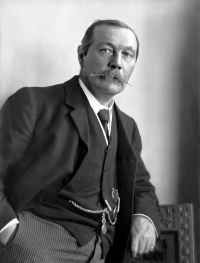
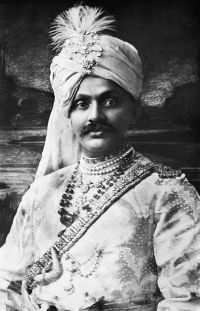
“ An injudicious and talkative batsman often materially assists a bowler by such remarks as, ‘I can’t see your bowling a little bit. When tossed high in the air that beastly tree is right behind;’ or, ‘When you bowl over the wicket the ball gets right in a line with the dark windows of the pavilion, and I can’t see it at all.’ Can anyone imagine for a moment that a bowler will not do his very best instantly to make the most of the dark branches of the tree or the windows of the pavilion? ”
Bowler
Definition and stakes
The bowler, central to the game of cricket, is both a strategist and a technician, shaping the contest through accuracy, trickery, and physical skill. Authors from the 19th and early 20th centuries examined this role through varied perspectives: R.H. Lyttelton humorously critiqued batsmen’s distractions, while Talbot Baines Reed vividly portrayed the bowler’s controlled aggression.
Arthur Conan Doyle highlighted the bowler’s susceptibility to external conditions, and Allan Gibson Steel emphasized the development of bowling as a disciplined art. These viewpoints collectively underscore the bowler’s dual role as both a challenger and a guide, pivotal in defining the rhythm and results of the game.
Quotes about “bowler”
Talbot Baines Reed,
Parkhurst Boys, and Other Stories of School Life
“ The bowler starts to run, with arm extended. He makes a sort of curve round the wicket, and balances himself on one foot as he discharges his ball. It comes like lightning, right on to my bat, twisting it in my grasp, and then is snatched up in an instant by “point,” who tosses it to the wicket-keeper, who returns it to the bowler. All this is very alarming. Here are eleven men banded together with the one object of putting me out, and they are all so quiet and determined about it that I feel like a guilty thing as I stand there to defend my wicket. ”
Cricket (1903)
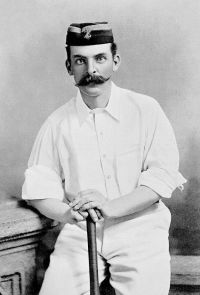
“ On grounds like these the batsman assuredly cometh into his own, and metaphorically layeth the bowler by the heel, bruising him hip and thigh through the weary hours of an August day, till the welcome news of the last over revives the rag of a man that is left, and he slowly wends his way to the rabbit-hutch, in sore need of the well-earned bath and its ensuing rub down—in sore need of a ginger beer. ”
Cricket (1903)
“ I have sorely digressed, but the trend of the digression was this, that if as a youth you wish to play cricket, devote all your time, all your energies, to bowling. A great bowler is born, not made; but though you may never soar to the heights of a Spofforth or a Lohmann, you can learn to bowl a good length, you can learn to bowl intelligently, and be a source of comfort to yourself, and, what is infinitely better, in all probability a source of comfort to your side. ”
Allan Gibson Steel,
Cricket
(1888)
“ The bowler will be delighted if he can tempt you to play the next ball before you have got rid of the flurry and excitement, and you will be looked upon as very obliging and thoughtless if you do. Very likely you have resumed your position in front of the wicket with no intention of playing for a second or two; perhaps the bowler is aware of the fact, but that does not prevent him from bowling at you in the hope that you may change your mind. ”
The Hambledon Men (1907)
“ How can you lay out a field for an uncertain bowler? How can you tell where the men will hit him? I mean one of the any-how style, happy-golucky, yard on this side, yard on the other, all men alike, one straight in about two overs. How careful the Public Schools ought to be in selecting bowlers of a good delivery for their instructors, men who go up to the wicket as if they were going to put the ball somewhere about the mark. On them depends the future style of the learners, who ought not to be taught to throw away all their manly strength in empty air. ”
Cricket (1903)
“ But with the year 1780 we come to a new era in the art of batting, associated more particularly with the name and art of a famous bowler, David Harris, the association being again an illustration of the truth, which has several times already been in evidence, that it is the bowling that is the efficient cause in educating the batsman—that it is the bowling that "makes the batting." ”
Arthur Conan Doyle,
Memories and Adventures
(1924)
“ A bowler has many days when everything is against him, when a hard, smooth wicket takes all the spin and devil out of him, when he goes all round and over the wicket, when lofted balls refuse to come to hand, or, if they do come, refuse to stay. ”
James Pycroft, The Cricket Field (1854)
“ So, study accurate bowling, and let speed come of itself. So much for attaining the power of a bowler; next to apply it. Not only practise, but study bowling: to pelt away mechanically, with the same lengths and same pace, is excusable in a catapult, but not in a man.—Can your adversary guard leg-stump or off-stump? Can he judge a length? Can he allow for a curve? Can he play well over an off-ball to prevent a catch? Can you deceive him with time or pace? Is he a young gentleman, or an old gentleman? ”
Allan Gibson Steel,
Cricket
(1888)
“ Thirty years ago there was not one professional bowler to every twenty there are now. The large public schools in those days had, as a rule, one professional bowler, who took charge of the ground, coached the boys, and made himself generally useful in various capacities. Consequently, each boy at practice had to bowl. The professional could only bowl to one boy at a time, and so everyone did his very best at practice to bowl straight and well, as a batsman would not care to practise to bowling that was slack and crooked. ”
Robert Henry Lyttelton, Cricket (1898)
“ A bowler can acquire by diligent practice a certain command over the pace and direction of the ball—great and important characteristics for any bowler—but without the aid of one or the other of the natural gifts no man can hope to be a great bowler. There are other causes of success for bowlers; one of these is action, and one which cannot readily be altered. But, whilst some actions make it easy for batsmen to see the ball, others make it difficult ”
Allan Gibson Steel,
Cricket
(1888)
“ Every bowler who is worth his salt knows much better than anyone else how the field should be placed to his bowling. So much depends upon the style and favourite strokes of the batsman to be dislodged and the mode of attack that is going to be brought into requisition, that the general rules we suggest here are more as a guide to young fast bowlers than to those who have gained their experience. ”
Ranjitsinhji Vibhaji II,
The Jubilee Book of Cricket
(1897)
“ The bowler may rest assured that, when he has acquired the art of bowling good-length balls, even mechanically, he has practically laid the foundation of an excellent style. Nothing in bowling is so difficult as to keep the pitch of one's deliveries at the uniform good length calculated to wear out the patience of most batsmen, particularly young ones. ”
Allan Gibson Steel,
Cricket
(1888)
“ And now, after having discussed the different styles of bowling known in cricket, let us consider some of the main rules which must guide the action of every bowler in the field. The first and chief principle that a young bowler must master is that he is bowling for his side's success, and not for his own ”
Jones Wister, A "Bawl" for American Cricket
“ The ball strikes the ground with greater force, causing a more sudden and unexpected rise, while the spin and angle add to its disturbing effect upon the mind of the batsman. 13th.—The bowler more than any other fielder needs patience, perseverance and pluck. He must be strong, steady and sure. He must smile and look happy when catches are missed. He must look contented and satisfied when the umpire gives decisions against his interest. All will recognize the successful bowler even without the aid of these few rules. ”
Various, Punch, or the London Charivari…
“ As soon as the bowler has covered half his course to the wicket you should raise your hand to arrest his career. Then you must stroll about a third of the way up the pitch and give the ground a good slapping with the face of your bat.If you feel so inclined, there is no reason why you should not repeat this manœuvre. Nothing is more calculated to upset a highly-strung bowler. And when the ball does come down the chances are that it will be a wide, in which case you will have earned one run for your side. ”
Robert Henry Lyttelton, Out-door Games: Cricket and Golf (1901)
“ The fast bowler pounding away with long hops, and the slow bowler with a leg-break bowling every variety of length, with no command whatever over the ball—this is another terrible development of the game to which the present easy wickets and consequent high scoring have brought us. ”
Robert Henry Lyttelton, Out-door Games: Cricket and Golf (1901)
“ You go and see a match nowadays, and you see a very fast bowler like Jones, the Australian, or Jessop, pounding the ball half-way down the pitch—with four or five men in the slips—and endeavouring to make the ball bump, that the batsman may hit under it and get caught behind the wicket. There is another bowler who bowls slow, and who is determined to get a curl or twist on his ball. The bowler, whose ball has a natural curl from leg, is disestablished by the absurd regulation of leg before wicket as interpreted at present, and the bowler I am trying to describe is not one of that class. ”
“ Of course those effects have been mutual; the bowling has educated the batting, and in his turn, again, the batsman has been the instructor of the bowler. No sooner has the one changed his tactics at all than the other has changed front a little in order to meet this new attack. Naturally, perhaps, it seems that the bowler has the oftener taught the batsman, than vice versa ”
Allan Gibson Steel,
Cricket
(1888)
“ The height of his ambition is to bowl a ball or two to the village champion, batsman, and when the opportunity arises to gratify his wish you will see him, hardly higher than the stumps, bowling with an action exactly similar to the crack village bowler, and scorning to encroach so much as an inch over the line of the bowling ”
Robert Henry Lyttelton, Cricket (1898)
“ I believe that, given the same wickets, our bowlers would be able to prove themselves every bit as good as the giants of old; and in one particular there can be no doubt that bowlers of the present day are far superior to those of the former generations, and that is in accuracy. To take one illustration, no bowler bowls a ball to leg now. The batsman, if he wants to hit in that direction, must pull a straight ball. ”
Allan Gibson Steel,
Cricket
(1888)
“ There is one species of ball which we have not discussed, deadly as it is, both in fast and slow bowling. This is the ball which, after the pitch, never rises, but shoots along the surface of the ground, and is commonly called a 'shooter.' The reason why no notice was taken of this when the different kinds of ball which may be bowled were being dealt with is because no amount of practice or skill can enable a bowler to bowl thus. It depends for existence upon inequalities in the ground. ”
Ranjitsinhji Vibhaji II,
The Jubilee Book of Cricket
(1897)
“ They like bowling as a relief from the monotony of fielding, not for its own sake. It is curious that people do not reflect more seriously upon the fact that the best batsman sometimes receives only two balls in a match and hits neither of them, whereas a good bowler can nearly always rely upon at least half an hour's fun. Indeed, any bowler who is put on at all cannot be ousted from his proud position until he has sent down a full over. ”
Robert Henry Lyttelton, Out-door Games: Cricket and Golf (1901)
“ It is probable that overhand bowling may be the most difficult to play, but in adopting entirely the overhead system of bowling and discarding round-arm bowlers have in my opinion made an error. The whole essence of modern bowling is variety. We see all paces, all heights, and all the different forms of twist and break, but the stamp of bowler, who bowled round the wicket, and kept the arm on a level or a little below the level of the shoulder, and made the ball come with his arm, is practically extinct. ”
Allan Gibson Steel,
Cricket
(1888)
“ There have been but few really fast bowlers who have been able consistently to make their balls come 'back.' Every now and then, however, for some unaccountable reason, a fast bowler finds that he is making the ball do a lot from the off side. Perhaps his grasp is firmer and his wrist and fingers are more powerful than on ordinary occasions, or the ground may have more turf on it, or, for some other reason, his bowling twists in from the pitch with most fatal results to the batsmen. ”
Allan Gibson Steel,
Cricket
(1888)
“ At present we will confine our attention to playing fast bowling, and let us assume that the batsman has taken his natural position with his right toe clear of the wicket and that a fast right-handed bowler is bowling with hand raised above the shoulder and over the wicket. This is the method of bowling most in vogue in these days; in fact, the strict round-arm bowling round the wicket, with a curl from leg, is for some inscrutable reason now comparatively rare. ”
Allan Gibson Steel,
Cricket
(1888)
“ Appleby, of Lancashire, is an example of this style of bowler, as is Barlow, of the same county, though he hardly comes within the definition of fast bowling. We have occasionally seen a left-arm bowler, like Emmett, of Yorkshire—who relies exclusively on the off break, which, to a right-handed batsman, brings the ball from leg to off—involuntarily send down a ball that, instead of taking the bias imparted to it, for some strange and unaccountable reason went the other way, an accident which places the batsman in a most awkward fix. ”
Allan Gibson Steel,
Cricket
(1888)
“ Perhaps bowling does not require the same oneness of hand and eye as batting, but it demands, if possible, more practice and experience, and to a far greater extent the exercise of mental qualities. The object of the bowler is to outmanœuvre the batsman; he has either to hit the stumps or draw him into some incautiousness or hesitation of play, which will result in the ball being caught from the bat or in the batsman being stumped out by the wicket-keeper. ”
Ranjitsinhji Vibhaji II,
The Jubilee Book of Cricket
(1897)
“ With few exceptions, the best bowlers of the present day adopt the long run, but on no account should a bowler take a run likely to tire him. His action after the start for the run up to the point of letting go the ball should be perfectly natural. It is obviously a mistake to copy the idiosyncrasies of a favourite bowler at the sacrifice of your own effectiveness. ”
Ranjitsinhji Vibhaji II,
The Jubilee Book of Cricket
(1897)
“ However, without becoming famous, it is possible to become very useful. As much attention should be paid to bowling as to any other part of the game. Whether or not you have it in you to develop into a Peel or an Attewell is immaterial; your duty is to make yourself as good a bowler as you can. ”
Allan Gibson Steel,
Cricket
(1888)
“ If a bowler, who, we will say, usually bowls over the wicket, perceive that by bowling round the wicket he may make his bowling more difficult to see, and consequently more effective, on account of a tree, house, or hedge that is directly behind that side of the wicket, he should most certainly change and make the most of that advantage. ”
“ Everyone who knows anything at all about cricket will at once admit that bowling is, to say the least, as important a feature of the game as batting. The same share of fame has always been conferred on a really good bowler as on an expert at the other great branch of the game ”
Allan Gibson Steel,
Cricket
(1888)
“ This is a wide field, and suggests at once that to become proficient a bowler must think—and think deeply too—not once or twice every few minutes, but before each ball, for none should ever be delivered without a particular object. ”
Jones Wister, A "Bawl" for American Cricket
“ The bowler must direct his efforts to gauge the batter’s reach, and deliver balls which will prevent scoring. When a bowler discerns the “length” ball a batsman cannot play, and his skill enables him to deliver it at will, he may be relied upon. It is the eager hope of every beginner to become a superior bowler. We have endeavored to indicate just what a good ball is and wherein it differs from one which the batter fancies. But this is not enough; the mind of the young bowler must solve the problem, and must have a well defined conception of the ball which is expected to baffle the batter. ”
“ Speaking from a spectator’s point of view, there is nothing more exciting than to watch the uprooting of the sticks, to note their gyration in the direction of the glorified long stop, and to follow the flight of a bail for fifty or sixty yards. To this end we must possess ourselves of a really fast bowler. ”
Allan Gibson Steel,
Cricket
(1888)
“ If the bowling be indifferent the player who can pull or hit a long hop to leg has' a decided advantage, as the ball hangs a great deal at times and favours that kind of play. If the bowler be on the spot, then tall scoring is an impossibility. The work to be got on the ball is astounding; I have seen balls break a foot or more. This kind of wicket is oftener seen at Lord's after a good deal of rain and a drying sun than anywhere else. We all remember that great match when the Australians made their first appearance there in 1878. ”