Bowling (cricket)

Definition and stakes

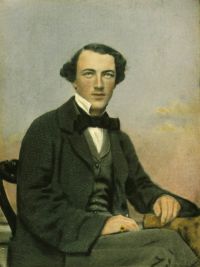
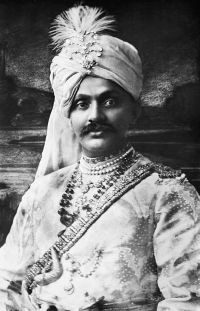
Portrait of Ranjitsinhji Vibhaji II Ranjitsinhji Vibhaji II,  The Jubilee Book of Cricket (1897)

“ Most bowlers dislike bowling to him. He treats them all with the scantest courtesy. The better they bowl, the harder he hits. He is particularly strong on the on-side, and applies a marvellous pullstroke to good-length balls just outside the off-stump. He hits such a ball as if it were a half-volley to leg—a beautiful stroke if it comes off; when it does not, the critics shake their heads and say "Shocking." But perhaps bowlers with a sticky wicket and everything to favour them have been shocked by this stroke to better purpose. It has turned the tide in many a match. ”
Source: Wikisource

The Cricket of Abel, Hirst, and Shrewsbury

“ Perhaps it may be a smaller pleasure than batting, somewhat as to besiege an enemy may be a smaller pleasure than to resist the siege or to make a sally. But bowling allows more errors—a single bad ball, unlike a single error in batting, need not be the end of the performance. Anyhow, bowling is a pleasant change from fielding, and gives one an extra chance of playing for a team. And, unless one plays for a team, Cricket is not much sport! A fair bowler is becoming more and more useful to his side every year, with these billiard-table wickets. ”
Source: Gutenberg

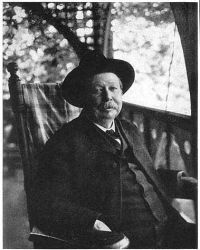
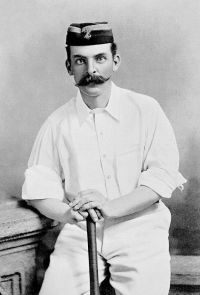
Portrait of Allan Gibson Steel Allan Gibson Steel,  Cricket (1888)

“ Perhaps bowling does not require the same oneness of hand and eye as batting, but it demands, if possible, more practice and experience, and to a far greater extent the exercise of mental qualities. The object of the bowler is to outmanœuvre the batsman; he has either to hit the stumps or draw him into some incautiousness or hesitation of play, which will result in the ball being caught from the bat or in the batsman being stumped out by the wicket-keeper. ”
Source: Wikisource

Get perspective with Kwize: daily news enlightened by great literature