Creation (theology)

Definition and stakes

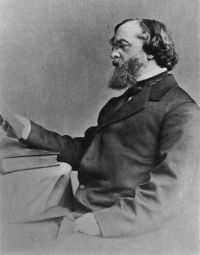
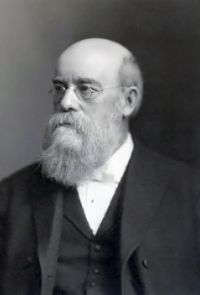
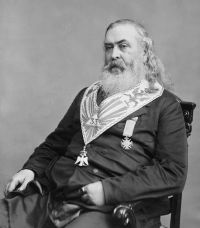
Portrait of Andrew Dickson White Andrew Dickson White,  History of the Warfare of Science with Theology in Christendom

“ Thus it was that, while the idea of a simple material creation literally by the hands and fingers or voice of the Creator became, as we have seen, the starting-point of a powerful stream of theological thought, and while this stream was swollen from age to age by contributions from the fathers, doctors, and learned divines of the Church, Catholic and Protestant, there was poured into it this lesser current, always discernible and at times clearly separated from it—a current of belief in a process of evolution. ”
Source: Gutenberg

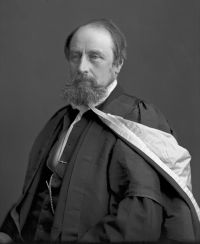
Portrait of Andrew Dickson White Andrew Dickson White,  History of the Warfare of Science with Theology in Christendom

“ In the two accounts imperfectly fused together in Genesis, and also in the account of which we have indications in the book of Job and in the Proverbs, there, is presented, often with the greatest sublimity, the same early conception of the Creator and of the creation—the conception, so natural in the childhood of civilization, of a Creator who is an enlarged human being working literally with his own hands, and of a creation which is "the work of his fingers." ”
Source: Gutenberg

Portrait of Augustus Hopkins Strong Augustus Hopkins Strong,  Systematic Theology (Volume 2 of 3…

“ On the definition of Creation, see Shedd, History of Doctrine, 1:11.
[pg 374]
II. Proof of the Doctrine of Creation. Creation is a truth of which mere science or reason cannot fully assure us. Physical science can observe and record changes, but it knows nothing of origins. Reason cannot absolutely disprove the eternity of matter. For proof of the doctrine of Creation, therefore, we rely wholly upon Scripture. Scripture supplements science, and renders its explanation of the universe complete.
”
Source: Gutenberg

Get perspective with Kwize: daily news enlightened by great literature