Cricket wicket

Definition and stakes

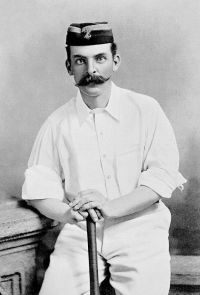
Portrait of Allan Gibson Steel Allan Gibson Steel,  Cricket (1888)

“ It is for the rising generation either to alter the law or to learn the art of getting in front of the wicket when the ball does not pitch straight.
It is in vain to lament over long scores and unfinished matches, over dearth of bowlers and slackness in the field, whilst all the time we are doing everything we can to make matters easier and easier for the batsman, giving him perfect wickets, on which he can score loo runs without getting out of breath, devoting his legs to the new purpose of systematically intercepting the more difficult balls.
”
Source: Wikisource

Portrait of Allan Gibson Steel Allan Gibson Steel,  Cricket (1888)

“ The body of the batsman in many cases completely obstructs the view the wicket-keeper ought to have of the ball. Even if he can get a good sight of the ball there is that abominable bat being fiddled about, baulking the eyesight in the most tantalising manner, and there are some batsmen who have a provoking habit of waving their bats directly the bowler begins his run, and continuing their antics till the ball is right up to them; while others seem to be built like windmills, and have a limb always at hand to throw out between the unhappy wicket-keeper and the rapidly-advancing ball. ”
Source: Wikisource

Portrait of Allan Gibson Steel Allan Gibson Steel,  Cricket (1888)

“ On wet hard wickets, when he can get no twist on, there is still life and pace in the ground; but in the sodden dead state, directly the ball touches the ground it sinks in, loses all life and pace, and comes on to the batsman like what a Yorkshire professional was once heard to call a 'diseased lawn-tennis ball.' There is no greater fallacy at cricket than to suppose that a sodden wicket is an advantage to a slow bowler. ”
Source: Wikisource

Get perspective with Kwize: daily news enlightened by great literature