“ Deerstalking was long the favorite sport in England, dating from the early days of semi-barbarism, when the only serious pursuits of the rich were war and the chase. The forest laws of the old Norman kings set the punishment for killing a deer, except in the chase, as great as for taking a human life. ”
Quotes about “deerstalking”
 James Fenimore Cooper,
The Deerslayer
James Fenimore Cooper,
The Deerslayer
“ Scalp for scalp, life for life, blood for blood, is one law; to feed her young, another. We know you, Killer of the Deer. You are honest; when you say a thing, it is so. You have but one tongue, and that is not forked, like a snake's. Your head is never hid in the grass; all can see it. What you say, that will you do. You are just. When you have done wrong, it is your wish to do right, again, as soon as you can. Here, is the Sumach; she is alone in her wigwam, with children crying around her for food—yonder is a rifle ”
 Charles Dudley Warner,
The Complete Writings of Charles Dudley Warner…
Charles Dudley Warner,
The Complete Writings of Charles Dudley Warner…
“ What right have these sophists to put themselves into a desert place, out of the reach of provisions, and then ground a right to slay deer on their own improvidence? If it is necessary for these people to have anything to eat, which I doubt, it is not necessary that they should have the luxury of venison.One of the most picturesque methods of hunting the poor deer is called " floating." The person, with murder in his heart, chooses a cloudy night, seats himself, rifle in hand, in a canoe, which is noiselessly paddled by the guide, and explores the shore of the lake or the dark inlet. ”
 John James Audubon,
Ornithological Biography
(1831)
John James Audubon,
Ornithological Biography
(1831)
“ But kind reader, you have seen enough of the still hunter. Let it suffice for me to add, that by the mode pursued by him, thousands of deer are annually killed, many individuals shooting these animals merely for the skin, not caring for even the most valuable portions of the flesh, unless hunger, or a near market, induce them to carry off the hams. The mode of destroying deer by fire-light, or, as it is named in some parts of the country, forest-light, never fails to produce a very singular feeling in him who witnesses it for the first time. ”
baron de Jean-Baptiste-Barthélemy Lesseps, Travels in Kamtschatka, during the years 1787 and 1788…
“ In these sportive amusements the tame deer gradually draws his prey within musquet shot of the hunter. With a well managed deer, one is able to seize his companion alive; a cord is hung upon the horns of the former, which, in their play, he entangles in the horns of his adversary. From that time the greater the efforts made by the wild deer to escape, the closer the running knot is drawn, and the more strongly the tame deer pulls at the cord, in order to give his master time to come up. It frequently happens however that the wild deer suspects the trick, and escapes the danger by flight. ”
Various, The Nursery, April 1878, Vol. XXIII. No…
“ With this purpose, the deer will often make enormous leaps, or run around in a circle so as to confuse and puzzle his pursuers. He will mount a stone wall, and run along it for some distance, well aware that the dog cannot scent him so well on the rock as on the grass. If he can find a pond or stream of water, the deer will plunge in and swim a long distance, so that the dogs may lose his trail.It is a joyful sound to the poor hunted deer when the dogs send up that sad, dismal howl, which they give utterance to when they have lost all scent of the deer, and despair of finding it. ”
American Big Game in Its Haunts…
“ In many places the hills are covered with an almost impenetrable chaparral of scrub oak, buckthorn, greasewood, manzanita, and deer-brush, in which the wary deer have taken refuge. In and through these, guided sometimes by the tracks of the deer, or encouraged by the presence of such tracks even if he cannot follow them, up steep mountains, exposed to the heat of the sun, in dust, over rocks, and without water, toils the hunter, who accounts himself lucky if, by tramping scores of miles through this sort of impediment, he succeeds, after days of toil, in killing his deer. ”
 William James Stillman,
The Autobiography of a Journalist…
William James Stillman,
The Autobiography of a Journalist…
“ This kind of hunting, as most people know, is a species of pot-hunting, much employed by the hunters for the market, and so destructive to the deer that it is now forbidden by the law in all the Adirondack country. The deer are stalked by night along the shores, where they come in to feed, the hunter carrying in his boat a light so shaded that it illuminates only the space directly in front of the boat, the glare blinding the animal so that he does not see the boat or the boatman. ”
 Hugh Lofting,
Doctor Dolittle's Post Office
Hugh Lofting,
Doctor Dolittle's Post Office
“ Next, they wait until the giraffe comes along and walks over the hole and falls in. Then they run up and catch him. For certain kinds of rather stupid deer they make a little screen of branches and leaves about the size of a man. And the hunter, holding the screen in front of him like a shield, creeps slowly forward until he is close to the deer and then fires his spear or arrow. Of course, the stupid deer thinks the moving leaves are just trees being swayed by the wind and takes very little notice, if the hunter is careful to approach quietly enough. ”
“ She, with the intense watchfulness of her kind, had seen a possible danger, and so warned her young one to hide itself.212 There is scarcely any animal so watchful as the female Deer, as all hunters know by practical experience. It is comparatively easy to deceive the stag who leads the herd, but to evade the eyes and ears of the hinds is a very different business, and taxes all the resources of a practised hunter. If they take such care of the herd in general, it may be imagined that their watchfulness would be multiplied tenfold when the object of their anxiety is their own young. ”
James Fenimore Cooper,
The Deerslayer — Chapter 30
(1841)
“ The Hurons will kill deer when they are hungry, and they have long rifles to fight with. This hunter cannot quit my young men now; they wish to know if he is as stouthearted as he boasts himself to be." "That I deny, Huron -" interrupted Deerslayer, with warmth - "Yes, that I downright deny, as ag'in truth and reason. No man has heard me boast, and no man shall, though ye flay me alive, and then roast the quivering flesh, with your own infarnal devices and cruelties! ”
 Sir Samuel White Baker,
The Rifle and the Hound in Ceylon
Sir Samuel White Baker,
The Rifle and the Hound in Ceylon
“ I immediately lay flat upon the ground, and presently an immense herd of full a hundred deer passed across the glade at full gallop, within seventy yards of me. Jumping up, I fired at a doe, and, to my surprise, two deer fell to the shot, one of which was a fawn; the ball had passed through the shoulder of the mother, and had broken the fawn's neck upon the opposite side. I am astonished that this chance of killing two at one shot does not more often happen when the dense body of a herd of deer is exposed to a rifle-ball. Deer-stalking is one of the most exciting sports in the world. ”
John H. Dixon, Gairloch in North-West Ross-Shire
“ Deer-stalking is an arduous and absorbing sport,—its difficulty is its glory. This is especially so in the stag season, for in summer and autumn the deer often keep to the higher parts of the mountains. Frequently a stalk is only attempted when a good stag has been spied in the early morning, or even the day before. If it be decided to stalk a particular stag, the sportsman and his attendants endeavour to approach by such a route as that, if possible, they may not be visible, and so that no breeze may convey their scent to the wary deer. ”
 Randolph B. Marcy,
The Prairie Traveller, a Hand-book for Overland Expeditions…
(1859)
Randolph B. Marcy,
The Prairie Traveller, a Hand-book for Overland Expeditions…
(1859)
“ When alarmed he will detect the slightest movement of a small object, and, unless the hunter stands or lies perfectly still, his presence will be detected. If the hunter does not move, the deer will, after a short time, recover from his alarm and resume his grazing, when he may be again approached. The deer always exhibits his alarm by a sudden jerking of the tail just before he raises his head. I once saw a Delaware Indian walk directly up within rifle range of a deer that was feeding upon the open prairie and shoot him down ”
Sir Samuel White Baker,
The Rifle and the Hound in Ceylon
“ The stalking is the most exciting sport in the world. I have frequently heard my own heart beat while creeping up to a deer. He is an animal of wonderful acuteness, and possessing the keenest scent; he is always on the alert, watching for danger from his stealthy foe the leopard, who is a perfect deer-stalker. To kill spotted deer well, if they are tolerably wild, a person must be a really good rifle shot, otherwise wise he will wound many, but seldom bag one. They are wonderfully fast, and their bounding pace makes them extremely difficult to hit while running. ”
Baron Edward Bulwer Lytton Lytton, The Coming Race
“ Continuing my walk, I started,—from a bush that resembled a great tangle of sea-weeds, interspersed with fern-like shrubs and plants of large leafage shaped like that of the aloe or prickly-pear,—a curious animal about the size and shape of a deer. But as, after bounding away a few paces, it turned round and gazed at me inquisitively, I perceived that it was not like any species of deer now extant above the earth, but it brought instantly to my recollection a plaster cast I had seen in some museum of a variety of the elk stag, said to have existed before the Deluge. ”
Our Young Folks at Home and Abroad
“ The mother keeps them in a quiet place where she thinks the hunters and dogs cannot get them; for men often hunt the wild deer. It is a great pity to kill them for sport, is it not? HOW FLEET HE IS!The deer hears quickly, and his scent is very keen too. When the hunters are after him, how fleet he is! Sometimes he leaps into the water and swims. Then the dogs lose the scent and cannot follow him. The male deer sheds his horns every year.When the horns are growing they look as if they were covered with velvet. HAVE THEY NO LANGUAGE? EVERYBODY’S DOG. ”
 William J. Long,
How animals talk
(1919)
William J. Long,
How animals talk
(1919)
“ On all such farms the deer have the scent of man almost constantly in their nostrils, and they are simply watchful, running when you approach too near, but turning after a short flight to have a look at you. At times you may see them feeding when the scent of laborers or fishermen blows fairly over them. But when October comes, and the law is “off,” and wild-eyed hunters appear with guns in their hands and death in their thoughts, then the same deer quickly become as other and wilder creatures, rushing off in alarm at the first sniff of an enemy. ”
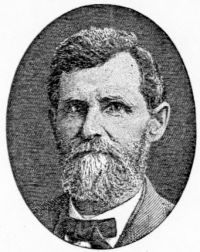 Lafayette Houghton Bunnell,
Discovery of the Yosemite, and the Indian War of 1851…
Lafayette Houghton Bunnell,
Discovery of the Yosemite, and the Indian War of 1851…
“ A mule is the best of sentinels to alarm a camp on the approach of danger. Deer and elk whistle and strike the earth perpendicularly with their feet when jumping up to discover the cause of alarm. Deer and antelope are both so inquisitive, that if the hunter has not been seen, or has been but imperfectly seen, by dropping into the grass or brush, and raising some object to view and suddenly withdrawing it, the deer or antelope will frequently come up within a few feet of the object. ”
 Elaine Goodale Eastman,
Indian Legends Retold
Elaine Goodale Eastman,
Indian Legends Retold
“ The White Deer next called all the Deer together, and they decided to punish with rheumatic pains every hunter who should kill one of their number without asking pardon for the offense. Ever since that time, the hunters have been very careful to beg the Deer’s pardon whenever it becomes necessary to shoot one, although now and then some one tries to avoid the penalty by building fires on his trail.The other animals followed the Deer’s example, and each made haste to invent a disease with which to torment the human race. ”
James Fenimore Cooper,
The Deerslayer — Chapter 6
(1841)
“ Deerslayer, do you get into the canoe, lad, and paddle off into the lake with the spare one, and set it adrift, as we did with the other; after which you can float along shore, as near as you can get to the head of the bay, keeping outside the point, howsever, and outside the rushes, too. You can hear us when we want you; and if there's any delay, I'll call like a loon-yes, that'll do it- the call of a loon shall be the signal. If you hear rifles, and feel like sogering, why, you may close in, and see if you can make the same hand with the savages that you do with the deer. ”

“ However, I jogged on along a runway made hard by the hoof of countless deer herds, until I came to a thread of water curving through the moss like a sword-blade on green velvet. Here I knelt, let go my pack, and rolled over on the moss, dog-tired.Hands clasped on my empty stomach I lay looking up at the sky through the matted leaves that thatched my forest roof, too tired even to drink. But the accursed deer-flies drove me to water as they drive the deer, and I drank my fill and smeared me with pennyroyal and tallow, face and wrists. ”
Charles Dudley Warner,
A-Hunting of the Deer, and other essays…
(1906)
“ The hunted doe went down “the open,” clearing the fences splendidly, flying along the stony path. It was a beautiful sight. But consider what a shot it was! If the deer, now, could only have been caught! No doubt there were tender-hearted people in the valley who would have spared her life, shut her up in a stable, and petted her. Was there one who would have let her go back to her waiting fawn? It is the business of civilization to tame, or kill. ”
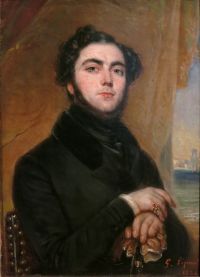 Eugène Sue,
The Mysteries of Paris, illustrated with etchings…
Eugène Sue,
The Mysteries of Paris, illustrated with etchings…
“ Occasionally a more animated scene presents itself; distant echo gives out the faint sound of the hunting-horn, and the cry of hounds; suddenly a frightened deer bursts from the neighbouring forest, stands for a few seconds in terrified alarm upon the frozen plain, then darts onward, and is quickly lost amid the thickets on the opposite side. The trampling of horses, the barking of dogs, are rapidly brought nearer by the breeze; and now, in their turn, a pack of dogs with brown and tawny-spotted skins issue from the brushwood from which the frightened deer but just now came ”
Charles Dudley Warner,
A-Hunting of the Deer, and other essays…
(1906)
“ Nothing is so appalling to a recluse as a half a mile of summer boarders. As the deer entered the thin woods she saw a rabble of people start across the meadow in pursuit. By this time, the dogs, panting and lolling out their tongues, came swinging along, keeping the trail, like stupids, and consequently losing ground when the deer doubled. But, when the doe had got into the timber, she heard the savage brutes howling across the meadow. ”
Various, Popular Science Monthly (1882)
“ Every deer-stalker knows he must approach his game on the side opposite the wind. Most mammals, especially the herbivorous, scent danger, and flee away. Many of them use their natural weapons only when brought to bay, and in despair. ”
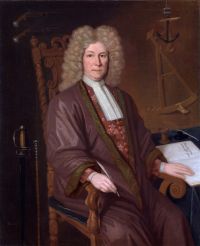 Robert Knox,
An Historical Relation of the Island Ceylon in the East Indies
Robert Knox,
An Historical Relation of the Island Ceylon in the East Indies
“ It is not swift, but by subtilty will catch his prey; which are Deer or other Cattel; He lyes in the path where the Deer use to pass, and as they go, he claps hold of them by a kind of peg that growes on his tayl, with which he strikes them. He will swallow a Roe Buck whole, horns and all; so that it happens sometimes the horns run thro his belly, and kill him. A Stag was caught by one of these Pimberahs, which siesed him by the buttock, and held him so fast, that he could not get away, but ran a few steps this way and that way. ”
Maria J. McIntosh, Evenings at Donaldson Manor; Or…
“ The deer-hound's haste, the hunter's fire," they pursue their prey—never straying from the track of their victim—and as the wearied hunter thinks he has at last outstripped them, he finds that they but waited for the evening to seize their prey, and falls a prize to the tireless pursuers. ”
“Katharine”, Letters from an Oregon Ranch
“ You know there is a regular deer-run on our place, and many a time when I have been strolling through the fields or along the banks of the stream I’ve seen one of those poor frightened creatures come flying out of the woods with death at his heels, clear the brook at a bound, and, though ready to drop with exhaustion, not daring to pause even a second for a drop of pure water to cool its throat. ”
“ Thus all deer trails or runways lead, sooner or later, to a stream, a pond or lake, where the deer has a chance of evading pursuit of his natural enemy. Now, while the game laws forbid hunting deer with dogs, and while dogs are not allowed to enter forests inhabited by deer, yet the inherited instinct of self-preservation of the latter persists, and whenever alarmed by the appearance of man, who in the mind of a deer is still associated with his other enemy — the dog, he immediately starts down his trail to the nearest water. ”
