Dysgenics

Definition and stakes

Michael F. Guyer,  Being Well-Born: An Introduction to Eugenics

“ If, however, as is estimated in Bulletin No. 5 of the Eugenics Record Office, about thirty per cent. of our general population already carry recessive neuropathic taints, it certainly is a hazardous proceeding to attempt thus to breed out nervous defects unless one is absolutely sure of the normality of the strain into which it is proposed to marry. The great difficulty is in determining whether or not there is a defective ancestry in a given stock. We have at present no criteria for identifying normal individuals who have defective germ-plasm. ”
Source: Gutenberg

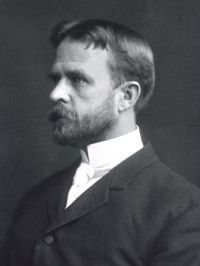
Portrait of Thomas Hunt Morgan Thomas Hunt Morgan,  Some possible bearings of genetics on pathology (1922)

“ If one can control the matings, so that out-breeding takes place each time, the result would undoubtedly be like that in our diagram; but what chance is there for a recessive character, that is neither beneficial nor injurious, if left to itself, to contaminate widely the race with its gene? The answer is that for any one defect there is hardly any chance at all. On the other hand, there is always a possibility that a defect may become widespread despite the chances against each in turn. ”
Source: Gutenberg

Roswell H. Johnson,  Applied Eugenics

“ The inheritance of an acquired disease is not only inconceivable, in the light of what is known about the germ-plasm, but there is no evidence to support it. While there is most decidedly such a thing as the inheritance of a tendency to or lack of resistance to a disease, it is not the result of incidence of the disease on the parent. It is possible to inherit a tendency to headaches or to chronic alcoholism; and it is possible to inherit a lack of resistance to common diseases such as malaria, small-pox or measles ”
Source: Gutenberg

Get perspective with Kwize: daily news enlightened by great literature