Summary

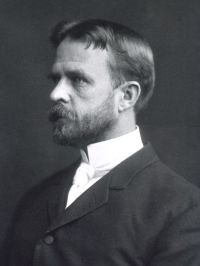
Portrait of Thomas Hunt Morgan Thomas Hunt Morgan Some possible bearings of genetics on pathology (1922)

If I have appeared at times overcritical concerning the application of genetics to pathology, it is not because I do not sympathize with the attempts that have been made to apply genetics to pathology. I realize, of course, that from the nature of the case much of this work is pioneer work, where rough and ready methods have often to be resorted to. So long as this is kept in view, no harm can be done in attempting to find how far Mendel’s principles can apply to heredity in man.
Source: Gutenberg

Portrait of Thomas Hunt Morgan Thomas Hunt Morgan Some possible bearings of genetics on pathology (1922)

In man and in domesticated animals we find that individuals appear occasionally that are defective in one or another respect. Some of the defects are inherited. Rarely a new one appears that has not been seen before. But the majority of them are reappearances of characters that have been carried under the surface as recessive genes in the germ-plasm. Today we recognize that each of these modifications, if recessive, has first arisen as a mutational change in a single gene before it appeared on the surface as a character by the coming together of two such genes.
Source: Gutenberg

Portrait of Thomas Hunt Morgan Thomas Hunt Morgan Some possible bearings of genetics on pathology (1922)

Hence whatever we learn about those hereditary elements that stand for defects, we learn just as much about the behavior of the normal partners of those elements. In a word, heredity is not confined to a study of the shuffling of those genes that produce abnormal forms, but is equally concerned with what is going on when normal genes are redistributed. This method of pitting one gene against the other furnishes the only kind of information relating to heredity about which we have precise knowledge.
Source: Gutenberg

Get perspective with Kwize: daily news enlightened by great literature