Summary

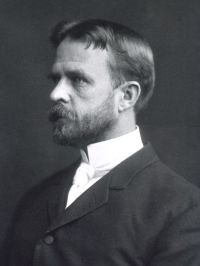
Portrait of Thomas Hunt Morgan Thomas Hunt Morgan A Critique of the Theory of Evolution… (1916)

First, if it were true that selection of an individual of a certain kind determines that new variations in the same direction occur as a consequence of the selection, then selection would certainly be creative. How this could occur might be quite unintelligible, but of course it might be claimed that the point is not whether we can explain how creation takes place, but whether we can get verifiable evidence that such a kind of thing happens. This possibility is disposed of by the fact that there is no evidence that selection determines the direction in which variation occurs.
Source: Wikisource

Portrait of Thomas Hunt Morgan Thomas Hunt Morgan A Critique of the Theory of Evolution… (1916)

He appealed to a fact familiar to everyone, that no two individuals are identical and that some of the differences that they show are inherited. He argued that those individuals that are best suited to their environment are the most probable ones to survive and to leave most offspring. In consequence their descendants should in time replace through competition the less well-adapted individuals of the species. This is the process Darwin called natural selection, and Spencer the survival of the fittest.
Source: Wikisource

Portrait of Thomas Hunt Morgan Thomas Hunt Morgan A Critique of the Theory of Evolution… (1916)

Are Factors Changed Through Selection?
As we have seen, the variation that we find from individual to individual is due in part to the environment; this can generally be demonstrated. Other differences in an ordinary population are recognized as due to different genetic (hereditary) combinations. No one will dispute this statement. But is all the variability accounted for in these two ways? May not a factor itself fluctuate? Is it not a priori probable that factors do fluctuate?
Source: Wikisource

Get perspective with Kwize: daily news enlightened by great literature