Thomas Hunt Morgan’s A Critique of the Theory of Evolution re-evaluates Darwinian evolution through the lens of emerging genetic principles, highlighting the significance of chromosomes, mutations, and Mendelian inheritance. Published during a time of scientific transformation, the work challenges established ideas by proposing that evolution results not only from competition for survival but also from the integration of advantageous mutations into populations.
Morgan questions Darwin’s dependence on natural selection as a force that amplifies existing characteristics rather than one that generates new ones, while incorporating insights from embryology, paleontology, and research on Drosophila to reshape evolutionary theory. The text emphasizes the interaction between genetic elements and environmental adaptation, portraying evolution as a process of incremental, inheritable change rather than a relentless struggle.
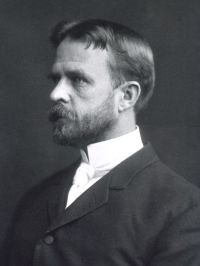 Thomas Hunt Morgan,
A Critique of the Theory of Evolution
Thomas Hunt Morgan,
A Critique of the Theory of Evolution
