“ The manifestations are not only in and around the ankle, but occur in the calf muscles and even above the knee. These painful conditions always develop unless the arch is supported. Until recent years it was rare to discover a bad case of flatfoot in which the patient had not taken many rheumatic remedies and had not come to the conclusion that he was the subject of an incurable and probably hereditary constitutional disease. Flatfoot is likely to cause considerable deformity in the old, the toes becoming bent and twisted up, and the subjects of it complain very much of their feet. ”
Flatfoot
Definition and stakes
The theme of “flatfoot” has been addressed by authors such as James J. Walsh, Charles Roberts, W. H. Harbaugh and Bernarr Macfadden. It is often associated with terms like foot, shoe, boot, heel and muscle.
Quotes about “flatfoot”
Charles Roberts, Popular Science Monthly (1883)
“ It is here, indeed, that nearly all the mischief lies, for according to my experience ninety per cent of the cases of lateral curvature of the spine in girls are associated with flat-foot. This deformity is exceedingly common among women, and a French savant recently quoted it as a proof of the physical inferiority of woman to man. To a slight extent flatfoot may exist in all women, as the position of the lower limbs after puberty would seem to produce it, and it may be Nature's plan to promote what anthropologists call marriage by capture ”
W. H. Harbaugh, Special Report on Diseases of the Horse
“ For these reasons such feet are particularly liable to bruises of the sole, corns, pumiced sole, and excessive suppuration when the process is once established. Horses with flatfoot should be shod with a shoe having a wide web, pressing on the wall only, while the heels and frog are never to be pared. Flatfoot generally has weak walls, and as a consequence the nails of the shoe are readily loosened and the shoe cast. ”
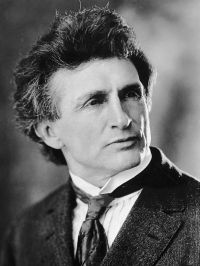 Bernarr Macfadden,
Vitality Supreme
Bernarr Macfadden,
Vitality Supreme
“ The sole of these forms of footwear has the same freedom in gripping the ground and adapting itself to the requirements of every step as the bare foot, and it is a curious and yet significant fact that whereas more or less foot trouble is the rule rather than the exception among civilized peoples, yet those races who wear moccasins or sandals, or go barefooted, never have flatfoot, broken arches, bunions or other defects of this type. ”
“ They are cases for psychotherapy more than any other form of therapeutics and need for a considerable period to have repeated assurances of the entirely local character of their affection. Bunions and Flatfoot.—The etiology and preventive treatment of a bunion has always seemed to me to bear a closer relation to a flat foot than to anything else. The flatfooted man has nearly always a tendency to bunions. The {417} explanation of this is not difficult if one traces the relation between the tendons that run around the arch to the big toe. ”
John Lord Peck, Dress and care of the feet (1872)
“ The flatness, if already existing, may tend to throw the foot still more toward the side. Either way, the first thing to be done is to counteract the flatness by a sufficiently long heel under the shoe, to support the arch. The shoe should also be made upon a flat-bottomed last, and one that will compel it to draw tight along the sides and ankle. Another requisite is that the counter shall be very stiff on the inside, while on the opposite side it should be weak. It should also be high as well as firm, sometimes very high, as when the ankle requires very much support. ”
John Lord Peck, Dress and care of the feet (1872)
“ If, for example, a shoe happens to be trodden on one side, and especially, as is most commonly the case, if it be so at the heel, then the heel has no support, except from the inner margin of the sole, which is thus worn away, and the heel-piece becomes oblique, or, in other words, lower at one side than the other. In walking and standing on such a heel-piece, the whole external margin of the foot is raised, and the inner, which naturally supports the arch, is so depressed as gradually to lose its convexity, and thus flat-foot is produced. ”
Popular Science Monthly (1884)
“ Flat-foot.—Flat-foot is an acquired deformity, characterized by a flattening or falling down of the inner longitudinal arch of the foot, a structure on which depend the form of the foot, the distribution of the weight of the body over it, and the grace and ease of walking connected with the rising forward on the toes. Its cause may be found in any condition that disturbs the natural equilibrium between the weight transmitted to the arch and the power of the fibrous and muscular structures to sustain the pressure. ”
John Lord Peck, Dress and care of the feet (1872)
“ Many a poor man is thus actually hobbled, to a greater or less extent, by the miserable foot-gear his poverty compels him to wear. As there is but very little bend to them, there is but little use of the muscles of the foot. It is cramped or unnaturally pressed upon, even though having plenty of room, and might almost as well be cased in iron as in the stiff kip or cowhide boot or brogan. The result is weakness, flattening, and a tendency to other kinds of distortion. We believe the frequency of flat-foot among some of the poorer classes of people may thus be easily accounted for. ”
Various, The Girl's Own Paper, Vol. XX, No…
“ The cause and treatment of flat-foot are well understood; but it is far more easy to prevent the feet from becoming flat, than it is to restore the natural arch of the foot after it has once been broken down. ”
 Edwin Abbott Abbott,
Flatland
(1884)
Edwin Abbott Abbott,
Flatland
(1884)
“ The size of the sides would of course depend upon the age of the individual. A Female at birth would be about an inch long, while a tall adult Woman might extend to a foot. As to the Males of every class, it may be roughly said that the length of an adult's sides, when added together, is two feet or a little more. But the size of our sides is not under consideration. I am speaking of the equality of sides, and it does not need much reflection to see that the whole of the social life in Flatland rests upon the fundamental fact that Nature wills all Figures to have their sides equal. ”
Charles Roberts, Popular Science Monthly (1883)
“ In the majority of cases the mischief would stop when the arch reached the level of the natural heel, but the heels of boots favor a still greater fall, which ends in e version of the foot. It is difficult to understand how women submit to the discomfort of wearing high-heeled boots, or can be so cruel as to let their daughters wear them. It is true they give a fictitious height to the body, and disguise the slighter forms of flat-foot, but on the other hand they exaggerate the severer forms, and the boots are entirely wanting in proportion. ”
 Maria Montessori,
Pedagogical Anthropology
Maria Montessori,
Pedagogical Anthropology
“ Flat Feet.—Another important malformation relates to the morphology of the feet. Everyone knows the distinctive curve or arch of the foot, and the characteristic imprint which it consequently leaves on the ground. Sometimes, however, this arch is missing, and the sole of the foot is all on the same plane (flat foot) . The dark-skinned natives of Australia have flat feet as one of their racial characteristics; in our own race it constitutes an anomaly that is frequent among degenerates. ”
Various, The Girl's Own Paper, Vol. XX, No…
“ We do not believe that flat-foot would ever occur if people did not wear boots or shoes. If your boots are very well made, and do not bend at the waist, but are flexible in the toes, they will not produce flat-foot. ”
 Hilaire Belloc,
The Footpath Way: An Anthology for Walkers
Hilaire Belloc,
The Footpath Way: An Anthology for Walkers
“ Occasionally on the sidewalk, amid the dapper, swiftly-moving, high-heeled boots and gaiters, I catch a glimpse of the naked human foot. Nimbly it scuffs along, the toes spread, the sides flatten, the heel protrudes; it grasps the curbing, or bends to the form of the uneven surfaces,—a thing sensuous and alive, that seems to take cognisance of whatever it touches or passes. How primitive and uncivil it looks in such company,—a real barbarian in the parlour. We are so unused to the human anatomy, to simple, unadorned nature, that it looks a little repulsive ”
John Chiene, Encyclopædia Britannica, Ninth Edition (1878)
“ The third and fourth varieties are so rare that they are of no practical interest, and need not be further alluded to. It is possible to confound true talipes valgus with flat-foot, a deformity which is the result of undue stretching, from weakness, of the fascial and ligamentous structures which maintain the arched form of the foot. In flat-foot the arch is lost, the patient is splay or flat-footed, and as a secondary deformity the foot is turned outwards, resembling and often confounded with true talipes valgus. ”
John Murdoch, Ethnological results of the Point Barrow expedition
“ When the folds are all of the same length and but slightly gathered the sole is turned up nearly straight, as at the heel usually, and at the toe also of waterproof boots. When the folds are long and much gathered the sole slopes well in over the foot. Some boots, especially those intended for full dress, have the sole deeper on the sides than at the toe, so that the top of the sole comes to a point at the toe. The ordinary pattern is about the same height all round and follows the shape of the foot, being rather more gathered in over the toe than at the heel. ”
Charles Roberts, Popular Science Monthly (1883)
“ It is a distinction, however, which is more than counterbalanced by the ugliness and inconvenience of flat-foot, to which it frequently gives rise. The ingenuity of an Edison could not devise a machine so favorable to the production of flat-foot as the tight-fitting, high-heeled, long-topped boot at present worn by girls. ”
John Lord Peck, Dress and care of the feet (1872)
“ It is in persons of the opposite type—those who have firm, close, hard, and strong muscles, and no extra flesh—that the arch is found in its greatest perfection. There the strong muscles and ligaments bind the bones together with such firmness that the arch is enabled longer to resist the influences which tend to break it down. Yet the flat foot is very common, in spite of all nature’s efforts for prevention. The deformity, in greater or less degree, may be said to exist as the rule among adult persons, while the natural arch is the exception. ”
John Lord Peck, Dress and care of the feet (1872)
“ There is a low arch, transversely of the foot, from the ball of the great toe to that of the little one, its two opposite resting points. In nature it is somewhat like the great arch between the ball and heel. To raise the sole under it is like supporting an arch in the middle, which would be absurd. In this case it is entirely unnatural, and only of use in a boot that is very tight, or much too narrow, where it may do good by preventing the formation of a big wrinkle in the sole of the foot, lengthwise, which might come from the drawing together of the opposite sides. ”
John Lord Peck, Dress and care of the feet (1872)
“ So also it is seen that the old-fashioned short heels, so long worn, have had an influence in producing the broken-down arch of the flat-foot; while other defects in the construction of the foot’s covering manifest themselves by callosities on the heel and instep, the turning over to one side, and the pressure, squeezing, and general discomfort in the fit. ”
“ The heels of the fashionable ladies' shoes at the present moment—quarter past three, P.M., August 4th, 1870,—are two inches high, and at the bottom not larger than an old-fashioned silver quarter of a dollar, if anybody can remember how large that was.Need it be argued that this absurd fashion weakens the ankle, and jams the toes into the sharp points of the boots?If a woman were to walk as much as her health requires, with those most unphysiological heels, her feet would soon be crippled. The ankle, the heel, the arch of the foot and the toes must all suffer. ”
Anthony M. Rud, The Giant Footprints (1918)
“ As I followed Masters' pointing finger, I felt the icy chill of fear course down my spine! I veritably believe that my hair came as near to standing on end as lies within the possibilities. Printed plainly in red on the brown of the earth was the spoor of a gigantic human foot! “It's nearly two feet long!” I cried aghast, feeling in my veins the curdling that the sanest man feels when he rubs elbows with unexplained horror. “Surely no man alive has feet like that!” ”
Edith Elmer Wood, An Oberland Châlet (1910)
“ And in Antonio the South claimed her own again.Even the discomfort of my shoes could not seriously dampen my enjoyment. Those trodden-over heels had become nearly unbearable; but when I caught one between two rocks and tore it off, the resulting limp was worse. It was not till the next morning that Frater evolved the brilliant thought of prying off the other heel to match, which was a great relief.Feet and shoes are always a problem on a long pedestrian trip. A shoe too tight is misery, but one too large, which allows the foot to rub and chafe, is almost as bad. ”
 Ada S. Ballin,
Science of Dress
(1885)
Ada S. Ballin,
Science of Dress
(1885)
“ With such ill-made boots (see Plate 8, Fig. B) owing to the bones of the feet being prevented from exercising their proper movements in walking, the muscles below the knees, which are connected with those bones, waste for want of use. The foot, cramped into a motionless mass by the boot, thus becomes in its function, or rather want of function, very like the deformed "lily" of the Chinese, and the shrunken, calfless leg is in a similar way used simply as a stump. ”
Bernarr Macfadden,
Vitality Supreme
“ Some day, when we are really civilized, high heels will be unknown. I am convinced that the Omnipotent Creator knew his business thoroughly when he created the human foot, that the sole of the human foot, heel included, was made for locomotion, and that it is impossible for human ingenuity to improve upon the foot. In other words, if you can secure footwear that will enable you to walk with the same freedom that you can enjoy when barefooted, you will then have attained perfection in foot covering. ”
John Lord Peck, Dress and care of the feet (1872)
“ Flat-foot is occasioned by the loosening of the ligaments that knit the foot firmly together, and, by the consequent sinking of the arch, the inner aspect of the foot no longer presents the natural hollow in the sole. The causes of such loosening of the ligaments are numerous, but by far the most frequent, and one readily induced by the ordinary shoe, is weight improperly directed on the arch. ”
 Gene Stratton-Porter,
The Keeper of the Bees
(1925)
Gene Stratton-Porter,
The Keeper of the Bees
(1925)
“ The footprint of a woman—not the peaked toed, pointed heel that he sometimes saw tilting over the sand. The imprint of a foot intended for business, shod in a shoe reasonable in width, unusual in length, with decidedly a common-sense heel. Jamie sprang up, and clasping his flowers followed that row of footprints straight down the beach to the throne. ”
Edmund Flagg, Flagg's The Far West, 1836-1837…
“ But, by a close inspection, it will be perceived that these are not the impressions of feet accustomed to the European shoe; the toes being much spread, and the foot flattened in the manner that is observed in persons unaccustomed to the close shoe. The probability, therefore, of their having been imparted by some individual of a race of men who were strangers to the art of tanning skins, and at a period much anterior to that to which any traditions of the present race of Indians reaches, derives additional weight from this peculiar shape of the feet. ”
Joseph Sparkes Hall, The Book of the Feet: A History of Boots and Shoes
“ The cracking joint unhinge, or ankle sprain; And, when too short the modest shoes are worn, You’ll judge the seasons by your shooting corn.” {112} CHAPTER VI. THE POETRY OF THE FEET, ETC. THAT any form of boot or shoe should have interfered with the beauty of the human foot and its elastic tread, is much to be lamented. The sculptures of antiquity all show great symmetry and beauty of form, whether in the male or female foot: the plump, rounded, and truly natural shape of the feet of the Venus de Medicis has excited the admiration of every one who ever looked at that beautiful statue. ”
Ada S. Ballin,
Science of Dress
(1885)
“ At this time high heels are most dangerous, as they are not only likely to cause the wearer to fall forward, but they prepare for her a difficult labour by causing the lumbar vertebrae to push forward. The high heel assists the pointed toe in deforming the foot by forcing the foot forward to the end of the boot. A simple experiment will show any individual what the shape of his boots ought to be; for feet are as distinctive features of the human frame as hands or faces, and they ought to be studied accordingly. ”
