Ironclad cruiser

Definition and stakes

Richard A. Fletcher,  Warships and their story (1911)

“ The duties of the modern cruiser are multifarious. She has to be no less a commerce protector than a commerce destroyer, and while at one end of the scale she may be little more than a glorified gunboat, she may at the other end have to be able to take her place in the line of battle and help her more powerful sisters. Whatever her duties, speed is regarded as of great importance.
The Iris, in 1878, attained a speed of eighteen and a half knots, but more than seventeen years elapsed before this speed was equalled by any of the cruisers.
”
Source: Gutenberg

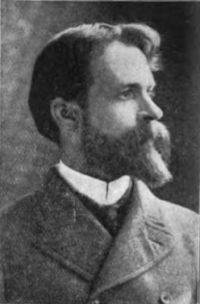
Portrait of Willis J. Abbot Willis J. Abbot,  The Naval History of the United States…

“ The engines had been so placed as to be exposed above water-line, which was condemned as a serious mistake in a war-vessel without armor-protection. It was realized, too, that the essential characteristic in an unarmored cruiser is great speed. The function she is expected to perform is to destroy commerce; and if she is slower than the merchant-vessels it is useless for her to go to sea; and if she is slower than the iron-clads, and consequently cannot escape from them, she could not long continue her service. ”
Source: Gutenberg

Cyril Field,  The British Navy Book

“ The Glasgow, Carnarvon, and Bristol were of great use in the Falklands fight, the first-named having already fought against the heavy batteries of the Scharnhorst and Gneisenau off the coast of Chile, while later on she sank the Dresden; while the Sydney won undying fame by defeating and driving on shore the notorious commerce-destroyer Emden.
Another distinctly modern type of cruiser is the "light cruiser", a fast unprotected vessel with light guns of 4-inch calibre, which has proved of immense value in the area of "liveliness" in the North Sea.
”
Source: Gutenberg

Get perspective with Kwize: daily news enlightened by great literature