Neurodegeneration

Definition and stakes

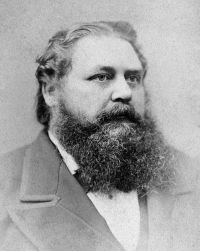
Eugene S. Talbot,  Degeneracy: Its Causes, Signs and Results

“ All the organs of the body are weakened in their function. Practically the neurasthenic in regard to his organs has taken on a degenerative function albeit not degenerating in structure, since the restlessness of the organs is a return to the undue expenditure of force which occurs in the lower animals in proportion as it is unchecked by a central nervous system. Through the influence of various exhausting agencies the spinal cord and the brain lose the gains of evolution and the neurasthenic is no longer adjusted to environment. ”
Source: Gutenberg

Popular Science Monthly (1884)

“ We meet with the preponderance of nervous diseases in the refined and cultivated classes, where, by premature and stimulating processes of education, there has been forced an elaboration of brain-structure, hastening the functional activity of the brain, with no due regard to the law of evolutional precedence. Normal growth and development will give us healthy minds, while a structurally degraded centric nervous system, or an altered quality of blood, and secondary disturbance of nerve-function, will antagonize healthy mental manifestation. ”
Source: Wikisource

Carl Gustav Jung,  Collected Papers on Analytical Psychology… (1916)

“ In the course of epilepsy there arises gradually a typical degeneration of the brain. The degeneration is, however, only discoverable in severe cases and when the disease has existed for some time. If the attacks have only existed for a relatively short time, not more than a few years, the brain as a rule shows nothing. Seventeen per cent, of our patients suffer from progressive paralysis and senile dementia. Both diseases present characteristic changes in the brain. In paralysis there is most extensive shrinkage of the brain, so that the cortex is often reduced by one half. ”
Source: Wikisource

Get perspective with Kwize: daily news enlightened by great literature