Preterite tense

Definition and stakes

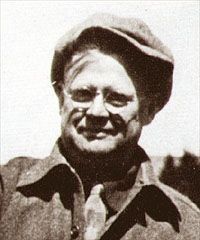
Portrait of H. L. Mencken H. L. Mencken,  The American Language — The Verb (1919)

“ Moreover, this perfect participle, thus put in place of the preterite, was further reinforced by the fact that it was the adjectival form of the verb, and hence collaterally familiar. Finally, it was also the authentic preterite in the passive voice, and although this influence, in view of the decay of the passive, may not have been of much consequence, nevertheless it is not to be dismissed as of no consequence at all. ”
Source: Wikisource

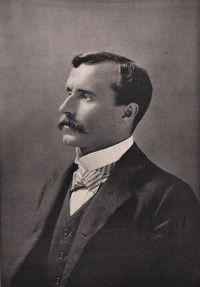
Portrait of H. L. Mencken H. L. Mencken,  The American Language — The Verb (1919)

“ Even when a compound has as its last member a verb ordinarily strong, it remains weak itself. Thus the preterite of to joy-ride is not joy-rode, nor even joy-ridden, but joy-rided. And thus bust, from burst, is regular and its preterite is busted, though burst is irregular and its preterite is the verb itself unchanged. The same tendency toward regularity is shown by the verbs of the kneel-class. They are strong in English, but tend to become weak in colloquial American. ”
Source: Wikisource

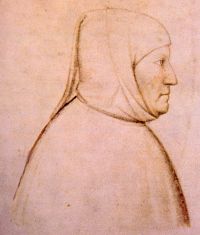
Portrait of Francesco Petrarca Francesco Petrarca,  Petrarch's Secret; or, the Soul's Conflict with Passion

“ But you see what will be the consequences of that error in which you stand; it will precipitate your soul into all manner of folly, when shame, and fear, even reason, that now acts as some check on passion, and the knowledge of truth itself shall all have disappeared.
Petrarch. I have already told you you were wasting your time. My own remembrance tells mo that I have never loved anything to be ashamed of, and, on the contrary, have ever loved what is most noble.
S. Augustine. Even noble things may be loved in a shameful way; it is beyond doubt.
”
Source: Gutenberg

Get perspective with Kwize: daily news enlightened by great literature