“ Synæresis readily takes place for vowels ordinarily in distinct syllables (fió, etc.) ; but diæresis hardly obtains for the vowels of a true diphthong (cambió, etc.) . (c) The combinations ió and iè are usually diphthongs in the terminations of the preterite indicative, the future subjunctive, the past tenses of the subjunctive, and the gerund, of verbs of the second and third conjugations: e.g., murió, muriere, muriese, muriera, muriendo. ”
Preterite
Definition and stakes
The preterite, a grammatical tense indicating completed past actions, plays a central role in many languages, functioning as the simple past in Spanish, French, and English. In Romance languages, it contrasts with the imperfect to denote clear, singular events, as illustrated by Spanish murió (died) or French passé simple for narrative accuracy. Although authors such as J. B.
Priestley or William Youatt did not directly examine its linguistic structure, the preterite’s functional significance—evident in verb forms and tense differentiation—remains essential for understanding the development of languages over time and the temporal aspects of storytelling. Its continued presence in literary and grammatical discourse highlights its lasting value in conveying past events with precision and subtlety.
Quotes about “preterite”
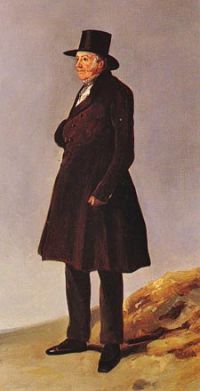 William Youatt,
The Hog
(1855)
William Youatt,
The Hog
(1855)
“ It is subject to attacks of inflammation, technically termed PERITONITIS, the symptoms of which closely resemble those of splenitis; and the causes too are very similar, being chiefly improper food, repletion, or exposure to extremes of temperature. Oleaginous purgatives are here the only ones which are admissible, and emollient clysters; great attention must also be paid to the diet, and nothing of an acrid or indigestible nature given to the animal. This disease is too often fatal, gradually wasting away its victim. ”
Aegineta Paulus, The seven books of Paulus Ægineta… (1844)
“ Of burnt sori, dr. ij; of frankincense, dr. ij; of verdigris called xyston, dr. j: having triturated with honey, apply to the pterygia. It is useful for the other malignant ulcers, and for lividity, and putridity of these parts.—Another: Add the flakes of copper to the flesh of dates, or of figs, and use.—Another: Having boiled and triturated pigeons’ dung in must with fine polenta, apply warm. And the flakes sprinkled by themselves dry up pterygia. We must always raise and remove with a scalpel the corner of the nail when it increases so as to hurt the pterygium. ”