Sacristan

Definition and stakes

Anonymous The Church Handy Dictionary

Justin Martyr and Irenaeus, both Fathers of the 2nd century, speak of the Eucharist as a sacrifice. Tertullian, of the 3rd century, does the same. (See Altar, and Communion, The Holy.)
SACRILEGE. The desecration of objects sacred to God. Thus the robbing of churches or of graves, the abuse of sacred vessels and jars, by employing them for unhallowed purposes, the plundering and misappropriation of alms and donations, &c., are acts of sacrilege which, in the ancient Church, were punished very severely.
SACRISTAN. The person to whose charge the sacred vestments, &c., in a Church are committed.
Source: Gutenberg

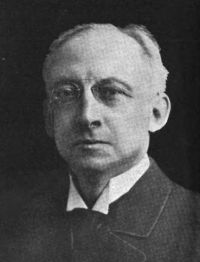
Portrait of Richard Heber Newton Richard Heber Newton The Right and Wrong Uses of the Bible

Men who felt the reality of a mystic communion with Christ, of which the Supper of the Lord was the symbol,—who felt the strengthening of their characters as their thoughts fed upon the words and life of Jesus,—naturally came to speak of the sacrament in terms of awe, which magnified the mystery, until at last they bowed down before the veritable body and blood of Christ, and trembled with fear as the tinkling of the silver bell announced that the priest was bringing God down into a wafer!
Source: Gutenberg

J. G. H. Barry Our Lady Saint Mary

This heavenly oblation of our Lord which is the means wherethrough we approach pure Divinity, is also the Sacrifice of the Church here on earth. The heavenly Altar and the earthly Altar are but one in that there is but one Priest and one Victim here and there. The Eucharistic Sacrifice is the Church's presentation of her Head as her means of approach to God, as the ground of all her prayers. These prayers make their appeal through Jesus Who died and rose again for us and is on the Right Hand of Power. We know of no other way of approach, we plead no other merit as the hope of our acceptance.
Source: Gutenberg

Get perspective with Kwize: daily news enlightened by great literature