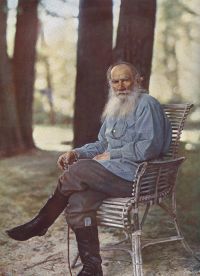
“ Moreover, the action of ruderal plants—including grasses—is to completely alter the nature of the poor soil and gradually fit it for other plants. Coverings of grass greatly affect the actions of heat and sunshine on the surface soil, and modify the effects of radiation and evaporation, to say nothing of the penetrating and other effects of the roots.Rhizomes and stolons break up stiff soils; and every engineer and forester knows how useful certain grasses are in keeping the surface-soil from being washed down by heavy rains on steep hill-sides or embankments. ”
Stolon
Definition and stakes
A stolon is a horizontal structure found in various organisms, acting as a pathway for growth and reproduction. In botany, it refers to a stem that facilitates the development of new plants, as observed in strawberries and grasses, while in mycology and zoology, it links fungal hyphae or colonial organisms. Authors such as H.
Marshall Ward emphasized its ecological function in soil modification, pointing out how stolons and rhizomes disrupt compacted earth. Although literary mentions are limited, the concept’s adaptability—spanning biology, mycology, and colonial formations—highlights its importance as both a biological process and a metaphor for interconnectedness.
Quotes about “stolon”
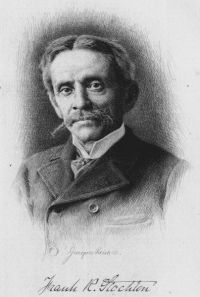 Frank R. Stockton,
The Magic Egg, and Other Stories
Frank R. Stockton,
The Magic Egg, and Other Stories
“ Tolman began to feel hungry. He had his winter appetite, and had lunched early. So said he to the night druggist, who had opened his "Dormstock," "How would you like to sit here and read awhile, while I go and get my dinner? I will light the gas, and you can be very comfortable here, if you are not in a hurry." P. Glascow was in no hurry at all, and was very glad to have some quiet reading by a warm fire; and so Mr. Tolman left him, feeling perfectly confident that a man who had been allowed by the old lady to renew a book nine times must be perfectly trustworthy. ”
Frank R. Stockton,
The Magic Egg, and Other Stories
“ The night druggist wanted to think about it. "There is nothing to think," said Mr. Tolman. "We know all about the lady." (He spoke truly, for he had informed himself about both parties to the affair.) "Take my advice, and be here to-morrow afternoon—and come rather early." The next morning Mr. Tolman went up to his parlor on the second floor, and brought down two blue stuffed chairs, the best he had, and put them in the little room back of the shop. He also brought down one or two knickknacks and put them on the mantelpiece, and he dusted and brightened up the room as well as he could. ”