Watertight compartment

Definition and stakes

John Bernard Walker,  An Unsinkable Titanic: Every Ship its own Lifeboat

“ Other things being equal, the protection of a ship against sinking is exactly proportionate to the number of separate watertight compartments into which the interior of her hull is subdivided. If she contains no watertight partitions whatsoever, her sinking, due to damage below the water-line, is a mere matter of time. If the inflow exceeds the capacity of the pumps, water will flow into the ship until all buoyancy is lost. Protection against sinking is obtained by dividing the interior of the hull into a number of compartments by means of strong, watertight partitions, or bulkheads. ”
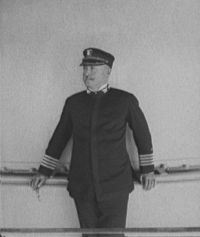
Source: Gutenberg

John Bernard Walker,  An Unsinkable Titanic (1912)

“ It sounds like a truism to say that a watertight bulkhead must be watertight; yet it is a fact that only in the navy are the proper precautions taken to test the bulkheads and make sure that they will not leak when they are subjected to heavy water pressure. Before a ship is accepted by the government, every compartment is tested by filling it with water and placing it under the maximum pressure to which it would be subjected if the ship were deeply submerged. ”
Source: Wikisource

John Bernard Walker,  An Unsinkable Titanic (1912)

“ Now, here is a practice which should be made compulsory in the construction of all passenger-carrying steamships. Only by filling a compartment with water is it possible to determine whether that compartment is watertight. To send an important ship to sea without testing her bulkheads is an invitation to disaster. The amount of water that may find its way through a newly-constructed bulkhead is something astonishing ”
Source: Wikisource

Get perspective with Kwize: daily news enlightened by great literature