AI-generated from sources
Brute or Fellow Sufferer, the Cabman in the Long Quarrel over the Cab Horse
In Brief
- The 19th-century campaign against cruelty to working horses chose mostly to prosecute: the man with the whip was cast as a brute, and punishing him became proof that a city was civilized.
- Lydia Maria Child, explaining in an 1839 anti-slavery catechism why overseers were harsher than masters, noted that men drive hired horses with less mercy than their own—a logic that places cruelty in the trade rather than in the driver.
- Sympathy for the horse and sympathy for its driver behaved like rivals: a defender of overworked railroad crews complained that animals had a cruelty law and men had none, while a defender of animals praised the horse for never striking.
- Machines, long hoped for as the abolition of “horse slavery,” removed the horse without settling the driver's case; when drivers' hours came under regulation, it was in the name of public safety, not of their hardship.
Main authors


One of the commonest sights of the big city, an editorial in the Hearst newspapers observed, was that of “a strong, brutal human being” beating a weak and overworked horse because it refused to do what it could not do [1]. Its author, Arthur Brisbane, drew the moral in his headline: the automobile would make us more human. The scene seems to read itself. Yet it holds two figures, and only one of them was ever in question. Nobody doubted that the horse was a victim. A writer in Chambers's Journal, standing before a cart horse unharnessed and stretched out in the street amid a crowd of idlers, judged that man's inhumanity to man was nothing beside the inhumanity shown to the horse [2].
The man on the box was harder to place. For the reformers of the 19th century and their heirs, he could be read in two ways. He was the brute, to be named, prosecuted and punished, and his punishment proved a city civilized. Or he was a hired hand in a trade that overworked horse and man alike, and the blows he struck were the last link of a chain that began with owners and employers. The two readings never quite merged into an alliance of fellow sufferers. When the motor car was hailed as the end of “horse slavery” [3], it closed the quarrel without settling it. It removed the horse, and with it the scene in which the driver's guilt or misery could be seen at all.
A stain upon the city, the cabman in the dock
The first reading carried the day because it fitted the courts: cruelty was the act of a person, and a person can be punished. A. S. Forrest, touring South America, found the cab horses of one city badly treated by their drivers [4]. What shocked him was less the cruelty than the impunity. The city had emulated northern capitals in so many respects, yet its authorities let “the brutes who ill use the poor beasts” go unpunished . The word brute has changed species. And the prosecution of cabmen has become a badge of modernity, the proof that a city belongs among the civilized.
The law was meant to lead opinion, not to follow it. The 1911 Encyclopædia Britannica records that the Cruelty to Animals Acts of 1849 and 1854 made practically any act of cruelty to an animal liable to prosecution and fine [5]. A society for the protection of animals posted its warnings on placards, from fowls carried to market by the legs to the bearing-reins of carriage horses [6]. James Anson Farrer supplied the theory. The protection of creatures too feeble to protect themselves, he argued, justifies legal punishment, and the law is often at first the only lever of a community's moral ideas [7]. On this view the courtroom educates the street.
The cases that circulated gave the punitive reading its face. Frederic Rowland Marvin, in 1908, told of a man who cut out the tongue of his balking horse and threw it on the roadside; twenty years in state prison, he thought, should have followed [8]. Cora May Williams cited the police courts as proof that wanton cruelty survives in enlightened societies. She recalled an owner who prodded his suddenly ill, fallen horse with a pitchfork until it died of its wounds [9]. Both stories are about owners, and both are about sadism. They show cruelty as an aberration of character. That is exactly the kind of cruelty a magistrate can reach.
Behind the brute stood a social portrait. A contributor to Popular Science Monthly in 1893 expected that “the ignorant, the lowly organized, and the depraved” would long maltreat animals, and that they must be deterred by punishment [10]. For everyone else, he hoped for a strong public feeling on the rights and relations of animals . The division is the author's own, and it is telling. Education was for the respectable, the penalty for the low. The passage names no drivers. But a poor man working a horse in the public street fell easily on the wrong side of the line.
Hired horses, hired men
The second reading began with a remark about ownership. In an anti-slavery catechism of 1839, Lydia Maria Child explained why the overseer was harsher than the master: when a slave died under punishment, the loss fell on the master, not on him [11]. To make the point plain she reached for a comparison her readers would recognize. Men drive hired horses with less mercy than their own, because injury to the beast costs them nothing and they want their money's worth . The analogy was offered to explain slavery, not the cab trade. Yet it contains a whole economics of the working horse. Cruelty grows in the gap between the one who drives and the one who bears the loss.
Child drew the conclusion that the prosecutors avoided. Overseers and drivers, she wrote, were a necessary part of a bad system, and its evils could not be avoided except by giving up the system itself [12]. Moved from the plantation to the street, the sentence shifts the guilt upward. Ouida, writing for the animals more than half a century later, made a similar move. The punishments of her day were slight, she complained, and the vast mass of cruelty—the “daily continual brutal offences” of owners and employers—lay entirely beyond the reach of any punishment [13]. Her target was not the rare sadist of the police court. It was the routine of those who owned the animals and set them to work.
Prosecution reached the spectacle, not the routine. William James Miller, wintering on the Riviera, thought the offender he had witnessed ought to have been prosecuted, since France had its own Society for the Prevention of Cruelty to Animals [14]. But the police were callous, he suspected, and cruelty to a horse often consists in “little aggravating acts which a prosecution might fail to reach” . J. T. Denny, writing on horses and roads in 1880, moved the definition further, from the blow to the work. To drive a horse that cuts himself is cruelty, he wrote, and some day it will be punished as such [15]. Once cruelty means sending an unfit horse onto the road, the question is no longer who held the whip. It is who decided which horse went out.
The cabmen, meanwhile, had a history of their own. Henry Charles Moore's 1902 chronicle of omnibuses and cabs lists their strikes, one of them against the introduction of lamps, beside a Cab-drivers' Benevolent Association, a London Cabmen's Mission and a Cabmen's Shelter Fund [16]. It concedes that their reputation for extortion was old, while insisting that men had often been accused wrongfully . Here is a trade with grievances, charities and missionaries: an object of philanthropy as much as of suspicion. The law, too, could treat it as a calling. Justice John Marshall Harlan held that licensed hackmen and cabmen might, within reasonable limits, use a public sidewalk in prosecuting their calling [17]. The brute of the placards was also a licensed worker with a claim to the street.
Never strike, never dream of a vote
An alliance of fellow sufferers was conceivable. It rarely formed, because sympathy for the horse and sympathy for the man behaved like rivals. In 1907 a writer in Watson's Jeffersonian Magazine described a railroad where pay fell a third short and not half enough help was employed [18]. His conclusion was bitter. Were the freight crew animals, the authorities could be indicted for cruelty; being only human beings, they had no law to cover them . Anti-cruelty law had become the yardstick of what the worker lacked.
The comparison cut both ways, and each side believed the other better protected. The Chambers's Journal writer before the fallen cart horse granted that man's inhumanity to man makes thousands mourn, only to rank it below the cruelty done to horses . A speech gathered in Standard Selections tipped the scale the other way, against slavery. The whole country would turn out to hang a horse thief, its speaker observed, yet would hang the man who helped a stolen man back to liberty—such were the inconsistencies of a system “where a horse is more sacred than a man” [19]. The hierarchy of protection was nowhere natural. It was a matter of law and habit, and it could be read as an insult from either end.
The sharpest formulation came from the side of the animals. Elliott O'Donnell, who thought the White Slave Traffic Act powerless to cure the evil it aimed at, wished its promoters would labor instead for a peaceful end for “our four-footed toilers” [20]. These, he wrote, work for us all their lives, never strike, never think of a pension for old age and never even dream of a vote . The horse is praised for lacking exactly what the worker claims. In Why I Am a Vegetarian, J. Howard Moore likewise called the horse a slave rather than an associate: a creature without rights, overworked, deprived of leisure and liberty [21]. The vocabulary of labor and slavery passed to the animal. It did not carry the driver with it.
The strike, in the same years, turned drivers into a public menace. A 1914 contributor to Popular Science Monthly listed the strike of express-wagon drivers in New York among conditions that should make every patriotic American blush [22]. Protection, he complained, went grudgingly to employers, and bringing in men willing to work seemed to be treated as a crime . Set beside the horse that never strikes, the driver who lays down his reins is the opposite figure. Read together, these texts suggest why horse and man so seldom shared a cause. The animal could be defended because it could not speak; the man lost sympathy as soon as he spoke for himself.
From the steam carriage to the end of horse slavery
The hope that a machine would do what the courts could not is older than the motor car. In 1831 the Mirror of Literature doubted that any campaign could match the relief that locomotive machinery would bring to the horses of the stage-coaches; it spoke of mitigation, “rather abolition”, of their suffering [23]. Nearly eight decades later, The Forerunner made the same case in another register. There was no horse work in a city, it argued, that machines could not do, and machines breed no flies [24]. The horse's deaths, long sicknesses and doctors' and druggists' bills outweighed the value of his labor and manure . Mercy had given way to hygiene and accounting. The horse was no longer a sufferer to be spared but a cost to be cut.
In Brisbane's editorials the machine redeemed the man as well as the horse. The disappearance of horses from the cities would abolish horse slavery, he wrote, and men “compelled to use their brains in dealing with machinery” would become more nearly human . This is the punitive reading carried to its end. The driver is still the problem, but the cure is no longer prison; it is a discipline imposed by the machine. Alfred Charles William Harmsworth, writing on motoring in 1902, judged the troubles of the transition temporary [25]. Meanwhile he laid the duty on horse-owners: train their animals to meet motors, and keep high-couraged horses out of the hands of incompetent lads . Even at the coming of the motor, blame settled on whoever held the reins.
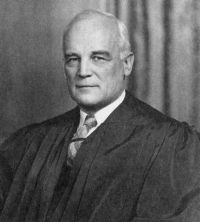
The driver did not vanish with the horse; he was reclassified. The danger he posed to others was an old theme. In Paris, Francis William Blagdon reported, the law required bells on the neck of every cabriolet horse and two lamps after dark, and the police dealt severely with offenders, yet serious accidents still happened [26]. With the motor, that reading took over. A California highways journal called reckless and drunken drivers a constant menace to life and property and wanted them stripped of their licenses [27]. Justice Harold Hitz Burton went further. Ten minutes of driving by an unqualified driver, he wrote, may do more harm than a year by a qualified one; the Commission therefore needed power over the qualifications and maximum hours of every employee whose work affected safety [28]. Here the driver's hours become a matter of law. They do so as a danger to the public, not as a hardship to the man.
What the machine offered, in the end, was the ideal worker that the horse had almost been. In a passage of Edgar Lee Masters's Children of the Market Place, the speaker welcomes the end of slavery as the replacement of a wooden plow by steel ones, which accomplish more and are themselves more truly slaves [29]. The same voice then turns to the strikes across the land. Men are free to choose their work, it concedes, but not free to organize, to agitate for better wages or to strike . The horse had been praised for never striking; the machine never could. Between them, the free driver remained the one part of the trade that could still refuse.
The long campaign against cruelty to the city's working horses had to decide whom to blame when a horse was beaten in the street. Its institutions answered with the law. They prosecuted the man with the whip, made his punishment the sign of a civilized city and painted him in the colors of the ignorant and the depraved. A minority looked past him to the trade: to hired horses driven with less mercy than owned ones, to owners and employers whose daily cruelty no court could reach, to cabmen with their own strikes, charities and missions. The two views never fused into a defense of horse and driver together. The horse was admired for never striking, and the overworked man envied the beast its law.
The machine settled the matter by removing its object. Hoped for as the abolition of horse slavery as early as the age of the steam carriage, it emptied the streets of the scene that had made the driver visible, whether as culprit or as fellow victim. What remained of him was a question of qualifications, licenses and maximum hours, argued in the name of other people's safety. The horse left the street with its law; the driver stayed behind with his hours.