AI-generated from sources
Fusion and the Farmers' Revolt, How the People's Party Traded Its Program for Silver
In Brief
- The People's Party of the 1890s was born of a refusal to vote along old party lines, yet from its early campaigns it allied with whichever old party was weaker locally—Republicans in the South, Democrats in the West.
- Fusion delivered what independence could not: in several Western states the Populists swept the field with Democratic help, while without it they ran a close second.
- The price was paid in program: the 1892 Omaha Platform attacked corporations, national banks, trusts and usurers, but free silver, a demand shared by many Democrats, rose to the top after the panic of 1893 and took over the party.
- At the 1896 convention in St. Louis, the Populists chose fusion and nominated the Democratic candidate Bryan; the party survived as an organization without its vitality, and the Democrats themselves dropped free silver before 1904.
Main authors
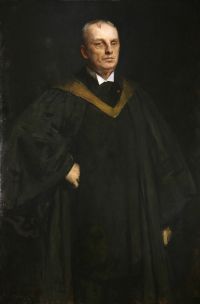
"If all parties nominate your enemies, then put some of your own friends into the race." The counsel, quoted by the historian Solon J. Buck from the farmers' revolt of the late 1880s, was arithmetic before it was moral [1]. If nothing could be gained by scattering votes among the candidates of the old parties, independent action was the only course left. The Farmers' Alliance of Kansas turned that reasoning into a vow: it would no longer divide on party lines and would vote only for candidates of the people [2]. Out of such resolutions grew a party of protest, dominated by farmers, formidable enough to warn the machine politicians that something new was moving in the country .
Yet a third party in a two-party system meets its dilemma on the first day. To win seats it needs the votes of others; to get them it must bargain; and every bargain narrows what it can say. The People's Party of the 1890s lived out this dilemma in less than a decade. Its alliances with the old parties often delivered the votes it sought. What they cost was the program: a revolt against railroads, banks, trusts and usurers ended its decisive alliance carried by a single demand, free silver. The sources, however, refuse the simple tale of a pure party corrupted. Fusion was its method almost from the start, and silver was its bait before it became its master.
The Familiar Fold and the Omaha Indictment
The first adversary of the revolt was not the railroad but the farmer's own loyalty. In the 1880s, Buck writes, alliances, wheels and leagues multiplied, giving shape to an unrest bred by a decade that was prosperous only on the surface [3]. The conviction that a new party was needed came slowly. A Republican or Democrat of long standing left "the familiar fold" only with reluctance . Kenyon L. Butterfield, a student of rural life, described the paradox behind this slowness: farmers were usually conservative and intensely loyal to party, yet a rural community that broke from its moorings turned intensely radical [4]. The slowness and the violence of the revolt had the same root.
That loyalty was not only habit; it was maintained by those it served. F. M. Perryman, writing of pioneer Illinois, accused the moneyed interests of stirring every party prejudice they could, convinced that voters freed from their love of a party name would unite against class legislation [5]. His list of wrongs also included the liquor traffic—a reminder that the reform agendas of the period were wider and more mixed than any single platform. In Alabama, according to Joseph C. Manning, the tool was fear. Democrats told Southern voters that a vote against their party meant support for some unnamed catastrophe, so that no farmer could weigh his empty pocket "and go off to discussing the money question" [6]. In the South, leaving the party meant defying a whole argument built on dread.
What the independents broke away for was broad. The Omaha Platform of 1892 accused the two old parties of having agreed to ignore every issue but one [7]. Their sham battle over the tariff, it charged, was meant to hide capitalists, corporations, national banks, rings, trusts, watered stock, the demonetization of silver and the oppressions of the usurers . Silver appears in that list as one grievance among many, not as the key to all the others. The platform's charge against its rivals is precisely that they shrink politics to a single question. The irony would come later.
The program was a sediment of two decades of protest. Buck traces its ideas to the Greenback platforms of the late seventies; throughout the eighties they competed with government ownership of railroads for first place in the manifestos of labor and farm organizations [8]. Free silver, though not ignored, reached foremost rank only in the last decade of the century, and especially after the panic of 1893 . Independence was the condition of this breadth. Only a party that owed nothing to either old organization could put railroads, banks and money on one platform without having to rank them.
The Rule of the Weaker Ally, from Kansas to the Cotton South
Independence was the principle; alliance was the practice. Everywhere, Buck notes, the new party's policy was to enlist the help of the weaker of the two old parties [9]. In the South this meant lining up with the Republicans against what he calls the old Democracy. In the North and especially the West, the Populists sought to control the Democratic vote, by fusion or by absorption [10]. The party thus had no fixed partner, only a rule. It allied with whoever was too weak to win alone and strong enough to add votes.
The arithmetic worked. With Democratic help, the new party swept the field in Colorado, Idaho, Kansas, Nevada and North Dakota . The counter-example is just as telling. In South Dakota and Nebraska, where there was no fusion, the Democratic vote was negligible and the Populists ran a close second to the Republicans . Strong alone, they won only together. Benjamin Rush Davenport, a sympathetic contemporary, spelled out why seats mattered more than purity: until the Populists could legislate or force legislation, they had accomplished nothing [11]. He counted, with visible hope, five senators "as they believe" and at least ten representatives .
Alliance had a price that the electoral returns do not show. In the South, the dominant party answered with every device of ridicule, class prejudice and scorn to keep former Democrats from voting the People's ticket . Davenport offers an image that reveals the ambiguity of the Populist position. He saw the party as a resting place for political wayfarers who had left the Republicans but hesitated to seek the protection of the Democrats [12]. The image is meant kindly. Yet a resting place is where travelers stop before moving on, and a party defined as a waystation depends on the road its voters take next.
Within the movement, unease about fusion was voiced early. Buck reports a general resolve that in the next campaign Populism should stand on its own feet [13]. Votes would be won by converting individuals rather than by "hybrid amalgamation" of parties and preelection deals for dividing the spoils . Fusion also had a perverse effect on adversaries. It blinded the old party leaders to the meaning of the Populist returns; the Democrats, holding a clear majority of electoral votes, saw no reason to worry about local losses . Strength lent to an ally is strength that no one counts as one's own.
Sixteen to One, or How Silver Captured the Party
The narrowing of the program did not wait for fusion; it came through the hunt for votes. Buck explains that many voters regarded Greenbackism as an economic heresy but saw bimetallism as a safe and sound answer to the currency problem [14]. To win them, the inflationists were ready to give up any preference about the form cheap money would take. Even before the People's Party was formed, farm organizations had taken up free silver to capture votes . The sequel reverses the verb. After the election of 1892, in Buck's words, "free silver captured the Populist organization" . The tool had become the master.
Silver had a decisive advantage: it already lived inside the old parties. Writing in The Arena in 1891, one observer claimed that a large majority of the Democracy openly favored free trade and free silver [15]. Many rank-and-file Republicans, he added, did as well, so that voters stood ahead of their leaders and party papers . Silver was a bridge a Democrat could cross without ceasing to be a Democrat. Walter Lippmann, analyzing the two-party system a generation later, described the mechanism that makes such bridges rare. Grouping voters into two large herds, he argued, forces issues to be simplified and selected, while a radical program of land taxation or trust control would cut across party lines [16]. By that logic, the demand that survives a two-party alliance is the one that divides neither partner.
The single plank also gave opponents a single target. A Republican history of the party claimed that the Democrats, after a term that left business dead, had no other plan than to coin silver at sixteen to one [17]. The claim is partisan, but it shows how a program reduced to one remedy could be painted as a mere nostrum. Charles A. Beard describes the resulting campaign: whole states were polled in advance, manufacturers announced they would close if the Democrats won, and a college president was forced out for advocating free silver [18]. Elisha Benjamin Andrews adds that fear of free silver in financial circles led corporations to fund the Republicans, while wealthy Democrats abandoned their own party [19]. Silver drew upon itself all the fear of the financial world without carrying the rest of the indictment.
A novel of the period caught the way opponents read the movement. In Willis George Emerson's Buell Hampton, Democrats and Republicans alike claim that good crops favor them, and that hot winds and poor crops are "necessary adjuncts to a triumph of Populism" [20]. The jibe belongs to fictional partisans, not to the author's own analysis. But it names a danger that silver made real. A demand that rose to prominence after the panic of 1893 could be read as a remedy for bad seasons rather than a critique of how railroads, banks and corporations were run. A program reduced to a currency fix risked being judged by the next harvest.
St. Louis 1896 and the Defeat of the Middle of the Road
The decisive choice came in a single convention. The Populists met in St. Louis on July 22, Frederic L. Paxson recounts, and one of their most devoted leaders summed up the trap [21]. "If we fuse, we are sunk," he complained, while refusing fusion meant that the silver men would leave for the more powerful Democrats . Both roads led to loss; only its form remained open. Fusion controlled the convention and voted down the Middle-of-the-Road group that held to independence . Bryan, already at the head of the Democratic ticket, was nominated, but the convention rejected his Democratic running mate, Sewall, for Thomas E. Watson of Georgia [22].
The rank and file fought for a last sign of autonomy. According to Andrews, Southern Populists found the Democrats more execrable than the Republicans, and Westerners distrusted Sewall as an Eastern man and rich . Sensing that their leaders wanted a merger, delegates insisted on nominating their vice-presidential candidate first; Bryan headed the ticket only the next day . The gesture proved fragile in practice. In the South, Populists ended up cooperating with Republicans in state elections and with Democrats nationally, and joint electoral tickets were agreed in only five Southern states [23]. In Tennessee they offered to back the Democratic electors if all would vote for Watson—a proposal that was declined . The one independent act left to the party had become a bargaining chip that the stronger partner could refuse.
The verdict came quickly, and on both sides. The People's Party kept its organization after 1896, Paxson writes, but its vitality was gone forever . The plank for which so much had been surrendered did not last much longer. According to the Encyclopaedia Britannica, the Democrats fought and lost the national campaigns of 1896 and 1900 mainly on free silver, then abandoned it before 1904 [24]. The exchange left the Populists with neither a living party nor the demand that had swallowed their program.
Yet the broad program outlived the plank. In 1905, Tom Watson's Magazine declared that the only hope of radical reform lay in a "straight-out, aggressive and fearless fight upon both the old parties" [25]. A year later, Watson's Magazine turned back to older targets: the Standard Oil and beef trusts, railroad rebates, and the proposal to end land monopoly and make railroad franchises common property [26]. A reader wrote to the same magazine that he had cast his last Democratic vote for president in 1876, and that Populism was not as dead as the two old twin parties wished [27]. Once silver was gone, the movement's survivors returned both to independence and to the program that independence had made possible.
The People's Party was born of a refusal to divide on party lines, yet it lived from the start by alliances with whichever old party was weaker in a given region—Republicans in the South, Democrats in the West . Those alliances won states and seats that independence alone did not. But they required a common denominator, and the denominator was free silver. That demand had once been one grievance among many in an indictment of corporations, banks, trusts and usurers; after the panic of 1893 it overtook the rest, served first to win votes, then took over the organization . When the 1896 convention chose fusion with the Democrats, the party kept a ticket and lost its vitality, while the Democrats dropped silver after losing two presidential campaigns on it .
What survived was less a remedy than a broken habit. A writer in Popular Science Monthly in 1914, who still praised the gold Democrats for saving the country from free silver, credited the greenback and populist movements with helping to "break the crust of habit in voting" [28]. Butterfield, observing rural life, foresaw no Farmers' Party but more and more independent voting from the rural precincts [29]. The farmers' revolt left its mark in the freedom of the voter rather than in the platform of a party. A third party can lend its votes to an ally; it cannot lend its program without losing it.