AI-generated from sources
Hans Holbein the Younger: The insignis artifex who mastered the Northern Renaissance
In Brief
- Holbein was recognized by contemporaries like Erasmus as an 'insignis artifex' (fine workman), reflecting his mastery across all decorative and monumental art forms, not just painting.
- His portraiture was defined by unflinching, scientific realism, prioritizing empirical observation over flattery or generalization, a style suited to the evolving cultural climate of Tudor England.
- Holbein bridged Northern realism (Jan van Eyck, Dürer) and Italian Renaissance composition, making him the first great Northern master to fully absorb and synthesize these influences.
- His versatility is confirmed by works like the satirical woodcuts 'Dance of Death' and monumental murals (now mostly lost), showcasing his immense technical command beyond court portraiture.
Main authors
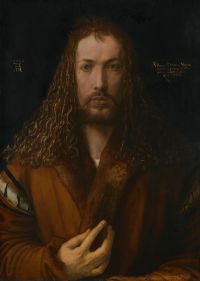
Hans Holbein the Younger is overwhelmingly remembered as the definitive portraitist of the Tudor court, his name synonymous with the powerful, unsparing likenesses of kings, merchants, and scholars that have shaped our perception of the 16th century [1, 2]. His preliminary chalk studies from this period, numbering over eighty, are considered the finest artistic and historical record of the era's most illustrious figures . This reputation is built on an almost unparalleled ability to capture not just a physical likeness, but the essential character of the sitter, revealing the complex personality lurking behind the face with an insight that remains potent centuries later [3]. The drawings achieve a perfect synthesis of delicacy and strength, obtaining profound results with seemingly simple means, a testament to his penetrating eye and unerring hand .
To confine Holbein to the role of portrait painter, however, is to overlook the vast scope of his artistic endeavors and misinterpret the very nature of his genius [4, 5]. While his portraits represent the highest manifestation of his talent, they were but one facet of a career defined by extraordinary versatility . The great scholar Erasmus, a frequent subject for the artist, aptly described him not as a painter or sculptor, but as an 'insignis artifex'—a 'fine workman' [6]. This designation captures the truth of Holbein's identity: a master of all crafts who applied his technical prowess and innovative design across every department of decorative and monumental art . From ephemeral architectural works to satirical woodcuts and grand murals, Holbein was a pivotal figure who synthesized German realism with Italian Renaissance principles, becoming the first and greatest painter north of the Alps to fully express the spirit of the age [7, 8].
The portraitist as analyst and documentarian
Holbein's approach to portraiture was rooted in a profound commitment to realism that set him apart from many of his contemporaries [9]. Unlike the Italian idealists who often sought to please and flatter their patrons, Holbein's work was analytical, a searching exploration of truth and character [10, 11]. This philosophy is captured in a comparison with his German contemporary, Albrecht Dürer; while Dürer might draw what he knew to be there, Holbein rendered only what he could empirically see, honestly confessing the limits of vision [12]. His method was not to generalize but to observe with scientific precision, capturing the facts as they were, up to the very point where vision ceases [13]. This uncompromising candor could be particularly challenging for his female sitters, whose portraits sometimes lacked the social distinction or idealized beauty common in the period [14].
This dedication to observed reality resulted in portraits that are both psychologically penetrating and rich in documentary detail. The 1532 portrait of the merchant Georg Gisze is a masterclass in this dual achievement, rendering every accessory of his trade—from silk and steel to glass—with a fidelity that would later define the Dutch still-life tradition [15]. Yet, this meticulous elaboration of detail never distracts from the vivid personality of the sitter; the accessories are subordinate to the artist's primary goal of seizing the essentials of character . In his depictions of King Henry VIII, Holbein created not just a faithful rendering of the monarch's face but an enduring historical document that laid bare the complex and formidable character behind it . The iconic Whitehall portrait, though destroyed by fire, became the definitive likeness, serving as the basis for countless subsequent royal portraits [16, 17].
The power of Holbein's portraits lies in their ability to convey a subject's entire personality in a single glance [18]. His expressive rendering of hands and eyes was a particular hallmark of his genius, capable of communicating volumes about the subject's intellect, status, or temperament [19]. The hands of Erasmus in his portraits are as full of force and character as the scholar's face, while the eyes of sitters like Robert Cheseman convey a startling immediacy [20]. This talent for capturing the inner life of his subjects made him the most popular and sought-after portraitist of his day, with a client list that spanned from foreign ambassadors and English nobility to wealthy merchants of the Hanseatic League [21].
The master of diverse crafts
While portraiture secured his fame, Holbein's ambition and skill extended to the most monumental forms of artistic production . In the field of large-scale mural decoration and historical painting, he was a pioneer north of the Alps, rivaling the great Italian masters of the Renaissance . These works, which often depicted boisterous scenes of peasant life or historical events like 'The Battle of Spurs', allowed him to express a frank and realistic 'joy of living' that contrasted with the formal stillness of his court portraits . Tragically, a great number of these masterpieces have been lost to history, including the famed wall-painting in Whitehall and the portrait group of Sir Thomas More's family, leaving only a partial record of his achievements in this domain .
Beyond painting, Holbein was a master of graphic arts, his legacy fundamentally founded upon wood engraving [22]. His most famous series, the 'Dance of Death', demonstrates a completely different aspect of his artistry. Published in 1538 after a long delay, these miniature homilies became famous throughout Europe for their grim humor and social satire [23, 24]. In these pictorial sermons, Holbein uses the figure of Death to level society, showing its unexpected approach to prince and peasant, king and pontiff alike . The sharp critique of the clergy in the series reveals the influence of the Reformation on his thinking, transforming the traditional motif into a powerful commentary on the uncertainties of life and the vanities of earthly power . Each small image is a masterpiece of design and draughtsmanship, showcasing his ability to convey immense power and beauty within the smallest of limits [25].
Holbein’s identity as an 'insignis artifex' is confirmed by the sheer breadth of his design work . He supplied craftsmen with patterns and working drawings for a vast array of objects, demonstrating a fertile invention of architectural details for backgrounds and a practical knowledge of many artistic processes . This included decorative 'Renaissance flourishes' that, in their exuberance, seem to come from a different artist than the one responsible for the stark simplicity of his portrait drawings [26]. From the design of a medallion on a lady's dress to the conception of triumphal arches, his creative output was immense [27]. This versatility was characteristic of the Renaissance ideal of the artist, who could move seamlessly between building and painting, design and engraving .
The Northern Renaissance synthesis
Holbein's art represents the culmination of the Northern European realistic tradition, standing on the shoulders of masters like Jan van Eyck and Albrecht Dürer . His work inherited the Northern penchant for precise and accurate delineation, which explains his extraordinary merit in portraiture . This lineage is even visible in the work of his own father, Hans Holbein the Elder, who possessed a similar sympathetic power of seeing and recording the human face without pedantry or pretense [28]. Holbein perfected this tradition, combining it with a psychological depth that gave his portraits an unprecedented feeling of life and presence .
However, what makes Holbein a pivotal figure is his role as a bridge between the German and Italian artistic worlds . While less of a visionary or dreamer than Dürer, he was by many accounts a far superior painter, possessing a keen sense of color and tonal relations that his Nuremberg counterpart lacked [29]. He was less overtly 'Teutonic' than Dürer, and his work in mural decoration shows a complete absorption of Italian Renaissance principles . He was the first great master to bring this influence north of the Alps, but he did so on his own terms, never sacrificing the intense realism and character analysis that was the hallmark of his native tradition .
This unique synthesis is evident in his technique. He could render the texture of black velvet or the glint of a medallion with painstaking accuracy, yet this fidelity to the surface never overwhelmed the human subject . His genius was in his ability to perceive and record the essential, distinguishing qualities of a person or an object . This approach was perfectly suited to the cultural climate of Tudor England, where a rising Protestantism favored a literal, fact-based representation of the world over the saintly visions of Italian masters . Holbein arrived at precisely the right historical moment, and his powerful, realistic style exerted a lasting effect on the course of English art .
The Portraitist as Analyst and Documentarian
Holbein's approach to portraiture was rooted in a profound commitment to realism that set him apart from many of his contemporaries . Unlike the Italian idealists who often sought to please and flatter their patrons, Holbein's work was analytical, a searching exploration of truth and character . This philosophy is captured in a comparison with his German contemporary, Albrecht Dürer; while Dürer might draw what he knew to be there, Holbein rendered only what he could empirically see, honestly confessing the limits of vision . His method was not to generalize but to observe with scientific precision, capturing the facts as they were, up to the very point where vision ceases . This uncompromising candor could be particularly challenging for his female sitters, whose portraits sometimes lacked the social distinction or idealized beauty common in the period .
This dedication to observed reality resulted in portraits that are both psychologically penetrating and rich in documentary detail. The 1532 portrait of the merchant Georg Gisze is a masterclass in this dual achievement, rendering every accessory of his trade—from silk and steel to glass—with a fidelity that would later define the Dutch still-life tradition . Yet, this meticulous elaboration of detail never distracts from the vivid personality of the sitter; the accessories are subordinate to the artist's primary goal of seizing the essentials of character . In his depictions of King Henry VIII, Holbein created not just a faithful rendering of the monarch's face but an enduring historical document that laid bare the complex and formidable character behind it . The iconic Whitehall portrait, though destroyed by fire, became the definitive likeness, serving as the basis for countless subsequent royal portraits .
The power of Holbein's portraits lies in their ability to convey a subject's entire personality in a single glance . His expressive rendering of hands and eyes was a particular hallmark of his genius, capable of communicating volumes about the subject's intellect, status, or temperament . The hands of Erasmus in his portraits are as full of force and character as the scholar's face, while the eyes of sitters like Robert Cheseman convey a startling immediacy . This talent for capturing the inner life of his subjects made him the most popular and sought-after portraitist of his day, with a client list that spanned from foreign ambassadors and English nobility to wealthy merchants of the Hanseatic League .
The Master of Diverse Crafts
While portraiture secured his fame, Holbein's ambition and skill extended to the most monumental forms of artistic production . In the field of large-scale mural decoration and historical painting, he was a pioneer north of the Alps, rivaling the great Italian masters of the Renaissance . These works, which often depicted boisterous scenes of peasant life or historical events like 'The Battle of Spurs', allowed him to express a frank and realistic 'joy of living' that contrasted with the formal stillness of his court portraits . Tragically, a great number of these masterpieces have been lost to history, including the famed wall-painting in Whitehall and the portrait group of Sir Thomas More's family, leaving only a partial record of his achievements in this domain .
Beyond painting, Holbein was a master of graphic arts, his legacy fundamentally founded upon wood engraving . His most famous series, the 'Dance of Death', demonstrates a completely different aspect of his artistry. Published in 1538 after a long delay, these miniature homilies became famous throughout Europe for their grim humor and social satire . In these pictorial sermons, Holbein uses the figure of Death to level society, showing its unexpected approach to prince and peasant, king and pontiff alike . The sharp critique of the clergy in the series reveals the influence of the Reformation on his thinking, transforming the traditional motif into a powerful commentary on the uncertainties of life and the vanities of earthly power . Each small image is a masterpiece of design and draughtsmanship, showcasing his ability to convey immense power and beauty within the smallest of limits .
Holbein’s identity as an 'insignis artifex' is confirmed by the sheer breadth of his design work . He supplied craftsmen with patterns and working drawings for a vast array of objects, demonstrating a fertile invention of architectural details for backgrounds and a practical knowledge of many artistic processes . This included decorative 'Renaissance flourishes' that, in their exuberance, seem to come from a different artist than the one responsible for the stark simplicity of his portrait drawings . From the design of a medallion on a lady's dress to the conception of triumphal arches, his creative output was immense . This versatility was characteristic of the Renaissance ideal of the artist, who could move seamlessly between building and painting, design and engraving .
The Northern Renaissance Synthesis
Holbein's art represents the culmination of the Northern European realistic tradition, standing on the shoulders of masters like Jan van Eyck and Albrecht Dürer . His work inherited the Northern penchant for precise and accurate delineation, which explains his extraordinary merit in portraiture . This lineage is even visible in the work of his own father, Hans Holbein the Elder, who possessed a similar sympathetic power of seeing and recording the human face without pedantry or pretense . Holbein perfected this tradition, combining it with a psychological depth that gave his portraits an unprecedented feeling of life and presence .
However, what makes Holbein a pivotal figure is his role as a bridge between the German and Italian artistic worlds . While less of a visionary or dreamer than Dürer, he was by many accounts a far superior painter, possessing a keen sense of color and tonal relations that his Nuremberg counterpart lacked . He was less overtly 'Teutonic' than Dürer, and his work in mural decoration shows a complete absorption of Italian Renaissance principles . He was the first great master to bring this influence north of the Alps, but he did so on his own terms, never sacrificing the intense realism and character analysis that was the hallmark of his native tradition .
This unique synthesis is evident in his technique. He could render the texture of black velvet or the glint of a medallion with painstaking accuracy, yet this fidelity to the surface never overwhelmed the human subject . His genius was in his ability to perceive and record the essential, distinguishing qualities of a person or an object . This approach was perfectly suited to the cultural climate of Tudor England, where a rising Protestantism favored a literal, fact-based representation of the world over the saintly visions of Italian masters . Holbein arrived at precisely the right historical moment, and his powerful, realistic style exerted a lasting effect on the course of English art .
To assess Holbein solely through his portraits, however magnificent, is to appreciate only a fraction of his artistic identity . His enduring legacy as a painter of men should not obscure his role as a complete 'master of arts', a fine workman whose technical command spanned the entire spectrum of visual creation in his era . His genius was not confined to a single medium but was expressed with equal force in monumental wall-paintings, intricate woodcuts, and a vast range of decorative designs . The frequent loss of his larger works has unfortunately skewed our modern perception, focusing our attention on the surviving portraits at the expense of his broader contributions .
Ultimately, Holbein's importance lies in his dual achievement. He both perfected the Northern tradition of unflinching realism and served as its most effective conduit for the ideals of the Italian Renaissance . In his work, the meticulous detail of the German school meets the grandeur of Italian composition, all filtered through an unparalleled eye for individual character . More than just a court painter, he was a foundational figure of the Northern Renaissance, an 'insignis artifex' whose diverse creations fundamentally shaped the art of his time and provided an invaluable, clear-eyed record of a world in transition .


