AI-generated from sources
Taft, Roosevelt and the old quarrel over the unwritten powers of the presidency
In Brief
- A president's hold over Congress through patronage fades as his term runs on, until his authority is strictly limited to the duties the Constitution assigns him.
- William Howard Taft, often judged a weak president, read the duty to execute the laws, with his colleagues, as placing the continued government of a territory within executive authority until Congress acted, and later wrote for the Supreme Court that the president must be free to dismiss the officers under him.
- Theodore Roosevelt held every public servant, judges included, accountable to the people for his stewardship, and denied any public authority the right to declare itself powerless before grave social wrongs.
- A power derived from what an office needs has no natural limit, which is why critics demanded the least power adequate to the end, and why earlier voices pointed to impeachment as its counterweight.
Main authors
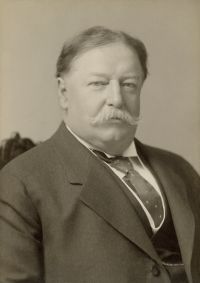

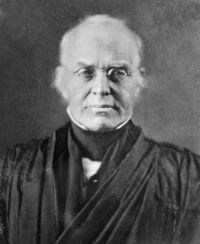
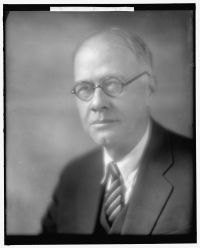
William Howard Taft described the decline of a presidency with unusual candor. A president, he observed, is held responsible for his party's majority in Congress, and the offices he hands out buy him a voice in legislation [1]. But patronage is spent as it is used. When no offices are left and a successor comes into view, the authority of the incumbent "becomes strictly limited to his constitutional functions" [1]. Observers read such frankness as the mark of a weak man, and the label stuck. A Washington chronicler counted him among the presidents under whom executive leadership failed [2].
Yet the same Taft, writing the opinion of the Supreme Court in Myers v. United States, held that the president must be free to dismiss the officers who execute the laws. It was a power the opinion had to derive from the president's duties rather than read off a single clause [3, 4]. The paradox dissolves once the two halves of his thought are set side by side. Taft's constitutionalism was not a theory of a small presidency but of a defined one. It was strong inside its frame, and willing to read that frame broadly whenever the duty to execute the laws seemed to require it. Facing him stood Theodore Roosevelt, for whom every public officer, executive or judge, was a steward answerable to the people [5]. Their quarrel turned less on how much power the office should hold than on where that power comes from, and on who may check it once it is used.
The president who ran out of offices
Taft's lecture rests on a distinction his critics rarely made: between influence and function. Influence is borrowed. It comes from the party, from the offices still to be filled, from the prospect of favors. It wanes as the term advances, for every president, though some have more of it than others [1]. Function is different. It is what remains when the bargaining stops, the core of duties the Constitution assigns. Read this way, the confession of weakness also says what is left to a president once his hold over his party is gone: the functions of the office.
His contemporaries judged him on influence, and found him wanting. Clinton W. Gilbert put it bluntly: "Mr. Taft lacked the will to rule" [2]. But Gilbert's own diagnosis cuts deeper than his verdict. Executive domination of the government, he wrote, had succeeded under only two presidents, and not completely even then. Congress rose against Roosevelt in his last years, and Wilson faced a Congress of the other party in his last two [2]. Party authority was one of the pillars of executive power, and a system that worked only half the time could not be called workable [2]. The failing pinned on Taft was the failing of a presidency built on personal command. The irony is sharp. Roosevelt himself had backed Taft as the man best qualified to carry forward his measures and policies [6].
Taft did not, for all that, want a passive executive. In the same lecture he proposed giving the president greater power in the matter of legislation [7]. His reason is revealing. Congress, he said with careful deference, does not know enough about the executive facts that ought to control legislation in an efficient government [7]. The argument appeals neither to popularity nor to a mandate. It appeals to knowledge: the president deserves more power because he sees the administration from inside. Strength, in this account, should be institutional and informed rather than personal and bargained for.
One episode shows how far the duty to execute the laws could carry him. Faced with a territory his lecture simply calls "the Zone", Taft wrote that, having to see the laws executed, the executive had to look after every piece of territory belonging to the United States [8]. Until Congress should act, it seemed to him and his colleagues to fall within executive authority to continue its government, maintain courts, execute murderers and discharge every function of a law-abiding community [8]. The scale is striking. From a single duty, a whole government was deduced. Yet the deduction carried its own limit, written into the reasoning itself: it held only until the legislature spoke. Here, in miniature, is the shape of Taft's doctrine—an unwritten power, drawn from a written duty, provisional by design.
Roosevelt and the servants of the people
Roosevelt started from a different place: not the text, but its author. In 1913 he called it the only safe rule in a democracy that the people themselves decide, after due deliberation, every subject they deem of vital importance [5]. Legislators, executives and judges alike were to be servants in fact. The people must be able to make and unmake them, to hold them strictly accountable for their "stewardship" [5]. The word matters. A steward manages what belongs to another, and answers to that owner. Notably, Roosevelt applied it to every branch, judges included, and not to the presidency alone.
Roosevelt feared the absence of power as much as its usurpation. He called it false constitutionalism when representatives on the bench, in the legislature or in executive office declared that the State had no power to right grave social wrongs [9]. Officers created by the people, he insisted, could not set themselves up as its masters [9]. Worse still, Congress and the federal courts together could create a "twilight zone in which neither the Nation nor the States have power" [10]. Powerlessness, in this view, is never neutral. It is a choice dressed as a scruple, and Roosevelt distrusted those who used the Constitution to block the work of social reform [11].
His portrait of Taft must be read as the testimony of a combatant. In 1912 he cast Taft's position as that of honorable men who, at bottom, distrust popular government and hedge it with every check and balance [12]. He also reported Taft's own formula: a government of all the people by a representative part of the people [12]. Their exchange over the courts is more precise. Taft, by Roosevelt's account, held that judges ought not to be representative of the people in the way the legislature and the executive are. Roosevelt agreed for ordinary suits, but not for judges interpreting the due process clause [13]. The detail is telling. Both men took the executive to be a representative office. They divided over whether the people speak only through their representatives, or may also act on their own initiative [5].
A critic of both saw less distance between them than they did. Woodrow Wilson, in The New Freedom, wrote that Roosevelt's conception of government was Taft's: the presidency as the presidency of a board of directors [14]. The jab is polemical and should not be taken at face value. But it names something real. The steward and the constitutional magistrate both picture the president as a manager of public business, whose authority is justified by what it accomplishes. Their dispute concerns the shareholders—the whole people acting directly, or the people through a representative part—more than the management itself.
Myers, or the tree on granted land
The removal case shows Taft's method at full stretch. The question, as the record frames it, was narrow. Having acted under a statute that created an office and authorized the appointment, could the president ignore its provision on the conditions of removal while the Senate was in session [15]? The Court's answer rests on responsibility. Charged by the Constitution with the effective enforcement of the law, the president needs, as an indispensable aid, a reserve power of removal over those who act under him [3]. Discipline, not prerogative, is the stated ground.
The reasoning is functional through and through. In the cabinet's field, officers must do the president's will, and he must place in each of them "implicit faith" [16]. The moment he loses confidence in one, he must be able to remove him without delay. Forcing him to file charges before the Senate could make impossible the unity that effective action requires [16]. A second argument concerns knowledge. The Senate may judge a nominee as well as the president can, but only the president and his trusted subordinates know the failings an officer reveals once in office [17]. It is the lecture's argument about executive facts, now turned into constitutional doctrine [7].
Taft dressed this logic in the authority of the founding debates. Madison, quoted in the opinion, warned that sharing removal between the Senate and the president would abolish the unity and responsibility meant to secure liberty, and break the chain of dependence among those who execute the law [18]. A senator whose words William Patterson recorded went further. Turning a man out of office, he argued, is neither a legislative nor a judicial act; it is "like a tree growing upon land that has been granted" [19]. The image carries the whole theory. Removal needs no grant of its own. It grows out of the grant of executive power, as the tree goes with the land.
From there the power spreads by deduction. The Constitution, the opinion holds, permits no distinction between removing a department head who exercises the president's discretion and removing officers engaged in their ordinary duties [4]. What is imperative for the most important subordinates must therefore govern all appointed by the president [4]. The power had long arrived by this kind of route. A commentator quoted in the opinion calls it the most extraordinary case of a power conferred on the executive by implication, through the assent of a bare majority of Congress, and then left unchallenged [20]. Much earlier, John Marshall's life of Washington had recorded the reasoning of that first settlement. Where the Constitution was silent, expediency required that neither branch of the legislature take part, and the danger of a president removing good men was treated as imaginary [21].
Here the theorist of a defined presidency arrives, by another road, near the place he is usually set against. Roosevelt grounded broad authority in the people's mandate; Taft grounded it in the logic of a duty. The difference in source matters, because a power drawn from a function claims to be measured by that function. But the Zone and the removal case share one structure: an unwritten authority deduced from the duty to execute the laws [8, 3]. Strength bounded by its purpose remains strength. In Taft's hands, the purpose proved generous.
Who shall be judge
The record of the case does not speak with one voice, and that is its value. Alongside the holding, it carries quotations from the founding debates and arguments pressed against the conclusion. The sharpest goes to the heart of the matter. If the president is vested by direct grant with all executive power, without further definition or limitation, "it becomes impossible to delimit his authority", and the field of federal activity is indefinitely enlarged [22]. Another passage turns to irony. It pictures 40 or 50 capable men, presided over by Washington in the heat of a Philadelphia summer, debating whether to give the president express authority to require written opinions—when they had supposedly already vested in him an illimitable executive power [23].
The counter-argument offered a rule of measure. The president, it notes, holds no express grant of incidental powers like the one Article I gives Congress [24]. A power implied because it is inherent in the executive must therefore be limited to "the least possible power adequate to the end proposed" [24]. An older argument quoted in the record went further still. The Senate's consent should be needed to displace officers as well as to appoint them, so that a change of chief magistrate would not overturn the government's personnel [25]. The dispute, then, is not whether the president needs power to execute the laws. It is whether that need can serve as its own measure.
Behind this lies a question John Locke had posed, in a far older setting, about executive prerogative: who shall judge whether it is rightly used? Between an executive holding such a prerogative and a legislature that depends on his will to convene, he answered, there can be no judge on earth [26]. The American answer was impeachment. A speaker quoted in the opinion held that the wanton removal of meritorious officers would itself expose the president to impeachment for maladministration [27]. Joseph Story, writing in 1833, explained why that check mattered more than elections. A momentary delusion might re-elect a corrupt chief magistrate, whereas impeachment compels him, like the humblest citizen, to bend to the majesty of the laws [28]. Unwritten discretion was tolerable because a written remedy stood behind it.
The sternest warning came from outside the quarrel altogether. Daniel Webster, long before Taft and Roosevelt crossed swords, scorned anyone who would declare, through the president's lips, that the security of freedom rests in executive authority [29]. Neither man claimed quite that, though the removal opinion quotes Madison tying the unity of the executive to the security of liberty. Roosevelt placed the security of freedom in the people, Taft, by his rival's account, in a representative part of the people [5, 12]. But the removal case shows how a doctrine of limits can, through the logic of function, hand the executive an authority that sits uneasily with Webster's warning. The danger lies less in the claim than in the deduction.
The quarrel between William Howard Taft, who held the president to the functions the Constitution assigns, and Theodore Roosevelt, who held every officer to account as a steward of the people, is easily told as a contest between a small presidency and a large one. The texts tell a different story. Taft, so often judged weak, wanted greater presidential power over legislation, held with his colleagues that the duty to execute the laws brought the continued government of a territory within executive authority, and wrote for the Supreme Court that the president must be free to dismiss the officers under him [7, 8, 3]. Roosevelt, for his part, targeted public authorities—on the bench, in the legislature or in executive office—that declared themselves powerless before social wrongs [9, 10].
What truly divided them was the source of authority and the means of checking it: the logic of a duty on one side, the will of the people on the other. Both roads lead to powers no clause spells out. A power drawn from what the office needs carries no natural limit. That is why the objection recorded in the Supreme Court's removal case asked for the least power adequate to the end, and why earlier voices pointed to impeachment as its counterweight [24, 27, 28]. An unwritten power is not the enemy of a written constitution. It is what a constitution produces when its duties outrun its words, and it stays safe only while a written remedy stands behind it.