Summary

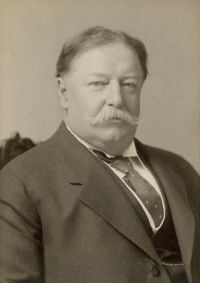
Portrait of William Howard Taft William Howard Taft Myers v. United States (272 U.S. 52…

Congress alone confers on the President the power to appoint to it and at any time may transfer the power to other hands. With such power over its own creation, I have no more trouble in believing that Congress has power to prescribe a term of life for it free from any interference than I have in accepting the undoubted power of Congress to decree its end. I have equally little trouble in accepting its power to prolong the tenure of an incumbent until Congress or the Senate shall have assented to his removal.
Source: Wikisource

Portrait of William Howard Taft William Howard Taft Myers v. United States (272 U.S. 52…

II. May the President oust at will all postmasters appointed with the Senate's consent for definite terms under an act which inhibits removal without consent of that body? May he approve a statute which creates an inferior office and prescribes restrictions on removal, appoint an incumbent, and then remove without regard to the restrictions? Has he power to appoint to an inferior office for a definite term under an act which prohibits removal except as therein specified, and then arbitrarily dismiss the incumbent and deprive him of the emoluments? I think there is no such power.
Source: Wikisource

Portrait of William Howard Taft William Howard Taft Myers v. United States (272 U.S. 52…

There is nothing in the Constitution which permits a distinction between the removal of the head of a department or a bureau, when he discharges a political duty of the President or exercises his discretion, and the removal of executive officers engaged in the discharge of their other normal duties. The imperative reasons requiring an unrestricted power to remove the most important of his subordinates in their most important duties must therefore control the interpretation of the Constitution as to all appointed by him.
Source: Wikisource

Get perspective with Kwize: daily news enlightened by great literature