Summary

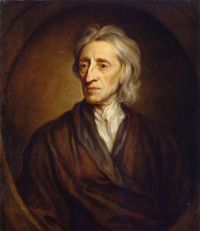
Portrait of John Locke John Locke Second Treatise of Government

Must they see their cities pillaged, and laid in ashes, their wives and children exposed to the tyrant’s lust and fury, and themselves and families reduced by their king to ruin, and all the miseries of want and oppression, and yet sit still? Must men alone be debarred the common privilege of opposing force with force, which nature allows so freely to all other creatures for their preservation from injury? I answer: Self-defence is a part of the law of nature; nor can it be denied the community, even against the king himself: but to revenge themselves upon him, must by no means be allowed them
Source: Gutenberg

Portrait of John Locke John Locke Second Treatise of Government

But the state of mankind is not so miserable that they are not capable of using this remedy, till it be too late to look for any. To tell people they may provide for themselves, by erecting a new legislative, when by oppression, artifice, or being delivered over to a foreign power, their old one is gone, is only to tell them, they may expect relief when it is too late, and the evil is past cure. This is in effect no more than to bid them first be slaves, and then to take care of their liberty; and when their chains are on, tell them, they may act like freemen.
Source: Gutenberg

Portrait of John Locke John Locke Second Treatise of Government

Where there is no longer the administration of justice, for the securing of men’s rights, nor any remaining power within the community to direct the force, or provide for the necessities of the public, there certainly is no government left. Where the laws cannot be executed, it is all one as if there were no laws; and a government without laws is, I suppose, a mystery in politics, unconceivable to human capacity, and inconsistent with human society.
Source: Gutenberg

Get perspective with Kwize: daily news enlightened by great literature