AI-generated from sources
The Idiot and the Fool, A Spectrum of Social Perception
In Brief
- The 19th century marked a significant shift, transforming the treatment of idiocy from simple confinement to a focus on specialized education and training, aiming for social integration.
- Society itself can manifest a pervasive collective folly, characterized by intellectual mediocrity and a lack of common consciousness, which impedes human progress and rational action.
- Strategic foolishness, where individuals feign or embrace apparent ignorance, functions as a powerful social tool to challenge norms, speak truths, and gain practical wisdom.
- The perception of intellectual deficiency is fluid, oscillating between a pitiable biological condition requiring management and a deliberate, subversive performance of folly.
Main authors



The figure of the 'idiot' occupies a uniquely fraught position in the social imagination, situated at the crossroads of medical diagnosis and cultural archetype. Historically, this term designated a specific and seemingly permanent state of mental deficiency, a condition to be managed, pitied, and segregated from the mainstream of society. This perspective framed idiocy as a biological tragedy, a failure of the physical instrument of the mind that rendered an individual a burden on their family and the state. This clinical view sought to categorize, treat, and ultimately contain a condition perceived as a drain on social resources and a potential source of moral danger.
Beyond this medicalized lens, however, lies a more complex and ambivalent understanding of intellectual lack. Society has also long recognized a different kind of 'foolishness,' one that is not a passive deficiency but an active, and sometimes powerful, social strategy. This is the realm of the fool, the jester, or the strategically ignorant individual whose apparent simplicity grants them a unique license to speak uncomfortable truths, challenge established norms, and navigate the world unburdened by conventional prudence. This oscillation between perceiving the idiot as a subject for institutional care and recognizing the fool as a potent social actor reveals a deep-seated ambiguity in how societies define and react to intelligence, wisdom, and their perceived absence.
The Medicalization of a Deficient Mind
The 19th-century scientific and medical communities dedicated significant effort to distinguishing 'idiocy' from other mental states. Legal and medical frameworks, as noted by Henry Maudsley, historically separated the congenital idiot from the lunatic, who might experience periods of clarity [9]. This distinction was further refined to separate idiocy—a fundamental weakness of mind—from insanity, which was seen as a disorder of an otherwise developed mind, and from mere stupidity, which implied a slowness of mental action [8]. This drive to classify was rooted in the belief that the idiot's brain was a damaged instrument, limiting the expression of an underlying intellectual and moral potential, however minimal [1].
This evolving understanding transformed the societal treatment of individuals deemed idiots. Previously, they might have been treated as curiosities, like the 'savage of the Aveyron,' or simply confined and neglected within lunatic asylums [2]. However, a philanthropic and scientific shift in the 19th and early 20th centuries reframed the issue as one solvable through specialized intervention [3, 10]. The focus moved from mere containment to education and training. Thinkers like J. T. Arlidge argued that idiots required a schoolmaster as much as a doctor, as the typical asylum was unsuited for their developmental needs [5]. The aim was to cultivate latent faculties and instill industrious habits, thereby mitigating the perceived danger and economic burden they posed to their families and the state [4, 7].
The underlying premise of this movement was that many forms of intellectual dullness were not congenital but rather the result of improper development [6]. Through painstaking and patient labor, reformers believed they could elevate individuals from a state of 'driveling idiocy' to a more functional and socially integrated existence . This effort to improve the 'feeble-minded' represented a significant shift from fatalism to a belief in the potential for betterment, even in those considered to have the most limited capacities. It marked the formalization of idiocy as a distinct category requiring a unique, pedagogical approach, separate from the management of other forms of insanity or social deviance .
The Specter of Collective Folly
While one strand of thought focused on the deficiencies of the individual idiot, another, more critical tradition has long diagnosed a pervasive folly within society itself. The Renaissance humanist Desiderius Erasmus famously depicted the world as a stage where all actors are essentially fools, and to be singularly wise is to be an outcast [12]. This perspective suggests that foolishness is not an aberration but the norm. Later writers, observing the mechanisms of the modern world, echoed this sentiment, lamenting a societal dullness and a preference for monosyllabic, uninspired intercourse that makes genuine intellectual engagement rare [11]. The issue, then, is not the isolated idiot but the collective embrace of intellectual mediocrity.
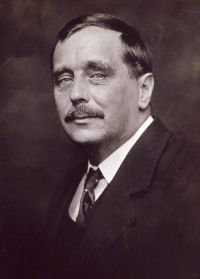
This societal stupidity is often seen as a significant barrier to human progress. H. G. Wells, writing in the early 20th century, identified 'a stupid brute jealousy' as the primary obstacle preventing civilized powers from achieving a common ideal [14]. Similarly, Charlotte Perkins Gilman used the powerful metaphor of the 'body politic' as a 'vigorous, well-grown idiot,' possessing all the machinery for a rich life but lacking the collective social intelligence to use it effectively [15]. In this view, society's failure is not a lack of resources or capability, but a stunting of its common consciousness, preventing rational action.
This collective ignorance can be seen as a potent and destructive force, arguably more powerful than knowledge in shaping worldly affairs [16]. It is a massive, stolid presence that can become particularly dangerous when it is unaware of its own limitations, enabling fools to believe themselves philosophers [17]. This kind of folly is not confined to the masses; it can be institutionalized, with some observers like Joseph A. Altsheler noting that the mistakes of leaders, whose authority is cloaked in ceremony, are often the most costly [13]. Ultimately, as Georg Wilhelm Friedrich Hegel suggested, it is a vulgar ignorance that scorns the seemingly disparate states of genius and imbecility, failing to recognize the intricate connections between them and clinging instead to a self-satisfied mediocrity [18].
Folly as a Strategic Art
In stark contrast to both the medicalized idiot and the unconsciously foolish society stands the figure of the strategic fool—one who embraces or feigns ignorance to achieve a specific social or intellectual end. This is not a state of being but a mode of performance. As Erasmus noted, there is great wisdom in knowing when 'to counterfeit the fool,' a lesson taught since antiquity [26]. This cultivated folly can be a powerful tool, as it blushes at nothing and attempts everything, unhindered by the modesty and fear that can paralyze the conventionally wise [23]. Through direct engagement with the world, the fool can acquire a form of practical prudence that eludes the scholar lost in ancient texts .
The social power of this role can be profound. In some contexts, a person dismissed as a fool or an idiot may possess a unique form of insight, a 'heaven's light' unseen by those with conventional wisdom [19]. This perception can be manipulated; being underestimated provides an advantage, allowing a person to adapt their apparent intelligence to their company [20]. When powerful figures try to discredit an individual by labeling them a fool, the strategy can backfire, rallying popular support and transforming the target into a leader [22]. The dynamic is such that the wisest person can be counted a fool when speaking profound truths, just as a silent fool can be mistaken for a wise person [24].
This strategic foolery is sometimes a highly refined craft. In the world of entertainment, for example, Philip Curtiss observed that professional success can rely on a 'keenly calculated stupidity'—a deliberate and earnest cultivation of simplistic performance [21]. The effectiveness of this artifice is captured in a sentiment attributed to William Shakespeare's characters: folly hatched from wisdom is especially potent because it uses wit and learning to justify simplicity [25]. This 'learned fool' is more noteworthy than a natural one. At its most extreme, as described in a work by Fyodor Dostoyevsky, a display of stupidity can be so pure and simple-hearted that observers are left wondering if it is not, in fact, a stroke of genius, unable to believe in its elementary transparency [27]. In these cases, apparent idiocy becomes a disarming and inscrutable form of social power.
The concept of the 'idiot' thus reveals a profound societal tension. On one hand, it has been subjected to a clinical gaze that defines it as a biological and social problem—a damaged mental instrument requiring specialized education and management to reduce its burden on the collective . This perspective seeks to repair or contain a perceived deficiency. On the other hand, critiques of society itself suggest that a more pervasive and dangerous form of foolishness operates at a collective level, where 'massive, stolid stupidity' and a lack of common consciousness hinder progress and perpetuate ignorance as a dominant force .
Navigating between these poles is the enduring archetype of the fool, whose power lies not in deficiency but in its strategic performance. Whether as a court jester, a political actor, or a social chameleon, the fool leverages apparent simplicity to subvert expectations, reveal uncomfortable truths, and acquire a practical wisdom inaccessible to the overly cautious intellectual . The line between pitiable lack and strategic advantage is therefore not fixed but fluid, dependent on context and intention. The fool reminds us that wisdom can appear as folly, and what society dismisses as idiocy may hold a disruptive and illuminating power.