AI-generated from sources
The Unseen Engine, The Sculpting Hand: Genius and Craft in Artistic Creation
In Brief
- Artistic creation arises from a dynamic integration of spontaneous genius and disciplined craft, not a choice between them.
- Genius is often described as an involuntary, dreamlike flow of ideas, connected to deep feeling and uncorrupted internal truth.
- Craft involves painstaking labor, technical mastery, and self-discipline, serving as a critical tool for refining and manifesting initial visions.
- An imbalance where either technique dominates inspiration or unchecked genius lacks discipline leads to sterile, hollow, or unrealized works.
Main authors


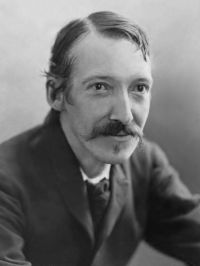
The act of artistic creation is often perceived as a moment of pure, inexplicable inspiration—a sudden flash of insight that brings a new form into the world. This romantic conception casts the artist as a mere vessel, a medium through whom a higher power or a deep, unconscious force flows. In this view, the greatest works seem to emerge fully formed, driven by an internal logic that the creator follows but does not consciously direct. It is a process allied with dreams and reverie, where the critical mind must be silenced to allow an imperative vision to take hold. The resulting art feels less like a construction and more like a discovery, an inevitable truth that has simply been unearthed.
Yet, this narrative of spontaneous genius obscures a complementary and equally essential truth: the laborious, disciplined, and often unglamorous work of craft. Behind every effortless line, transcendent melody, or perfectly weighted sentence lies a history of practice, technical mastery, and relentless effort. The transformation of a raw, ethereal vision into a tangible, resonant work of art is not a matter of magic but of skill, patience, and an intimate understanding of a chosen medium. This disciplined application is what provides the structure and clarity necessary for an idea to survive its journey from the artist’s mind to an audience, suggesting that without the scaffolding of craft, the most profound inspiration would collapse into incoherence.
The Involuntary Wellspring of Genius
The experience of true creative genius is frequently described as an involuntary and almost automatic process, something that happens to the artist rather than being directed by them. Charlotte M. Mason articulated this phenomenon as an idea developing within the creator seemingly of its own accord, with the logical sequence of expression feeling both surprising and perfect [1]. This sense of being a passive medium is echoed by Oliver Wendell Holmes Sr., who posited that creative action is not voluntary at all, but an automatic flow that the artist can only prepare for, not command [2]. For John Ruskin, this state is so absolute that conscious thought becomes an impediment; the creator is possessed by an imperative vision, a dream that dictates every move without room for deliberation [3]. The artist, in this state, does not think but simply executes what they are compelled to see.
This creative force is often seen as originating from a source deeper than the conscious intellect, drawing its power from a connection to sincerity and nature. Ralph Waldo Emerson argued that the lasting impact of any work is directly proportional to its depth of thought, which arises from a place of genuine feeling [4]. Hamilton Wright Mabie further developed this idea by suggesting that genius is fundamentally closer to nature than is talent, and that great works of art grow unconsciously, much like living things [6]. It is only when this connection is severed, and creation devolves into mere dexterity, that genius fades into a lesser form of skill . The authentic power of art, therefore, stems from this almost mystical alignment with an uncorrupted, internal truth.
However, this reliance on pure, unmediated genius carries inherent risks and limitations. The state of visionary creation can be a precarious one, isolating the artist in an imagined world that clashes painfully with material reality [7]. This disconnect can lead to a state of perpetual creation without realization, a cycle of conceiving beauty that can never be adequately embodied . Sir Archibald Alison observed that even transcendent genius can be misled by its own energy, attempting to achieve effects that are fundamentally impossible within the constraints of human perception and artistic form [5]. Without a grounding force, the visionary impulse, for all its power, risks becoming a self-contained and ultimately tragic gift, unable to manifest its potential in the shared world.
The Indispensable Labor of Craft
While genius provides the initial spark, the painstaking work of craft is what builds the fire. Inspiration alone does not encompass the technical skill required to give an idea form; that mastery must be acquired through what Burton Egbert Stevenson called "infinite pains" [8]. This process is demanding, requiring not just enthusiasm and determination but a profound self-discipline that involves the conquest of idleness and the pouring of one's very essence—what one author termed "life's blood"—into the work [9]. This sentiment is echoed by Theodore Parker, who framed talent not as an innate gift but simply as the capacity for work, and genius as a greater power for more advanced forms of that work, all in service of an idea held dearer than oneself [14].
The disciplined practice of craft serves as more than just a means of execution; it is a critical tool for thought and clarification. For John Henry Newman, the act of writing is a powerful stimulus for the mind, a way to truly ascertain what one knows and does not know about a subject [11]. By externalizing thought, the artist can test its coherence and originality. Robert Saunders Dowst took this further, advocating for a clear separation between the conceptive and executive processes. By allowing an idea to mature before attempting to develop it, an artist can avoid wasting labor on an inherently weak concept [12]. Craft, therefore, is not merely about shaping a final product but is integral to the intellectual and structural refinement of the initial vision.
Ultimately, mastery in any art form is built upon a deep understanding of its technical foundations. Johann Wolfgang von Goethe suggested that one cannot fully appreciate the airy freedom of genius without first knowing the long history of mechanical and handicraft struggles that preceded it [15]. For the most devoted artists, this engagement is a lifelong process. As Robert Louis Stevenson noted, lesser artists may settle on a fixed style, but those of a higher order continually re-engage the full forces of their mind with every new work, pushing against the tendency toward academic rigidity [13]. This commitment to craft is a practical necessity, as even the most profound idea will be worthless if the final work lacks technical skill or beauty [16]. It is the power of drawing, the command of rhyme, that allows what Emerson called the "spiritual energy" to become visible and transform an invisible inspiration into a tangible thought [17]. This arduous journey, which Lev Shestov likened to the humiliating task of cultivating an inner beast of burden, is the often-unseen condition of all great achievement [10].
The Perils of Imbalance
When the delicate equilibrium between genius and craft is disturbed, art falters. An overemphasis on technique at the expense of inspiration leads to work that is sterile and emotionally hollow. As Elizabeth Ashe observed, when art becomes excessively self-conscious and critical, it sacrifices its elemental power and smothers itself in its own technical wrappings [18]. This can elevate mediocrity but will never produce greatness . Clive Bell noted that as an artist's sense of reality and emotional experience decays, technical proficiency is often used to mask this inner poverty [19]. In such cases, technique ceases to be a means to express a feeling and becomes an end in itself, a vessel too intricate to contain any profound emotion . This results in what is often condemned as "fine-writing"—a style that prioritizes the sound and structure of language over the feeling it is meant to convey [21].
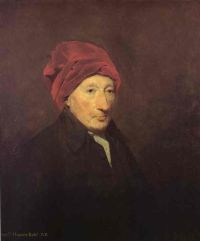
Conversely, unchecked genius, unmoored from the discipline of craft, is equally prone to failure. Ralph Waldo Emerson’s insight that the most sublime inspirations die if the artist lacks the hand to paint them speaks to this danger . A creative imagination that disdains the foundational work of its medium, as Thomas Reid warned in the 18th century, may erect a pleasing facade that lacks solidity [27]. This can result in what Goethe termed an artistic "trick" rather than a genuine work of art—a display of talent that subdues a difficult subject but fails to honor it with the dignity of careful, industrious treatment [28]. The limitations of the human mind and the chosen medium are formidable challenges that every artist must confront; without the tools of craft, the vision remains trapped [25]. This struggle helps explain why great creative power is so often associated with mental and moral infirmity, as the gap between conception and execution becomes a source of torment [26].
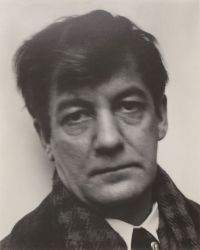
This schism between vision and execution can create a profound internal confusion, rendering the artistic process inert. Edwin Ellis, interpreting William Blake, described the paralysis that occurs when reason is applied to impulse and impulse to mechanics, forcing the artist to cease work entirely [24]. This disconnect is what Sherwood Anderson's character warns against in urging a young writer to live first and learn what people think, rather than becoming a mere "peddler of words" [23]. Similarly, a character in Aldous Huxley's work decries purely formal theories of art, asserting that life can only come from passion and feeling, not from abstract principles [20]. Language and form can be coarse interpreters of thought, and much is lost in the translation [22]. As William Hazlitt powerfully concluded, art that strays from its grand, creational impulse inevitably degenerates toward the mechanical, losing the very inspiration that gave it life [29].
The creation of enduring art is not a choice between the spontaneous insight of genius and the disciplined application of craft, but a sustained, dynamic integration of both. To privilege one over the other is to invite failure. An over-reliance on raw, untutored inspiration leads to unrealized visions and beautiful but structurally unsound works, while a fixation on technical perfection without a animating passion produces little more than soulless, academic exercises. The artist’s journey is a constant negotiation between these two poles: channeling the involuntary, dreamlike state of creation while simultaneously employing the conscious, laborious skill required to give that vision a coherent and powerful form.
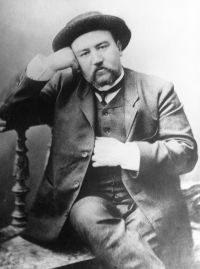
The ultimate synthesis, therefore, appears to lie beyond a simple balancing act and demands a deeper mode of existence. As A. I. Kuprin suggests, truly great work cannot be constructed from mere observation or technical facility alone; it requires a complete immersion in life itself [30]. The artist must inhabit their subject so fully that the distinction between internal vision and external reality begins to blur. It is in this state of being—where profound feeling is fused with mastered technique, and ulterior motives of creation fall away—that the hand becomes a seamless extension of the heart. Here, the tension between genius and craft dissolves, allowing a work to emerge that is at once deeply personal and universally resonant, bearing the unmistakable signature of both effortless inspiration and hard-won mastery.