AI-generated from sources
The curse of the first brother: Cain, defiance, and the philosophical necessity of destruction
In Brief
- Cain's fratricide is interpreted not as mere jealousy but as an act of intellectual rebellion, rooted in a Promethean ambition to achieve divine knowledge and defy limitations like mortality (Byron).
- Theologically, Cain is viewed by figures like Martin Luther as the archetype of fallen humanity and the precursor to all who reject the righteous and divine messengers.
- The narrative serves as a central case study for the philosophical debate between free will and 'Philosophical Necessity,' raising the question of whether Cain's actions were inevitable products of his inherent nature.
- Cain symbolizes the tragic human condition where the drive to build, know, and defy constraints is inextricably linked to the capacity for great evil and destruction.
Main authors

The biblical narrative of Cain and Abel transcends its status as a simple story of the first murder to become a foundational myth exploring a profound philosophical conflict [1]. It dramatizes the collision between two fundamental modes of human existence: Abel's quiet acceptance of divine will, symbolized by his righteous sacrifice, and Cain's ambitious defiance, which questions, challenges, and ultimately destroys [2, 3]. This primordial act of fratricide is not merely an outburst of jealousy but a complex event that interrogates the very nature of human consciousness, ambition, and our relationship with the divine and the inevitable reality of death [4].
The central inquiry posed by the narrative is whether Cain's transgression was a simple, malevolent choice or if it represents a necessary, albeit catastrophic, step in humanity's intellectual and spiritual development. This question forces an examination of free will against a backdrop of theological determinism and philosophical necessity [5, 6]. The story sets in motion a powerful dichotomy that resonates through human history: the tension between humanity as a creator, embodied by the life-giving role of woman, and humanity as a destroyer, a role typified by man's destructive potential [7]. Cain's action, therefore, becomes a crucible for understanding the intertwined roots of progress and violence, knowledge and sin.
The Character of Defiance: Ambition Against Omnipotence
Cain's rebellion is fundamentally intellectual. His motivation extends beyond mere envy of his brother's accepted offering; it is rooted in a profound desire to comprehend the universe on his own terms [8]. In his dialogue with a Luciferian figure, Cain expresses an ambition not for divine favor but for divine knowledge, aspiring to gaze upon the "great double Mysteries" that govern existence . This aspiration is so powerful that he is willing to face annihilation for a moment of ultimate insight, a stark contrast to a paradigm of faith that requires obedience without full understanding . His defiance represents a conscious break from unquestioning piety, choosing instead to seek answers and power, even if it means aligning with forces antagonistic to God [9].
This Promethean drive is further evidenced by Cain's struggle against the concept of mortality. He conceives of Death as a tangible being he could physically challenge, an "almighty" and "inevitable" power he wishes to overcome . His refusal to passively accept the limits imposed upon humanity marks a pivotal moment in consciousness. It is a direct inheritance from his mother, Eve, whose own transgression was motivated by the desire for knowledge . Through this lens, Cain's fratricide becomes more than an act of violence; it is a violent assertion of will against the perceived constraints of his existence, a tragic attempt to seize a form of control in a world governed by inscrutable forces [10].
The Theology of the Act: Sin, Symbol, and Consequence
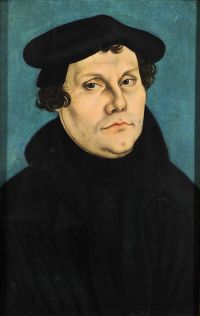
From a theological perspective, Cain's action is the definitive manifestation of a human nature operating without divine grace [11]. His internal state is characterized by pride, envy, and a bitterness that leads him to despise his neighbor, prefiguring a world that consistently persecutes its benefactors [12]. Thinkers like Martin Luther see Cain not as an anomaly but as the very archetype of fallen humanity, the progenitor of all who would seek to eliminate the righteous in a vain hope of securing their own status or power [13]. His nature, impelled by the same spirit of opposition that drives Satan, becomes the template for unredeemed man [14].
The significance of the act extends far beyond the personal. Cain becomes a potent symbol, the "symbolical father" of those throughout history who would reject and destroy the divine messengers, including the prophets and Christ [15]. The murder is thus cast as the originating sin of a particular kind of worldly rebellion. The subsequent punishment is accordingly comprehensive, inflicting spiritual, domestic, and civil calamity by separating him from God's presence, cursing the land he works, and condemning him to a life of restless wandering [16].
Cain's reaction to this divine sentence is telling. He does not express remorse for his sin but rather complains that his punishment is unbearable, viewing himself as a victim of excessive rigor [17]. This response, coupled with his brazen attempt to deceive an omniscient God with a lie, reveals a heart hardened by the act of transgression [18]. In choosing to build a city on earth, he demonstrates a complete orientation toward worldly settlement and a rejection of any hope for a heavenly one, solidifying his status as one who is cursed because he actively seeks satisfaction here below [19].
Philosophical Necessity and the Human Condition
The narrative of Cain also serves as a powerful illustration for the philosophical debate surrounding free will and necessity. The doctrine of "Philosophical Necessity" posits that every event is an unavoidable link in a vast chain of cause and effect, suggesting that nothing could have been otherwise . From this fatalistic viewpoint, Cain's actions might be interpreted not as a freely chosen evil, but as the inevitable product of his inherent nature and the circumstances he faced . Some philosophical systems support this by ascribing necessity to all determinations of the will [20].
However, this deterministic view is challenged by other philosophical traditions. Thinkers like David Hume propose that necessity is not an objective quality within an agent or action, but rather a subjective feeling in the mind of an observer who infers a connection between events [22]. This reframes necessity as a logical construct rather than a physical force, preserving a space for human agency [23]. Similarly, some ethical systems argue that while human affections may arise from necessity, the true measure of freedom lies in the power to consciously choose whether to harbor or dismiss them, a capacity described as a noble virtue [24].
Ultimately, the story can be read as an allegory for a universal human condition, the "curse of Cain" that dooms humanity to destroy, often against its own better judgment [25]. In a paradoxical theological twist, the figure of the destroyer can even be seen as an unwitting instrument of a higher purpose, a necessary evil whose destructive actions serve to bring about a greater peace or salvation [26]. This positions Cain not just as the first murderer, but as the embodiment of a tragic and necessary force within the dialectic of human history, where creation and destruction are inextricably linked [27].
Conclusion: The Enduring Legacy of the First Brother
The story of Cain and Abel is far more than a simple morality tale; it is a philosophical crucible examining the volatile interplay between human ambition and divine order . Interpreted through theology, Cain embodies a nature devoid of grace, setting a timeless precedent for envy and violence against the good . Analyzed through philosophy, his act becomes a case study for the profound debate between free will and an inexorable necessity that governs all existence . In either reading, Cain's transgression symbolizes a fundamental aspect of the human experience: the destructive impulse that is tragically intertwined with the drive to build, to know, and to defy limitations .
The scriptural and philosophical trajectory may point toward a moral evolution, from the destructive act of Cain to the redemptive submission of Christ [28]. Yet, the archetype of the destroyer remains a potent force. Cain’s legacy is the perpetual conflict between our creative and destructive capacities, a tension that defines humanity’s struggle with itself . His story continues to compel us to question the origins of our impulses, the nature of our freedom, and whether the path to knowledge must necessarily pass through the valley of destruction.
The narrative of Cain is not merely an account of the first murder but a foundational exploration of human consciousness at war with its own limitations. It establishes a powerful archetype of the defiant seeker, one who, in aspiring toward forbidden knowledge, unleashes a destructive force that sunders familial bonds and alienates humanity from the divine . This act of fratricide becomes a symbol for a necessary, yet tragic, aspect of the human condition: the reality that the drive for self-determination and the capacity for great evil are often sourced from the same wellspring of ambition.
Ultimately, the story leaves us with an enduring philosophical problem. It frames the tension between Abel's simple faith and Cain's complex rebellion not as a resolved issue, but as a permanent dynamic . The trajectory from the man who murders to the one who submits to murder suggests a possibility of transcendence, yet the 'curse of Cain' remains a metaphor for our innate potential for destruction . His legacy is the inescapable recognition that the conflict between creator and destroyer is not external but internal, a struggle that continues to define the moral and intellectual journey of humanity .