AI-generated from sources
When law makes citizens agents of injustice: The crisis of legislative overreach
In Brief
- Laws that force citizens to choose between their moral sense and respect for the law create a foundational crisis of governance, risking societal collapse.
- Mechanisms like citizen-enforcement laws (S.B. 8) are 'stratagems designed to shield' legislation from judicial review while creating 'calamitous liability' for those targeted, turning 'neighbor against neighbor'.
- According to philosophical texts, citizens retain a higher duty to personal conscience over state legislation, justifying civil disobedience when a law is considered 'lawless' or encourages legalized plunder.
- Economic coercion, where laws ruin specific classes (like debtors or targeted business owners) to benefit powerful actors, is a historical method the state uses to incentivize its own breach and corrode societal trust.
Main authors


A legal system that places the citizen in the 'cruel alternative of either losing his moral sense, or of losing his respect for the law' presents a foundational crisis for governance [1]. This dilemma arises when a law, rather than promoting justice and order, creates a perverse incentive structure where disobedience appears rational, profitable, or even ethically necessary. In such circumstances, the state itself becomes an architect of conflict, compelling individuals to choose between their conscience, their economic survival, and their civic duty.
The core issue is not merely the existence of an unjust law, but one that is structured to actively reward non-compliance or punish adherence to a ruinous degree. By means of their respect for flawed legislation, even well-intentioned citizens can become 'daily made the agents of injustice' [2]. This forces a critical examination of the relationship between state power, individual conscience, and the economic realities that shape human behavior. Modern legal frameworks have demonstrated sophisticated methods of creating such untenable choices, employing novel stratagems that challenge the very role of the judiciary and the rule of law [3]. When the law itself becomes a source of peril, it jeopardizes its own legitimacy and the stability of the society it is meant to govern.
The Legal Framework as a Catalyst for Conflict
The architecture of a perverse incentive often begins with legislation that fundamentally contradicts established expectations of fairness and due process. A particularly egregious example is when a state first encourages capital investment in a specific business and then subsequently passes laws that criminalize that same activity. Such an act is described as a profound outrage, depriving a citizen of liberty and property without due process of law and transforming a legitimate entrepreneur into a criminal by legislative fiat [4]. This retroactive criminalization places individuals in an impossible position, where past compliance becomes the basis for future punishment, incentivizing evasion by any means possible.
Contemporary legal systems have devised even more intricate methods for creating these conflicts. The Texas S.B. 8 abortion law, for instance, was constructed with an 'array of stratagems designed to shield its unconstitutional law from judicial review' . By authorizing any private citizen, other than a government official, to bring a lawsuit against those who aid or abet a prohibited abortion, the law effectively outsources enforcement to the general populace, turning 'neighbor against neighbor' [5]. This creates a situation of 'calamitous liability' where providers must defend themselves against countless suits across the state, regardless of the outcome [6]. Such a framework imposes an unequal burden, as women of means may find ways to circumvent the law, while those without resources suffer the full weight of its consequences [7].
Economic coercion is another powerful tool through which law can incentivize its own breach. When a legal system is structured to leave debtors at the complete mercy of a few powerful creditors, it can force the sale of property at ruinously low prices [8]. In such a scenario, the 'landed men,' facing the loss of their liberty and estates, would naturally resist a law that ensures their destruction [9]. The paradox can also exist within the bureaucracy itself, as seen in policies where citizens may sue officials for overreach, yet those same officials face significant sanctions for helping individuals evade restrictive laws, creating a web of conflicting motivations that undermines coherent governance [10].
Conscience, Disobedience, and the Limits of Law
When faced with a law that contradicts fundamental morality, the citizen's conscience often becomes the ultimate arbiter of action. The argument that one's only obligation is 'to do at any time what I think right' posits a higher duty to personal ethics than to state legislation . From this perspective, a government based on majority rule cannot be inherently founded on justice; it is merely an expression of physical strength [11]. Therefore, the critical question becomes whether a citizen must ever 'resign his conscience to the legislator' [12]. The very existence of moral distinctions, which must logically precede any positive law, suggests that blind obedience cannot be the foundation of a just society [13].
This prioritization of conscience provides a philosophical basis for civil disobedience. When a legislature acts 'lawlessly' by proscribing a citizen's constitutional rights, the citizen can proceed on the basis that 'such a law is no law at all' [14]. For a minority, true power is not found in conforming to an unjust majority, but in becoming an irresistible obstruction by clogging the 'machine of government' with its collective weight [15]. If the alternative is to imprison all just people or abandon an unjust policy, the state will be forced to relent . This stance directly challenges the conventional view that subjects have a duty to passively obey the 'law of the land,' even if they cannot actively cooperate with it [16].
The state often counters such dissent with the appeal to 'law and order.' However, this justification has historically been used by despotic regimes to legitimize arbitrary power [17]. The cry for 'law and order' frequently signals that the established bureaucracy feels its dominance is in danger [18, 19]. The essential truth, however, is that 'law and order is for man, and not man for law and order' [20]. When a legal framework is deliberately used to hinder the self-realization of a nation or its people, it becomes an 'outrage on man and an insult to God' [21].
Economic Motives and Societal Decay
The state often relies on economic incentives, throwing out 'property, distinction, and pleasure, are thrown out as baits' to encourage citizens to enter public affairs and to direct their political conduct [22]. This acknowledges the powerful role of self-interest in civic life. However, this manipulation becomes perverse when the law itself facilitates what amounts to legalized plunder—the transfer of wealth from its creator to another without consent or compensation [23]. Such actions violate the foundational rights of personality, liberty, and property, which are understood to be 'anterior and superior to all human legislation' [24]. When the law undertakes to regulate industry or commerce, it assumes responsibility for their prosperity; if they suffer under its regulation, the fault lies with the law itself [25].
The profit motive is not inherently negative; it can be defined as 'the right by work to earn a decent livelihood' [26]. The peril emerges when the pursuit of 'excessive profits' leads to the creation of undue private power and when 'law-defying' corporations engage in iniquitous actions to secure improper gains [27]. In populous societies, the admiration of unpossessed wealth can devolve into envy, and a habit of acting with a view to profit can foster corruption and baseness [28]. This drive for gain, when unchecked by a sound legal and moral framework, becomes a primary engine of societal conflict.
The long-term consequences of maintaining laws that foster such conflicts are severe. Foolish legislation is ultimately unsustainable, a 'rope of sand which perishes in the twisting,' because a state must eventually follow the character of its people rather than attempt to lead it through coercion [29]. The persistent disobedience of natural and moral laws invites societal penalties, including poverty, crime, and a 'perverted moral sense' that can be passed down through generations [30]. Ultimately, adding too many stories of injustice and contradiction to the 'temples of constitutional law' risks their total collapse [31].
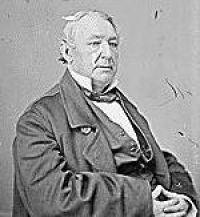
A legal system that forces a choice between moral integrity and civic obedience has failed in its primary purpose. The 'cruel alternative' described by Frédéric Bastiat is not a mere philosophical abstraction but a tangible reality that emerges whenever law becomes a tool for plunder, oppression, or economic ruin . By creating perverse incentives, such laws do more than provoke individual acts of defiance; they systematically corrode public trust and the foundational respect for the rule of law itself.
From the debtor forced into ruin by an unyielding financial system to the citizen compelled to navigate byzantine legal traps designed to subvert constitutional rights, the dilemma persists . The ultimate challenge for any society is to develop a government that does not demand the resignation of conscience to the legislator . A truly enlightened state is one that recognizes the individual as a higher and independent power from which its own authority is derived . Without this recognition, a state that places its citizens in a position of calculated disobedience risks not only widespread contempt for its laws but the erosion of the moral and social fabric it is charged to protect .