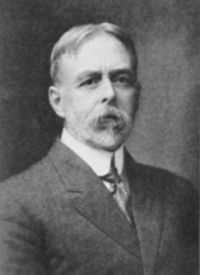
Albert Perry Brigham

Biographical details

Portrait of Albert Perry Brigham Albert Perry Brigham,  From trail to railway through the Appalachians (1907)

“ It is a noisy, busy place, with wide streets, swift electric cars, and blazing furnaces. To see it grow is like watching a new Pittsburg rise up in the heart of the South.
From the Berkshire country at the north to the southern end of the Appalachians, there are to-day thriving towns and fertile fields. No longer does the mountain wall cut off the products of the West from the markets of the East. Yet hardly a hundred years ago the eastern strip of country was practically shut off from the whole territory drained by the Ohio and Mississippi rivers.
”
Source: Gutenberg

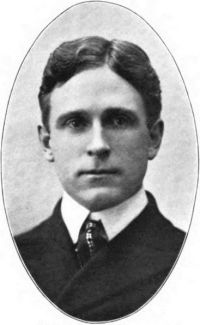
Portrait of Albert Perry Brigham Albert Perry Brigham,  Popular Science Monthly (1909)

“ It is plain that the whole circle of conservation problems applies here, not only by directly increasing food, as in irrigation, but in cheapening the cost of transportation, in saving land by forest conservation and in utilizing power of every kind to the full, thus releasing time and energy for the free use of opportunity and the complete employment of all our resources. Thus a well ordered civilization would sustain the greatest number at good standards, as a well-managed household may maintain a large family on a lesser sum than is required by a neighboring small household. ”
Source: Wikisource

Portrait of Albert Perry Brigham Albert Perry Brigham,  From trail to railway through the Appalachians (1907)

“ One cannot go far along the Hudson or the Mohawk without finding the site of an Indian village, the foundations of an old fort, the homestead of a Revolutionary hero, or an ancient place of worship. When we see the great railways and swift trains, the bundles of telegraph wires, the noisy cities and great mills of to-day, we can remember Philip Schuyler, Sir William Johnson, Marinus Willett, Peter Gansevoort, and Nicholas Herkimer. ”
Source: Gutenberg

Get perspective with Kwize: daily news enlightened by great literature