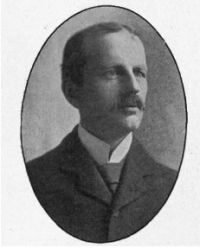
Arthur William Clayden

Biographical details

Arthur William Clayden Cloud Studies

We next come to a variety which is anything but a harbinger of good, namely, the long stripes or bands of cirrus which stretch outwards from the margin of the cloud canopy of a cyclonic storm. In some ways these appendages to the great nimbus resemble the strips of cirriform cloud which fringe the summit of a thunder-cloud. They look as if they must have been formed by the blowing away, by a rapid wind, of the top of an uprising column of vapour-charged air.
Source: Gutenberg

Arthur William Clayden Cloud Studies

Cooling by radiation we may then dismiss as a cause of cloud formation of no great efficacy, and certainly one which has little to do with the production of cumulus.
Cooling by contact with a cold body is another and more potent cause. We often see it in a mountain district, where a frost-bound peak stands facing the wind with glittering snow-slopes on which the sun is shining, while a long tongue of cloud hangs like a banner on its leeward side. In such a case it is easy to understand how the air sweeping by the icy mass is chilled below its saturation point
Source: Gutenberg

Arthur William Clayden Cloud Studies

The loftiest variety of cirrus appears in the afternoon in very hot weather, sometimes quite late in the evening; and in autumn it is by no means a rare event for it to suddenly form just when the sunset colours are fading, or even after they have paled into twilight. Under such circumstances it stands out of a shining silvery grey colour against the background of the darkening sky. A specimen of it is shown in Plate 5, which shows its extreme slightness of form and delicacy of texture.
Source: Gutenberg

Get perspective with Kwize: daily news enlightened by great literature