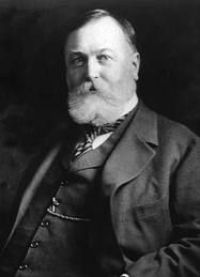
Clarence W. Barron

Biographical details

Portrait of Clarence W. Barron Clarence W. Barron The Audacious War

How can she advance money to Russia, Belgium, France, and other countries at war or just going into the war, and ask no foreign assistance, no overseas help,—except to be let alone,—expand her home trade and wages, pay with a lavish hand, and still pile up real gold both at home and over the ocean?
The first answer is because she does expand trade; because she does pay and pay promptly; and because she does protect her own trade.
The United States does not protect its trade or its citizens anywhere in the world to-day.
Source: Gutenberg

Portrait of Clarence W. Barron Clarence W. Barron The Audacious War

This has been the meaning of the clashes of the classes within all growing nations—Germany, Russia, the United States. All that outcry of humanity against mere commercialism, against the mere financial exploitation of man and his labor, in this age takes on a larger meaning.
In great wars material things go back; but the man goes to the front; and the victorious survivors make a newer and broader human creation—a new world with a new spirit.
The world has been seeking a solution of many social problems. They instantly disappear as dissolved in the hot cauldron of war.
Source: Gutenberg

Portrait of Clarence W. Barron Clarence W. Barron The Audacious War

There was not in the brain of Bismarck or of Von Moltke, or of the Emperor under whom they prosecuted the wars against Austria, Denmark, and France, any idea of Germany as the Conqueror of the world.
"Never be at enmity with the Russian Bear," was the saying at the time of Bismarck and before. "Always contrive that yours shall be a defensive war; let the other party attack," was the declaration of Bismarck.
The policy of Bismarck was: "If you have an enemy, make friends with all the other powers, so that your enemy be isolated diplomatically and politically."
Source: Gutenberg

Get perspective with Kwize: daily news enlightened by great literature