“ Although we had previously moored our boat with the approach of darkness, yet this night the Indians kept on their course. The river was now wide and still, and the banks low and tropical. With the fading light of day, the sea-breeze set in, fresh and pungent, from the ocean. Fire-flies sparkled like stars along the shore, and only the night-hawk, swooping down after its prey, startled the ear of night with its rushing pinions.The night advanced, and the steady dip of the paddles soothed me into a slumber, from which I was only roused by the noise of drums and the sound of revelry. ”
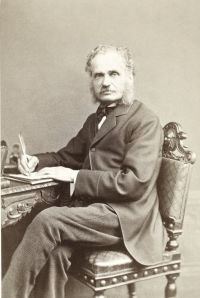
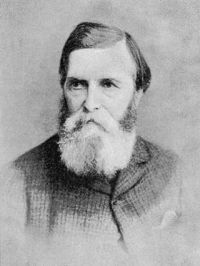
E. G. Squier
Biographical details
E. G. Squier, a 19th-century author renowned for his vivid portrayals of tropical landscapes and indigenous cultures, is best exemplified by his novel Waikna, a narrative rich in naturalist observation and daring expeditions. His prose conveys the lush, untamed beauty of Caribbean environments, from "palm-trees on the surrounding cays" to "wild plants and vines" that "seemed to have subdued the forest," while also delving into themes of human endurance and the dynamic relationship between society and the wild.
Squier’s work resonates with contemporaries like Henry Walter Bates and R. M. Ballantyne, merging empirical detail with compelling storytelling. Through Waikna, he presents a fusion of travelogue, ecological insight, and philosophical contemplation on humanity’s role within nature.
Quotes by E. G. Squier
“ We swept on swiftly and gayly, the pine-clad mountains of Guanaja rising slowly and smilingly above the horizon. By-and-by the palm-trees on the surrounding cays became visible, their plumes appearing to spring from the clear waters, and to rise and fall with the motion of our boat. As we [326] approached nearer to them, we could make out the cays themselves, supporting masses of emerald verdure, within a silvery ring of sand. Between them and the island, with its wealth of forest, the sea was of the loveliest blue, and placid as a “painted ocean.” ”
“ Around the mishla canoe was a motley assemblage of men, women, and children; some with red caps and frocks, others strutting about with half a shirt, and others entirely naked. A number of men with pipes and drums kept up an incessant noise, while others, with muskets, which they filled with powder almost to the muzzle, fired occasional volleys, when all joined in a general hurrah, “English fashion.”At a little distance was built up a rude fence of palm-branches and pine-boughs, behind which there was a crowd of men laughing and shouting in a most convulsive manner. ”