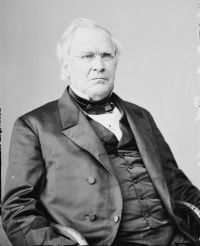
Montague Hughes Crackanthorpe

Biographical details

Montague Hughes Crackanthorpe 1911 Encyclopædia Britannica, Volume 2… (1911)

No self-respecting power would, of course, consent to submit to arbitration a question of life or death. This would be as if two men were to agree to draw lots as to which should commit suicide in order to avoid fighting a duel. On the other hand, if the exception be taken to exclude all questions which, when decided adversely to a state, impose a restraint on its freedom of action, then the exception would seem to exclude such a question as the true interpretation of an ambiguous treaty, a subject with which experience shows international arbitration is well fitted to deal.
Source: Wikisource

Montague Hughes Crackanthorpe 1911 Encyclopædia Britannica, Volume 2… (1911)

In order that international arbitration may do its perfect work, it is not enough to set up a standing tribunal, whether at the Hague or elsewhere, and to equip it with elaborate rules of procedure. Tribunals and rules are, after all, only machinery. If this machinery is to act smoothly we must improve our motive power, the source of which is human passion and sentiment.
Source: Wikisource

Montague Hughes Crackanthorpe 1911 Encyclopædia Britannica, Volume 13… (1911)

For the latter he was content to note briefs and draft opinions, and when, in 1866, Quain donned “silk,” it was on Herschell that a large portion of his mantle descended.
In 1872 Herschell was made a queen’s counsel. He had all the necessary qualifications for a leader—a clear, though not resonant voice; a calm, logical mind; a sound knowledge of legal principles; and (greatest gift of all) an abundance of common sense. He never wearied the judges by arguing at undue length, and he knew how to retire with dignity from a hopeless cause.
Source: Wikisource

Get perspective with Kwize: daily news enlightened by great literature