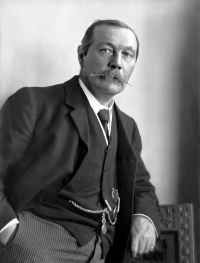
Ronald John McNeill

Biographical details

Ronald John McNeill 1911 Encyclopædia Britannica (1911)

It was through ranks of volunteers drawn up outside the parliament house in Dublin that Grattan passed on the 16th of April 1782, amidst unparalleled popular enthusiasm, to move a declaration of the independence of the Irish parliament. “I found Ireland on her knees,” Grattan exclaimed, “I watched over her with a paternal solicitude; I have traced her progress from injuries to arms, and from arms to liberty. Spirit of Swift, spirit of Molyneux, your genius has prevailed! Ireland is now a nation!” After a month of negotiation the claims of Ireland were conceded.
Source: Wikisource

Ronald John McNeill 1911 Encyclopædia Britannica, Volume 8… (1911)

Parliamentary reform was in the forefront of the new government’s policy, and with this question no statesman except Lord Grey himself was more closely indentified than Durham. To ardent reformers in the country the presence in the cabinet of “Radical Jack,” the name by which Lambton had been popularly known in the north of England, was a pledge that thorough-going reform would not be shirked by the Whigs, now in office for the first time for twenty years. And it was to his son-in-law that Lord Grey confided the task of preparing a scheme to serve as the basis of the proposed legislation.
Source: Wikisource

Ronald John McNeill 1911 Encyclopædia Britannica (1911)

The duke of Shrewsbury was one of the greatest noblemen of the reign of Queen Anne. Strikingly handsome in person, his demeanour was dignified and his manners full of grace and courtesy. Swift described him as “the finest gentleman we have,” and as “the favourite of the nation,” while William III. spoke of him as “the king of hearts.”
Source: Wikisource

Get perspective with Kwize: daily news enlightened by great literature